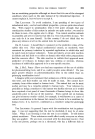
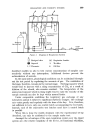
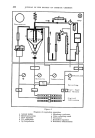
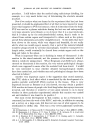
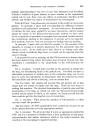
•a Mate INHALATION AND TOXICITY STUDIES 399 .•_•_.essed ' •air Figure 1. Diagram of Respiration System • Rossignol valve RC Respiration chamber • Stopcock $ Wet lrilter 1, 2 Flowmeter z[ Oil filter described enables us also to test various concentrations of samples con- secutively without any interruption. Additional devices prevent the sedimentation of aerosols. In the open system, physiological conditions can be maintained through- out the test period by regulating the amounts of gas. The ventilation of the lungs, therefore, remains in the normal range. The lung capacity which would tend to increase with a rising concentration of CO•, as a result of dilation of the alveoli, also remains constant. The temperature of the animal environment which in rising might tend to raise the toxicity of the sample material can also be kept within normal limits. Under comparable conditions the respiratory gas exchange of any laboratory animal is subject to significant rhythmic changes the exchange rate varies greatly and regularly with the time of the day. It is, therefore,. not sufficient to have only one control batch accompanying the test batch. Instead, each of the consecutive test batches must have a control batch in parallel. When this is done the results obtained, with the experimental set-up described, can only be attributed to the sample under test. Amongst the advantages of the open respiration system over the closed system are--the relative simplicity of the device, its functional reliability•

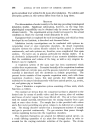
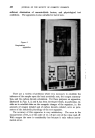
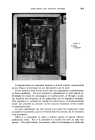
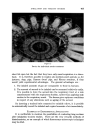
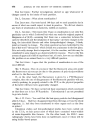
-400 JOURNAL OF THE SOCIETY OF COSMETIC CHEMISTS sufficient elimination of uncontrollable factors, and physiological test conditions. The apparatus is also suitable for batch tests. Figure oe Respiration apparatus There are a variety of problems where it is necessary to establish the influence of the sample upon the basic metabolic rate, the oxygen consump- tion, and the carbon dioxide exhalation. For these purposes an apparatus, illustrated in Figs. oe, 8, and 4, has been developed which, in particular, en- ables us to establish data on the energetic changes of the organism, i.e. the amounts of oxygen inhaled and of carbon dioxide exhaled, serve as para- meters of the metabolic physiology of the test organism. The accuracy of this apparatus is very satisfactory. The error in the measurement of COs is of the order of 1.1-1.6 per cent of the value read off. With oxygen the error is considerably less because it only reflects instru- mental errors.
Purchased for the exclusive use of nofirst nolast (unknown)
From: SCC Media Library & Resource Center (library.scconline.org)