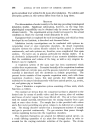
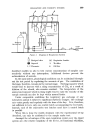
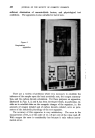
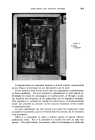
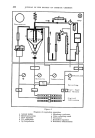
INHALATION AND TOXICITY STUDIES 403 Device for individual smoke treatment •hort life span but the fact that they have only nasal respiration is a draw- back. It is, therefore, possible to employ also medium-sized animals as, for instance, dogs, pigs, Siamese dwarf pigs, and Rhesus monkeys, if they •vould yield experimental advantages. The general advantages are: 1. The inhaled amounts of gas are comparable to those in humans. 2. The amount of aerosol to be inhaled can be measured relatively easily. It is possible to force the aerosol into the respiratory tract at a rate commensurate with the respiratory rhythm, rather than applying only suction to the respiratory mask. The former gives optimum conditions in respect of any alterations such as ageing of the aerosol. By inserting a tracheal tube connected to suitable valves, it is possible -to automatically record the inhaled and expired amounts of air immediately. EXAMPLES OF EXPERIMENTAL APPLICATIONS It iS worthwhile to mention the possibilities of evaluating lung sections after inhalation toxicity studies. There are the very versatile methods of histochemistry, as an example of which fluorescence-microscopic techniques may be cited.

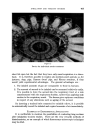
404 JOURNAL OF THE SOCIETY OF COSMETIC CHEMISTS Example 1 Freeze-sliced tissue sections of rat lungs, treated with cigarette smol•e were investigated with the following results: (a) Lungs of animals treated with smoke have yellow fluorescing particles when examined as fluorescence-microscopic preparations. These. fluorescing particles occur especially in close proximity to the larger bronchi or are phagocytized by cells (alveolar phagocytes). (b) There is a correlation between the number and the size of fluorescing• particles, and the amount of cigarettes smoked. The slides (to be shown) clearly demonstrate that the extent to which the brownish-yellow fluorescing particles occur depends on the number of cigarettes smoked, and the spots are visible in the vicinity of both the large: and the small bronchi. It should be noted that the slides depict sections. prepared according to our original, rather incomplete, technique. A more advanced technique has been developed since. Even so, the slides demon-. strate that the smoking apparatus functions properly, and they indicate that: the self-cleaning mechanism appears to play an important part. Example 2 Recently a number of authors have concerned themselves with the. compatibility of hair spray preparations. Some of them have stated that: the inhalation of hair spray preparations could lead to a deposition in the- respiratory tract of the basic constituents and thus give rise to diseases• like thesaurismosis or thesaurosis. The constituents most frequently em- ployed are polyvinyl pyrrolidone (PVP) or its co-polymer polyvinyl acetate. (PVA) shellac dimethylhydantoinforma!dehyde resin modified poly- acrylic acid resin or lanolin. The non-volatile component of these pre- parations ranges from 1.36 to 1.72 per cent (determined by heating for 2 hours at 105øC), with lanolin to 4.37 per cent, and the particle size is said to range from 1 to 30 microns. The toxicological results, and their interpretations are, however, not unanimous. The number of diseased cases is relatively small. The experiments with animals where it has not been possible to induce thesaurosis beyond doubt, have been carried out chiefly with only one species, and frequently an insufficient number of animals. Moreover the dosage applied in these experiments was usually relatively' high and the experimental period relatively short. As a result, the experi- mental set-up was not equivalent to actual usage. Subacute applications are even less related to conditions of usage. Colour slides of fluorescence-microscopic lung preparations show PVP deposits noted after exposing rats to hair spray preparations. (Received: 16th September
Purchased for the exclusive use of nofirst nolast (unknown)
From: SCC Media Library & Resource Center (library.scconline.org)