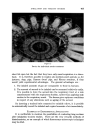
INHALATION AND TOXICITY STUDIES 405 REFERENCES •(1) H. I. Trurnit U.S. Army Chemical Corps Medical Division Report No. 181 (1949). •(2) J. Ferin and B. Ulehlova Arch. Gewerbepathol. Gewerbehyg. 16 630 (1959). '(3) E. J. King, A. B. Maguire and G. Nagelschmidt Brit. J. Ind. Med. 13 9 (1956). •(4) H. Antweiler in: Silikose-Forschung, Sonder-Band 2 509 (1958). •(5) W. Messerklinger Arch. Ohren-Nasen-u. Kehlkopfheilk. 173 1 (1958). •(6) W. Klosterkhtter, in H.Ntickel Fortschritte der biologisch•n Aerosol[orschung 1957- 1961 (Friedrich-Karl Schattauer Verlag, Stuttgart). Introduction by the lecturer Cigarette smoke particles were demonstrated to display yellow fluores- .cence without fluorochromes whereas these must be added when determining PVP, for example. Fluorescence occurs in either case with blue, as well as -with ultraviolet light. The method of preparing colour pictures of fluores- ,cence-microscopic slides, and pertinent details, has been described by 'Schiimmelfeder (7). In my opinion fluorescence-microscopy is a suitable method for demons- trating hair spray particles in different organs as, for instance, lung, lymph -nodes of the lung, liver, spleen, trachea and others. With this versatile :method no thesaurosis could be detected even under extremely vigorous ,experimental conditions of duration and intensity of exposure to the :materials. A number of colour slides were shown to demonstrate a correlation between •the number of cigarettes smoked, and the amount of particles found. Other slides shown were selected as a contribution to the controversial problem ,as to whether the constituents of hair sprays are incorporated into the lung, i.e. into the organism, or whether they are trapped before reaching the lung .because of their particle size. DISCUSSION DR. L. COLBERG: This is a subiect in which I have been very much .concerned in the past. You may recall that when I presented a paper before the Society earlier this year, I showed pictures of histological sections .of lung displaying the presence of fluorescent particles of labelled chymo- trypsin that had been administered to cats by inhalation (8). I demonstra- ted very much the same phenomena as have been presented, but the point -that I made then, I think, is still valid now, namely, that demonstration of -the presence of material is one thing but quantitative assessment of how much is there is quite another matter. I do not think that by any kind of :standardization of section thickness or any other procedure, one can arrive at a reliable estimate of the quantity of material present by the fluorescent {7) Schiimmelfeder Proc. Symposium on Cyto- and Histoch,mistry in Hematology, Freiburg 88 (1962). {8) L. Golberg, L. E. Martin, P. Sheard and C. Harrison Brit. J. Pharmacol. 15 304 (1960).

406 JOURNAL OF THE SOCIETY OF COSMETIC CHEMISTS procedure. I still believe that the method using radioisotope labelling, for example, is a very much better way of determining the absolute amount involved. Now if we analyse what one learns by the experiment that has just beerr presented, it should be emphasized first of all that we have known for many years what happens to PVP, for instance, when it is introduced into the body. PVP was used as a plasma substitute during the last war and subsequently very large amounts were infused, so we do know that it is a macromolecule• that it is taken up by the reticuloendothelial system, that it tends to be cleared from certain organs and transported to others such as the spleen• and all these phenomena are pretty straightforward. So the slides that have been shown on the screen, while very elegant and beautiful, do not really' add to what one would expect, namely, that a part of the material inhaled would be phagocytosed by alveolar macrophages, would be transported to lymph nodes, would eventually be cleared from certain organs such as the lung and taken to the spleen. What is important when one is thinking in terms of 'thesaurosis' is the reaction to the stored material, not the presence of the material, which I think is relatively unimportant. What Bergmann et al (9,10) have always. stressed on thesaurosis is the reaction, the very serious pathological changes which were supposed to ensue after the material had been stored. I would be very interested to hear whether detailed histopathological studies• have been carried out, and whether any such pathological changes have been observed to follow ? Another very important aspect is the suggestion that stored material,. like PVP, elicits a local effect which is manifested by the development of a positive periodic acid-Schiff (PAS) reaction in the tissues. This is very important because as Brunner et al (11) showed, one may obtain a positive- PAS reaction in tissues of people who lived long before hair sprays were ever invented, and therefore it would be of very great interest to us to know whether in these particular experimental animals this reaction was carried out and whether it was found to be positive ? The most recent development in this country, as far as thesaurosis is. concerned, has been the work of the M.R.C. unit who, in addition to carrying out a survey on a large scale, did discover one case of what appears to be sensitization to shellac (12). This was a very severe pulmonary syndrome• (9) M. Bergmann, I. J. Flance and H. T. Blumenthal New Engl. J. Med. 258 471 (1958)• (10) M. Bergmann, I. J. Flance, P. T. Cruz, N. Klam, P. R. Aronson, R. A. Joshi and H. T. Blumenthal New Engl. J. Med. 266 750 (1962). (11) M. J. Brunner, R. P. Giovacchini, J.P. Wyatt, F. E. Dunlap and J. C. Calandra J. Am. Med. Assoc. 184 851 (1963). (12) A. I. G. McLaughlin, P. L. Bidstrup and M. Konstam Food and Cosmetics Toxicology' 1 171 (1963).
Purchased for the exclusive use of nofirst nolast (unknown)
From: SCC Media Library & Resource Center (library.scconline.org)