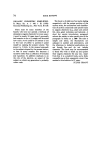
4O JOURNAL OF THE SOCIETY OF COSMETIC CHEMISTS (64) (65) (66) (67) (68) (69) (41) Gurney, R. and Bunnell, I. L. A study of the reflex mechanism of sweating in the human being: effect of anaesthesia and sympathectomy. J. Clin. Invest. 21 269 {1942). {42) Sutarman and Thomson, M. L. A new technique for enumerating active sweat glands in man. J. Physiol. it7 51P (1952). (43) Sarkany, I. A method for studying the microtopography of the skin, Brit. J. Dermatol. 74 254 (1962). (44) Sivadjian, J. Hygrophotographische Untersuchungen kosmetischer. Mittel insbesondere Antihidrotika. Parfiim. Kosmet. 46 162 (1965). (45) Sarkany, I. and Gaylarde, P. A method for demonstration of sweat gland activity. Brit. J. Dermatol. 80 601 (1968). (46) Lobitz, W. C. and Osterberg, A. E. Chemistry of palmar sweating. J. Invest. Dermatol. 6 63 (1945). (47) Schwartz, I. L., Thaysen, J. H. and Dole, V. P. Urea excretion in human sweat as a tracer for movement of water within the secreting gland. J. Exptl. Meal. 97 429 (1953). (48) Dole, V. P., Stall, B. G. and Schwartz, I. L. Methods for local induction and quanti- tative analysis of human sweat. Proc. Soc. Exptl Biol. Meal. 77 412 (1951). (49) Sato, K. and Dobson, R. L. An improved sweat collector. J. Invest. Dermatol. 511 232 (1969). (50) Wooding, W. M. Interpretation of gravimetric axillar antiperspirant data in Proc. Joint Conference on Cosmetic Sciences (1968) (Toilet Goods Association Inc., Washington). (51) Pinson, E. A. Evaporation from human skin with sweat glands inactivated. Am. J. Physiol. t117 492 (1942). (52) Neumann, C., Cohn, A. E. and Burch, G. E. A quantitative method for the measurement of the rate of water loss from small areas, with results for finger tip, toe tip and posterior- superior portion of the pinna of normal resting adults. Am. J. Physiol. t112 748 (1941). (53) Bettley, F. R. and Grice, K. A. A method for measuring the transepidermal water loss and a means of inactivating sweat glands. Brit. J. Dermatol. 77 627 (1965). (54) Grice, K. A. and Bettley, F. R. Inhibition of sweating by poldine methosulphate (Nacton). Its use for measuring insensible perspiration. Brit. J. Dermatol. 78 458 (1966). (55) Greuer, W. and Peukert, L. Arch. Dermatol. Syphilol. t79 410 (1939). (56) Bullard, R. W. Continuous recording of sweating rate by resistance hygrometry. J. Appl. Physiol. t7 735 (1962). (57) Blank, H., Rosenberg, E. W. and Taplin, D. An electronic device for measuring sweating and cutaneous water loss in Montagna, Ellis and Silver. Advances in Biology of Skin. 11 {1962) (Pergamon Press). (58) Custance, A. C. Cycling of sweat gland activity revealed by a new technique. J. Appl. Physiol. 17 741 (1962). (59) Albert, R. E. and Palmes, E. D. Evaporative rate patterns from small skin areas as measured by an infra red gas analyser. J. Appl. Physiol. 4 208 {1951-52). (60) Johnson, C. and Shuster, S. The measurement of transepidermal water loss. Brit. J. Dermatol. 81 Suppl. 4 40 (1969). (61) Randall, W. C. and Kimura, K. K. The pharmacology of sweating. Pharm. Rev. 7 365 (1955). (62) Van Beaumont, W. and Bullard, R. W. Sweating: direct influence of skin temperature. Science t$7 1465 (1965). (63) Hermann, F., Prose, P. H. and Sulzberger, M. B. Studies on sweating. ¾. Studies of quantity and distribution of thermogenic sweat delivery to the skin. J. Invest. Dermatol. 18 71 (1952). Heald, R. C. Anticholinergic drugs as antiperspirants. Am. Perruiner Cosmet. 81 95 (1966). Kligman, A. Topical pharmacology and toxicology of dimethyl sulfoxide. Part I. J. Am. Meal. Assoc. t911 796 (1965). Kligman, A. Dimethyl sulfoxide. Part II. J. Am. Med. Assoc. 1911 923 (1965). Blank, I. H., Jones, J. L. and Gould, E. A study of penetration of aluminium salts into excised human skin. Proc. Sci. Sect. Toilet Goods Assoc. 29 32 (1958). Papa, C. M. The action of antiperspirants. J. Soc. Cosmet. Chem. t7 789 (1966). Papa, C. M. and Kligman, A. M. Mechanisms of eccrine anidrosis. II. The antiperspirant effect of aluminium salts. J. Invest. Dermatol. $9 139 (1967).

MEASUREMENT AND CONTROL OF PERSPIRATION 41 DISCUSSION DR. D. JAcKsoN: The cyclic appearance from the chart over the first half hour collection is very striking. Did the output of sweat fall to zero between the peak events? T• L•CTURF. R: Initially, when stimulating the glands, particularly by heat, there is periodic activity of the gland. At first only a certain number react and there is a return to zero between peaks of activity. Then as the stimulus is maintained, more glands begin to react, each with a greater output, so that ultimately there is a con- tinuous output rather than just periodic activity. DR. D. JAcKsoN: Do you have any estimate of the sweat output in these conditions? TI•F• LECTURER: In a 10-min collection period, a subject sweating heavily would yield perhaps as much as 3 or 4 g of liquid per axilla. MR. D. A•r)REWS: Although you use a panel of subjects for these evaluation tests, if one subject was treated several times over a period of weeks, would you get effective reproducibility ? TH• L•CTUR•R: Under the same conditions, if the subject was treated with the same material, fairly reproducible results would be obtained. The traces suggested this. On the other hand, the material with which the subject is actually treated will have a marked effect on the glands and the effect is obviously liable to change over a long period of treatment. MR. W. D. ROBeRTSOn: Does this method lead to a simple figure of percent reduction for an antiperspirant compound? TI• L•.CTUR•.R: With traces of this type, although the results could be treated mathematically it may well be preferable to avoid this type of calculation. For such a calculation, it would be necessary to sum peak heights on the trace to provide quanti- tative data. Alternatively, it would be possible to select a certain point on the trace for measurement and subsequent calculation. Methods of treating these results are still under consideration, but the final approach may be similar to that used in gas chroma- tography namely, measurement of the area under the trace. DR. D. W. G. D•c•R: Have you been able to correlate your results with the perception of antiperspirant activity obtained with home-use conditions? THe. L•.CTVRER: NO. Our experience with the pad method shows that often the results obtained under experimental conditions do not correlate closely with the results from home-user tests. At home, the person often removes much of the material by getting dressed almost immediately after application of antiperspirant. Also, soap remaining on the skin after washing may interfere with the action of the antiperspirant. Hence the results obtained under experimental conditions are often quite different from the results of home-use. MR. M. K. Sa•ea•Rr): You conducted your experiments over 70 min in the warm- room. How long would the activity of this antiperspirant actually last? Ta• L•CTUR•R: Most cosmetic manufacturers hope that their antiperspirants last over several hours. Under conditions in the warm-room it is difficult to say how long the effect lasts. It is quite possible that under conditions where there is very heavy
Purchased for the exclusive use of nofirst nolast (unknown)
From: SCC Media Library & Resource Center (library.scconline.org)