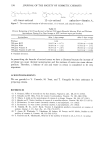
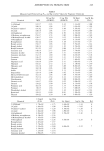
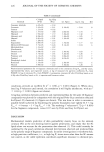
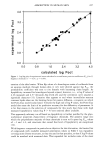
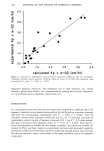
192 JOURNAL OF THE SOCIETY OF COSMETIC CHEMISTS squatane (Nikko Chemicals) in a 20-ml brown-colored screw bottle sealed with a cap and 400 ppm of retinol in creams with 500 ppm butylated hydroxy toluene (BHT) (Wako Jyunyaku Kogyo Co.) in an aluminum tube sealed with a cap (about 15 g) were preserved under various temperature conditions. Table I shows the formula of sample water-in-oil creams. In order to investigate the influence of water and oil in cream on all-trans-retinol, we prepared water-oil creams, varying the relative quantities of the oil and water phases. Prepared retinol in ethanolic solution, and squalane and sample creams, were prepared in the absence of ultraviolet lights by using pure yellow-colored fluorescent light (National Co.) and in the absence of oxygen, using an argon gas blanket, blowing and bubbling with argon gas. CONTACT OF RETINOL WITH WATER Five hundred parts per million of retinol in 100%, 75%, and 50% ethanolic solutions were prepared and stored at 50øC for periods of ten days. In addition, 500 ppm of retinol in 50% ethanolic solution with 2% polyoxyethylene glycero! monoisostearate (60 mol) (Nihon Emulsion Co.), a surface-active agent, were prepared and compared with 500 ppm of retinol in 50% ethanolic solution without surface-active agent. This surface- active agent had to be fresh, and the sample for the storage test had to be prepared using blowing and bubbling argon. If not, the influence of peroxide in the surface-active agent (4) and that of oxygen could not be neglected. EFFECT OF ANTIOXIDANTS Butylated hydroxy toluene (BHT) (Wako Jyunyaku Kogyo Co.), butylated hydroxy anisole (BHA) (Wako Jyunyaku Kogyo Co.), vitamin E (Tokyo Kasei Kogyo Co.), and vitamin C (Wako Jyunyaku Kogyo Co.) were selected as antioxidants. Five hundred parts per million of retinol in ethanolic solution including 500 ppm of each of these antioxidants were stored at 50øC for periods of five days without using an argon gas blanket. When vitamin C was added to the retinol-ethanolic solution, the pH was adjusted at pH 7.0 with sodium hydroxide, since retinol is very unstable at low pH. Table I Formula of Sample Water-in-Oil Creams Cream C Ingredient Cream A Cream B (% by weight) Water 65.03 54.03 42.03 Glycerin 15 15 15 Oils 15 26 38 Stearyl alcohol (4) (4) (4) Petrolatum (4) (8) (12) Liquid petrolatum (7) (14) (22) Polyoxyethylene glyceryl monostearate 4.6 4.6 4.6 Ethyl parahydroxy benzoate 0.2 0.2 0.2 retinol 0.04 0.04 0.04 Butylated hydroxy toluene 0.05 0.05 0.05 perfume 0.08 0.08 0.08

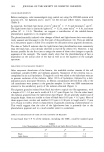
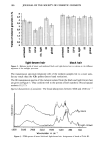
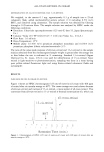
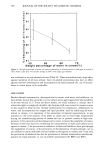
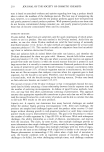
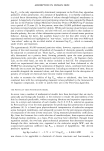
ALL-TRANS-RETINOL IN CREAM 193 DETERMINATION OF ALL-TRANS-RETINOL AND 13-CIS-RETINOL We weighed, to the nearest 0.1 mg, approximately 0.3 g of sample into a 25-ml volumetric flask, added methanol/ethyl acetate solvent (1:1) including 0.5% (w/v) BHT, and dissolved using ultrasonics. The sample solution was obtained by filtering through a 0.45-micron filter. The sample solution was analyzed by HPLC under the following conditions: ß Detection: Ultraviolet spectrophotometer (325 nm) (U-best 55, Japan Spectroscopic Co.) ß Column: Vydac 201 TP 104-C18 (25 x 0.46 cm) (Vydac Co., U.S.A.) ß Flow Rate: 1.0 ml/min ß Oven Temperature: 35øC ß Mobile phase: 0. 136% (w/v) potassium phosphate monobasic and 0.034% (w/v) potassium phosphate dibasic solution/acetonitrile (3:7) The ratio of the value (peak response of all-trans-retinol and 13-cis-retinol in the sample solution obtained from the chromatogram/sample weight in grams) after the storage test to that before the test is evaluated as % remaining. Standard 13-cis-retinol (Sigma Chemical Co, St. Louis, U.S.A.) was used for identification of 13-cis-retinol. Since retinol is light-sensitive to photoisomerization, sampling was done in a room having pure yellow-colored fluorescent light and using brown-colored volumetric flasks and autosampler. RESULTS INFLUENCE OF OILS IN CREAM ON RETINOL Figure 1 shows an HPLC chromatogram (325 nm) of water-in-oil cream with 400 ppm of retinol after six months storage at 40øC. The cream storage test result shows decrease of all-trans-retinol and increase of 13-cis-retinol, a main isomer of all-trans-retinol. This conversion from all-trans-retinol to 13-cis-retinol is thermal isomerization (6), which can 13-cis-retinol BHT , /X, all-tras-retinoi Retention Time (min.) Figure 1. Chrornatograrn of HPLC (325 nrn) of water-in-oil cream with 400 pprn of retinol after six months storage at 40øC.
Purchased for the exclusive use of nofirst nolast (unknown)
From: SCC Media Library & Resource Center (library.scconline.org)