182 JOURNAL OF THE SOCIETY OF COSMETIC CHEMISTS of action are operative, and it was shown that melanin has the ability to scavenge molecular oxygen as well as photochemically formed reactive oxygen species such as 02- and H202 (5-8). The photooxidation of melanin is accompanied by bleaching (6,9,10), a process well known and practiced in the hair care field. Eumelanin and pheomelanin respond in a different manner to irradiation. Chedekel et al. (11) found that under alkaline conditions the photolysis of pheomelanin leads to a hundredfold higher production on biologically active OH' radicals and O2-anions than eumelanin. The highly damaging potential of these compounds led Menon et al. (12) to suggest that pheomelanin might be a poor protectant against sun-induced skin cancer. A somewhat different perspective on the reactivity of these pigments was provided by Wolfram and Albrecht (13), who examined the photo and chemical oxidation of pheo- and eumelanins in hair. They found pheomelanin to be more resistant to such oxidative attacks than eumelanin. The purpose of this investigation was to obtain a better understanding of the effect of sunlight on the melanin and hair. Our goal was to provide some explanations on the molecular level. We were fully aware of the difficulties associated with the lack of precise knowledge regarding the complex structure of melanin as well as with the uncertainties of the effect that different segments of the sunlight spectrum may have on the photo- reactions of the pigment. We have thus limited our experiments to black and light- brown hair and carried out the irradiation study with UV-B, UV-A, visible light, and IR segments of the sunlight spectrum. The work was performed in a specially designed irradiation unit, which was described in detail in the first part of this study (14). An enzymatic technique was used for the isolation of the melanin pigments from hair (15). The isolated pigment was further purified by removal of proteins and lipids. The melanin granules were weighed and characterized by means of IR spectroscopy. The results are discussed in relation to the nature of the pigments and irradiation parameters. MATERIALS AND METHODS HAIR SAMPLES Untreated black and light-brown hair was obtained from Herzig Co. as 25-cm-long tresses of European origin. PURIFICATION OF HAIR The hair was extracted for 5 min with dichloromethane and for 30 min with diethylether to remove the sebum and traces of naphthalene, a conservation agent applied by the hair trader. Finally, the hair was washed with a non-ionic detergent, rinsed, and stored at ambient humidity. IRRADIATION OF THE HAIR The hair tresses were irradiated for a period of 6 weeks (1008 h) in individual com- partments with UV-B, UV-A, visible light, IR, or global radiation at RH 70 %

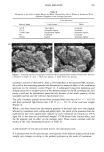
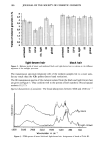
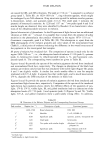
HAIR MELANIN 183 (14). In each case approximately 10 g of hair were used, and the hair was spread parallel and rearranged daily to assure uniform exposure to irradiation. COLOR DETERMINATION The color of the nonirradiated hair was determined by means of Datacolor © 3890 equipment using the CIELAB-system. The color of the irradiated hair was determined visually by comparing the color quality with nonirradiated light-brown and black tresses. ISOLATION OF MELANIN An enzymatic technique to solubilize the keratin was used (15). One gram of hair was stirred into 30 ml of buffer of pH 6.7 containing 83.36 mg papain and 290 mg dithioerythritol (DTE). The reaction was carried out for 72 h at 50 ø C. The residue was separated by centrifugation (18,000 min- • at 4 ø C), with twofold washing with water. The residue contains cell membrane complex and melanin granules. SEPARATION OF THE CELL MEMBRANE COMPLEX AND PROTEINS FROM THE MELANIN The isolated mixture containing the cell membrane complex and melanin granules was hydrolyzed for 120 h in vacuo at 110 ø C with 6 N HC1 and 3% thioglycolic acid. The melanin residue was filtered using a 0.2-}xm pore membrane. DELIPIDIZATION OF MELANIN The deproteinated melanin was delipidized by three 10-min washings with hexane/ isopropanol/water (6:6:1 v/v/v). The residue was freeze-dried and kept at P205. SEM EXAMINATIONS The purity of melanin was evaluated by means of a scanning electron microscope (SEM). IR SPECTROSCOPY The spectroscopic examination was carried out using an FTIR 60SXR spectrometer (Nicolet). The melanin samples were examined either as KBr pellets or in a diamond cell. The spectral resolution was 4 cm- 1 in the range from 400 to 4000 cm- 1 RESULTS IRRADIATION OF HAIR SAMPLES The black and light-brown hair samples were irradiated for a period of 6 weeks (1008 h) with UV-B, UV-A, visible light, IR, or global radiation as previously de- scribed (14).
Purchased for the exclusive use of nofirst nolast (unknown)
From: SCC Media Library & Resource Center (library.scconline.org)