204 JOURNAL OF THE SOCIETY OF COSMETIC CHEMISTS COMMON ISSUES SHARED BY PETS PETs are conceptually simple. All the protocols involve introducing microorganisms into the cosmetic. All the protocols have the same general steps: product preparation, inoculum selection and preparation, inoculation, incubation, plating and estimating the surviving microorganisms, and interpreting the data. The differences are in how these steps are conducted. These differences are described below. Product preparation. The product sample used in a PET should replicate all the param- eters for national distribution, including formulation, packaging, and manufacturing conditions. Raw materials should be of the same quality and from the same source as expected for national distribution. Even minor changes for adjusting viscosity, color, perfume, pH--even changes in process water--may adversely affect a product's PET results. Scale-up from lab to plant also provides opportunity for variables that need to be identified and controlled so the final nationally delivered product will be adequately preserved. Most published preservative methods test full-strength (100%) product (15). However, Brannan et al. (17, 18) and Cooke et al. (62) added diluted product to the challenge test as well. The dilutions stress the product and also provide a means of ranking the product. For example, products that can be diluted and continue killing the inoculum may be classified as well-preserved, whereas products that kill the inoculum only when the product is at full strength may be adequately preserved if the packaging prevents consumer contamination during use. In addition, this approach is another way of mimicking expected use patterns. For example, products that are diluted during fore- seeable misuse, such as shampoos, should be able to continue killing microbial chal- lenges. Finally, dilution mimicks potential manufacturing errors, particularly those involving washouts where diluted product is accidently left in a line. If a product can remain hostile when diluted, then microorganisms are less likely to be selected to be resistant in the biocide. If not, then the organisms are selected for survival at diluted biocide concentrations and are just a minor step away from being selected for growth in full-strength product. Inoculum: Selection and maintaining resistance. An appropriate microbiological challenge of the product is the most critical factor in determining the validity of a preservative efficacy test. All the tests currently specify a set of inoculum microorganisms. Some of the methods list specific strains from ATCC, while others also allow inclusion of other organisms the microbiologist chooses. These choices often include preservative-resistant strains from consumer-used product samples, raw materials, or manufacturing sites. However, use of these resistant organisms may be considered a form of abuse testing by some. Use of these special strains, however, should be reevaluated if one has not maintained a rigorous program of preserving the originally isolated culture. More often than not, one maintains a culture collection by putting up an original set of vials. When the last remaining vial is subcultured, an isolated colony (obtained by streaking for isolation) is selected to grow up and harvest. This culture is preserved in another set of lyophilized vials. Unfortunately, this process represents a departure from the originally deposited culture because the progeny of only a single individual was selected to represent the original population. Routine subculturing on nonselective growth media will also cause the loss of preser- vative resistance since the selective pressure of the preservative is no longer present. The

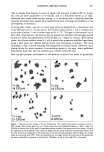
COSMETIC PRESERVATION 205 likelihood of selecting organisms without the resistant factor is high when using tra- ditional "streak for isolation" pure culture concepts. Instead, one should rely on assess- ing the purity of the population by its homogenous appearance on a lawned agar plate. Preferably this should be done on a medium that has the preservative in an active state (not neutralized) incorporated into the agar. Once the population is grown up as a lawn, the entire lawn should be harvested for freezing or lyophilization. An area needing more research is the effect of growing the inoculum in broth or on solid media. Greater resistance to preserved product has been described for broth-grown cultures compared to cultures grown on solid medium. However, this result may have been due to the carryover of broth into the product acting as a neutralizing agent of the preservative in the product rather than to any intrinsic resistance gained by the bacteria by growing in broth (63,64). Another area needing further research is the investigation of the importance of the growth phase of the challenge inoculum. The growth phase affects the physiological state of the organisms used as the inoculum. For example, Holm-Hansen found that ATP per cell is decreased as cells reach stationary phase (65). This physiological change and potentially other changes may affect an organism's resistance to preservatives. Inocu/um.' Concentration and recha//enge. In the CTFA's PET, the recommended inoculum level for bacteria is 1 x 10⁸ colony-forming units per milliliter (CFU/ml). If 20 grams of product are inoculated with 0.2 ml (a 100:1 ratio), then the final CTFA recom- mended concentration of 1 x 10⁶ colony-forming units per gram (CFU/g) of product is obtained. Other PETs may use different inoculum levels. The key issue is to keep the dilution of product by the inoculum to a minimum a good rule is to not dilute the product over 1% with the inoculum. In like manner, fungi and yeast are introduced into the product. However, their concentration is only 1 X 10 4 CFU/g of product in the CTFA method. The assumption that these counts represent fungal spores may not be valid since hyphae can also give rise to fungal colonies. How to standardize the concentration of the inoculum is left up to the microbiologist in the CTFA method. A transmittance of 30-40% at 425 nm of bacteria suspended in buffer will usually yield 1.0 x 10⁸ CFU/ml. However, any reference to standard microbiological methods will provide the specifics for determining microbial concen- trations (66). Rechallenge is the addition of fresh inoculum to a product that has already killed off the first challenge after an appropriate time. CTFA provides for a rechallenge if desired but does not require it. Some studies suggest this practice does not provide any more information than single challenges (67). The manufacturer, however, may be able to make a case for multiple challenges. For example, mascaras are commonly subjected to repeat insults by the consumer. In this case, the microbiologist should select a challenge level that is reasonable and likely from consumer use (1 x 10² CFU/gm) rather than the high levels recommended in the compendial methods. These levels could be determined by allowing people to use unpreserved products and analyzing the level of organisms introduced into the product after that use. Another area of concern regarding the inoculum is whether or not to use pure or mixed challenges. This question refers to the use of several pure cultures that are mixed together after they were grown up and harvested. Use of this mixed inoculum may be more representative of actual conditions of contamination since microorganisms do not
Purchased for the exclusive use of nofirst nolast (unknown)
From: SCC Media Library & Resource Center (library.scconline.org)