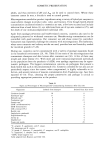
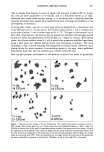
206 JOURNAL OF THE SOCIETY OF COSMETIC CHEMISTS exist as pure cultures in nature but as interacting populations within communities of microorganisms. If one assumes that co-metabolism or synergism occurs within a com- munity biology dynamic, mixed cultures may provide greater stress to the preservative system than pure challenges (68). In fact, cometabolism and vitamin and cofactor synthesis help stimulate mixed interactions within communities of microorganisms (69,70). The idea that such interactions occur during a PET is supported by the observations of Henriette et al. (71), who described a mixed-bacterial community that developed in disinfectants and antibiotics. None of the individual species were resistant to the antimicrobials. Only the community showed resistance. In contrast to the above, however, it is the idea that mixed populations are more robust that forms one of the objections to their use. The claim is that it introduces the variable of microbial population dynamics into the challenge test. Alternatively, some feel that the mixed cultures may be less stringent than pure challenges because one organism may produce metabolic factors that are antagonistic against other microorganisms in the challenge (72) or that the organisms will compete with each other for limiting substrates and growth factors such as iron (73). Resolution of the issue will take more research. Plate counts and other assumptions. There are two assumptions that microbiologists make that are false regarding plate counts . . . and yet we still rely on them: 1) one organism gives rise to one colony, and 2) organisms are evenly distributed as single cells and do not exist as clumps. A new paradigm of organisms existing as nonuniformly distributed clumps that later break up into individual cells may help to explain the anomalous results one occasionally gets in preservative efficacy testing. It must be emphasized that the following is only a model as it applies to preservative testing. It is, however, a valid model since it is based on a historically well known fact that organisms do exist predominantly in clumps rather than as single individuals, even in shake flask cultures (74,75). It is also based on reports about the clumping nature of bacteria due to hydrophobicity (76) and on the newer reports about biofilm and aggregate formation, particularly when exposed to biocides (77). The following enigmatic scenario is sometimes seen during a PET. An initial kill occurs at 7 days (seen as a decrease in CFU) but is followed by an increase in CFU at 14 days, followed by another decrease at 21 days. Usually this is passed off as experimental error such as use of the wrong culture conditions or recovery system or incorrect dilution/ pipetting techniques. Occasionally one gets these results despite controlling all these factors. When this happens, the experimenter may pass off the result as an anomaly of biological systems. However, all these explanations assume that a CFU comes from single organisms that are evenly dispersed throughout the sample. Let's explore the new paradigm that provides at least a hypothetical model that may help explain these results better. Most people working with bacteria exposed to disinfectants and antibiotics are very well aware that bacteria do not exist as uniformly distributed individuals but as biofilms and as Poisson-distributed or negative binomial-distributed clumps or aggregates (66,78-80). If one uses the paradigm of microbes existing in aggregates (or clumps), the enigma may be explained without having to claim "exper- imental error" (Figure 1). The initial kill at 7 days may have been due to killing of the cells in smaller clumps, where the entire clump of cells is killed but the larger clumps have a few cells within them that remain alive because they were protected. Our model is that CFU are really derived from clumps rather than individual cells. The surviving

COSMETIC PRESERVATION 207 cells in clumps then disperse to result in single cells that give a higher CFU at 14 days but now are more susceptible to the biocide, and so a reduction follows at 21 days. Although this model needs further testing, it is satisfying that it logically describes what has heretofore been passed off as experimental error or biological variability or the development of resistance. In doing plate counts, one can use either pour plates or spread plates to determine how many CFU/gm survive. In pour plates, the diluted product (about 1 ml) is vortexed into a test tube of about 15 ml of melted agar at 46 -+ 2øC. The agar is then poured into a Petri dish. Alternatively, the dilution may be placed into the Petri dish and agar poured on top of it while the experimenter swirls the plate in a "figure 8" motion. With spread plates, the diluted product (about 0.1 ml) is spread onto prepoured solidified agar plates using a bent glass rod. Spread plating allows easy processing of samples. The main advantage is that it avoids exposing microorganisms to heated media. However, pour plating allows for more exposure to neutralizing agents in the agar. Some published information finds that the two methods give similar results (81,82). One can also perform enrichments of the product to detect low levels of potentially T=Od 18 CFU/ml T=14d • 21 CFU/rnl T=7d 10 CFU/ml T=21d 6 CFU/rnl Figure 1. Bacteria exist as clumps in Poisson distribution. This model helps explain anomalous results in PET testing. Each clump gives rise to a colony rather than each individual doing so. After 7 days, the CFU/ml is reduced due to the death of organisms existing outside of the protection of the clump. A few of the organisms at the periphery of the clump are killed, but the clump still forms an individual colony. The fact that some of the organisms in the clump died is not detected upon plating. After 14 days, the clumps break up to provide more CFU. Now the individuals are no longer within the protection of the clump and are more susceptible to exposure to the biocide. Therefore, at day 21 the total CFU is decreased.
Purchased for the exclusive use of nofirst nolast (unknown)
From: SCC Media Library & Resource Center (library.scconline.org)