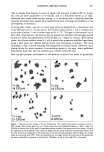
208 JOURNAL OF THE SOCIETY OF COSMETIC CHEMISTS recoverable organisms (83). The sensitivity or detection limit of typical dilution and plate count methods is usually from 10 to 20 CFU/gm of product. In enrichment, at least 10 g of product is put into 1 liter of broth and incubated. Any turbidity (or color change if one uses either a pH or redox indicator) indicates at least one organism was present in the 10-g sample. This approach makes the detection limit 1 CFU/10 gm of product (theoretically 0.1 CFU/gm). Thus the sensitivity is increased by 100X com- pared to traditional plate count methods. It is most useful in determining if, after the 28-day period, low levels of inoculum still exist that may still be capable of growing later on. Adaptation and resistance. All of the recognized tests require long incubation periods (28-56 days). These long periods are supposed to account for the phenomenon of adaptation. After some lag phase the microbes "grow back" to high enough levels to be detected again. The mechanism(s) for this regrowth are not well understood. Perhaps it is due to survival and adaptation. Perhaps it is due to in situ recovery of injured organisms (84). It may be due to container-associated organisms that slough off into the product (85,86). It may even be due to inadequate mixing and inconsistent plating methods, since bacteria display Poisson distribution in the sample. The paradigm of organisms existing as clumps is also a possible explanation to help explain "grow-back," without needing to claim microbial adaptation, or recovery of injured cells or the "Phoenix Phenomenon" (87,88). These latter two explanations need not be the sole or even primary explanations the clumping paradigm also explains what appears to be anomalous results when cells die off but then "recover" during a PET. Whether or not the clumping paradigm is a more valid explanation for these anomalous results than adaptation or the "Phoenix Phenomenon" remains to be shown empirically. Certainly there are cases where adaptation occurs. However, where adaptation is claimed for preservatives that have multiple modes of action, resistance is rarely via an individual occurrence of plasmid acquisition, mutation, or lifting of repression (89), as is often found with antibiotics but rather is a result of enhancement of the expression of a characteristic within a population due to genetic drift. This may occur as a shift in the amount of capsule production, clumping, stimulation of production of glutathione, or even physical community developments within biofilms where certain organisms exist as protector guilds for other organisms (90-92). Such resistance is typified by whole-cell poisons such as chlorine (93,94). Few cases of true chlorine resistance occur (e.g., point mutations by a single mutant cell that survives). Instead, any "resistance" seen is really a population or community effect of cells existing within the protection of a biofilm or surrounded with a capsule composed of extracellular polymeric substances that excludes the chlorine or use of cellular energy to produce higher levels of glutathione (90,95). Perhaps in these examples a more proper term to use would be biocide "tolerance" rather than resistance. The establishment of a biofilm or clumps of organisms provides an adaptation mechanism for tolerance to biocides using extracellular polymers in the form of a capsule. This biofilm then leads to an inoculum source that is constantly being exposed to sublethal or subinhibitory levels of biocide. Once established, adaptation via increased production of glutathione or a slowdown of metabolism (or even perhaps mutation) can result in a resistant phenotype (or even genotype), and the problem becomes compounded (personal communication, J. S. Chapman, Rohm, and Haas). Genetic adaptation to biocides at the individual rather than population level is a pos- sibility in some cases (96). However, several papers claiming to have demonstrated this

COSMETIC PRESERVATION 209 phenomenon are either a case of neutralization of the biocide (by carryover of the growth medium) or a case of saturating the biocide with more organisms than available biocide to the point of inactivating it (97,98). Specific genetic mechanisms (e.g., point muta- tions, plasmid acquisition, lifting repression) or the expression of formaldehyde dehy- drogenase do exist in some cases (99,100). The hallmark of whether or not a permanent genetic adaptation has occurred is the stability of the resistance in the absence of selective pressure from the presence of preservative, as apparently is the case for parabens (101). However, resistance to all biocides by permanent genotypic change must not always be assumed. The most naYve idea is that the resistance mechanisms against biocides are similar to those mechanisms found in antibiotic resistance. Whereas anti- biotic resistance can be described based on specific molecular activity at specific sites, the resistance to biocides cannot. Often the resistance to biocides must be maintained at a population level by continuously culturing the organism in the presence of the preservative to maintain the selective pressure on the population. This selective pressure causes the population to develop higher capsule production, which enhances clumping associations, and the production of biofilms. Alternatively, enhancement of the expres- sion of glutathione synthetase could also occur within the population to provide resis- tance to some biocides (102). Take the selective pressure away, however, and this expression stops, indicating that a permanent genetic change within individuals did not take place but rather that population shifts occurred. Use of neutralizers. Appropriate use of neutralizers is often overlooked when conducting PETs. Some preservatives only require dilution in buffer to be inactivated. Others require chemical neutralizers used in the diluent or the plating medium, or both. Filtration is another approach but is limited to those products that can be filtered. The work of Sutton and others describes a number of neutralization methods for preservatives as well as a scientific basis for their evaluation (103-107). The goal of a neutralizer is to inactivate the biocide before the biocide inactivates the microorganism in order to provide uninhibited microbial growth. Failure to inactivate the biocide immediately upon sampling causes one to overestimate the killing potential of the biocide. This failure is actually a measure of the kill that continues within the plating medium because the active biocide is carried over into the medium (108). A fairly effective all-purpose (universal) neutralizing medium is Dey-Engley broth (109). Dey-Engley broth is described further in Atlas' Handbook of Microbio/ogica/ Media (110) and the Difco Manual (111). A thorough review of this and many other neutralizers may be found in the articles by Russell (84) and Sutton (112). The ASTM provides a method to determine if a neutralizer is nontoxic and effective, using microorganisms as biological indicators (113). This method is a retroactive check for neutralization. It is done by streaking plates showing no growth with test organisms. The streak is done 48 hours or more after the inoculated product was originally plated. Since this streak is done so long after the initial plating, the retroactive test only proves that neutralization finally occurs after allowing the biocide to incubate in the medium for some length of time it does not prove that neutralization occurred instantaneously when the product containing the biocide was mixed into the medium. Retroactive checks of neutralization, and thus the ASTM method of neutralizer validation, are invalid. Interpretation of data. Interpretation of the data using the criteria set by the compendial
Purchased for the exclusive use of nofirst nolast (unknown)
From: SCC Media Library & Resource Center (library.scconline.org)