220 JOURNAL OF THE SOCIETY OF COSMETIC CHEMISTS (150) (151) (152) (153) (154) (155) (156) (157) F. Sharpell and M. Manowitz, "Preservation of Cosmetics," in Disinfection, Sterilization, and Preser- vation, 3rd ed., S.S. Block, Ed. (Lea & Febiger, Philadelphia, 1983), pp. 589-607. W. C. Waggoner, Ed., Clinical SajSty and Efficacy Testing of Cosmetics (Marcel Dekker, New York, 1990). J. H. Whittam, Ed., Cosmetic Safety.' A Primer for Cosmetic Scientists (Marcel Dekker, New York, 1985). CTFA Preservation Subcommittee, "A Guideline for the Determination of Adequacy of Preservation of Cosmetics and Toiletry Formulations," in Technical Guidelines (Cosmetic Toiletry and Fragrance Association, Washington, D.C., 1981). C. Durant and P. Higdon, Preservation of cosmetic and toiletry products, Soc. Appl. Bacteriol. Tech. Ser., 22, 231-253 (1987). P. A. Geis, Preservation of cosmetics and consumer products: Rationale and application, Dev. Ind. Microbiol., 29, 305-315 (1988). CTFA Survey, Preservative test methods companies use, Cosmet. Toiletr., 105, 79-82 (1990). D. K. Brannan, "Cosmetic Microbiology," in Encyclopedia of Microbiology, J. Lederberg, Ed. (Aca- demic Press, San Diego, 1993), Vol. 1, pp. 593-603.

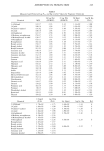
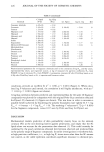
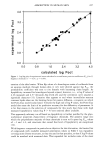
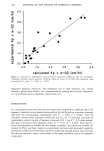
j. Soc. Cosmet. Chem., 46, 221-229 (July/August 1995) Predicting absorption of fragrance chemicals through human skin JURIJ J. HOST•NEK, Euromerican Technology Resources, Inc,, Lafayette, CA 94549. Received March 25, 1995. Synopsis Potts and Guy fitted an equation to the experimental permeation coefficients (Kp) of a variety of molecular structures through human skin (1). This equation was based on molecular weight (MW) and the octanol- water partition coefficient (log P). In the endeavor to identify a mathematical model predictive of the mostly unexplored skin penetration of fragrance chemicals, the Potts-Guy equation was tested here by correlating the published, measured Kp for 20 such compounds with predicted Kp values. The data, covering a broad range of structures, are well described by that model (r 2 = 0.86, p 0.001). Also, calculated octanol-water partition coefficients, an alternative in case of missing measured values, appear well founded when analyzed statistically: comparison of 33 measured partition values with the calculated log Ps show near-perfect correlation for the intermediate lipophilicity range typical of fragrance chemicals (0.5 log P • 3.5 r 2 = 0.97, p • 0.001). The Potts-Guy relation thereby recommends itself as a simple and reliable method for the quantitative evalu- ation of human skin absorption potential of small-molecular-weight nonelectrolytes, and of fragrance chemicals, in particular where such data are largely missing. INTRODUCTION Exposure to fragrances is becoming unavoidable in the course of daily activities, as an ever-growing range of consumer goods is perfumed, either for functional or esthetic reasons. Most exposure is olfactory, and thus fleeting, and with the rare exception of individuals suffering from chemical hypersensitivities, without notable adverse effects. Through one category of products, however, exposure to fragrances is immediate, repeated, and significant, and dermatologists as well as toxicologists are becoming increasingly aware of the potential for toxicity. A large number of consumer products, namely the category of cosmetics and toiletries designed for contact with the skin, mostly as so-called stay-on products, contain a relatively high percentage of fragrance materials. Perfumes and colognes consist entirely of highly complex fragrance mixtures, This paper celebrates the 70th birthday of Bruno P. Vaterlaus, Dr. Sc. Techn. ETHZ, who for many years directed the course of research at Givaudan with great integrity and vision, through good, and sometimes very difficult times. 221
Purchased for the exclusive use of nofirst nolast (unknown)
From: SCC Media Library & Resource Center (library.scconline.org)