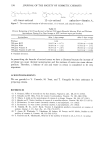
222 JOURNAL OF THE SOCIETY OF COSMETIC CHEMISTS natural, nature-identical, or fully synthetic. As far as they contain natural oils and essences, they rate a low priority for purposes of human health concerns, as those currently in use have been proven safe based on an age-old history of human exposure without adverse effects of note. However, some 3000 synthetic chemicals are currently also used in fragrance compounding (2). They find increasing application in personal care products, for esthetic as well as economic reasons yet only a handful have been tested on human or animal skin for permeation, and thus systemic availability assess- ment. It therefore appeared appropriate to evaluate the relevance of currently developed mathematical models as an expeditious approach for the prediction of the human skin penetration potential by fragrance chemicals. METHODS PERMEABILITY COEFFICIENT Kp In order to avoid or minimize the ethical, economic, and biological difficulties associ- ated with in vivo experimentation, in vitro studies using human skin are now being used most frequently for estimating dermal absorption. From such studies, where a standard protocol has been observed, a statistically adequate number of data has now been generated that lends itself to mathematical modeling for QSAR purposes. Common parameters that result from such percutaneous absorption experiments are the perme- ability coefficient Kp, defined as Jss = KpC, where Js• and C are the steady-state flux and donor concentration, the latter maintained at an unchanged (or infinite) value. The rate at which a chemical penetrates the skin, in the present paper expressed in cm/hr, is described as the permeability coefficient Kp or as its logarithm, log Kp•a value determined over sufficient time to assure conditions of steady state. When the permeant is applied from aqueous solution, it represents the in vitro method by which most compound-specific penetration data currently available in the literature have been gen- erated. In such studies, a piece of excised human skin is attached to a diffusion cell consisting of a top chamber to receive an adequate volume of the penetrant in solution, an O-ring to secure the skin in place, and a temperature-controlled bottom chamber containing saline and equipped with a sampling port to withdraw fractions at specific time intervals for analysis (2a). Although forearm skin is an ideal choice, most commonly abdominal skin obtained at autopsy is used for reasons of availability. It is now generally accepted that properly conducted in vitro tests using human skin yield a reasonably good predic- tion of the absorption rate for chemicals in humans. OCTANOL/WATER PARTITION COEFFICIENT Poet Polarity was found empirically to be a critical, if not the most important, physicochem- ical parameter determining the ability of chemical compounds to penetrate the skin barrier. It describes the partitioning behavior of a solute between a lipid and a polar phase, typically n-octanol and water. Expressed as the partition coefficient Poet or its logarithm log Poet, it represents the solvent system most frequently used to describe the polarity of chemicals.

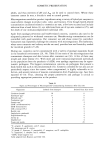
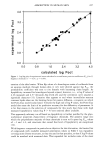
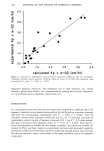
ABSORPTION IN HUMAN SKIN 223 Log Poet is the only experimentally determined component in the Potts-Guy algorithm predictive of skin penetration. As a measure of lipophilicity, it is thereby confirmed as a critical factor determining the diffusion of solutes through biological membranes in general. A large body of octanol-water partitioning values has been compiled by Hansch and Leo in the Pomona College Medicinal Chemistry Project (PCMCP) log P database over a period of 25 years (3). In the process, more than 30,000 published experiments have been reviewed and also tested for validity. While partitioning values between water and a variety of lipophilic solvents, and also with soil, are included in that database to describe polarity, the core of that information system consists of octanol-water partition behavior. Among the latter, the numbers found to be the best after review of the experimental methods are highlighted as "star-values," and at this time over 9000 such "star-values" make up the so-called starlist of measured log Pact, which is constantly under review and expansion. The approximately 30,000 measured partition values, however, represent only a small portion of the total inventory of hundreds of thousands of chemicals presently available for industrial or commercial use. Those log Pact values on record have been experimen- tally determined on a priority basis, focusing primarily upon the most prominent pharmaceuticals, pesticides, and frequently used solvents. Log Pact for fragrance chem- icals, on the other hand, are only by chance included in that list. For compounds for which no experimental data exist, an accurate method had been elaborated at the PCMCP for calculating log P by summation of fragment values, combined with factors that take into account any fragment interaction. Including an estimate of error, they are accessible alongside the measured values, and thus data required for the description of polarity of virtually all chemicals have become readily retrievable. In order to ascertain the validity of log Poet values so calculated, they have been correlated here with the corresponding measured values published in the literature for 33 fragrance compounds, in order to justify their use in the Potts-Guy algorithm. THE POTTS-GUY SKIN PENETRATION MODEL In recent time a number of mathematical models have been developed that are mech- anistically and biologically founded, in the endeavor to render the penetrability of the skin by chemicals predictable, without requiring laborious and expensive experimenta- tion. In a review and evaluation of such models, the U.S.E.P.A. selected an equation by Potts and Guy (1) as the most appropriate for predicting skin penetration of priority pollutants (4). It is based upon physicochemical interpretation of molecular transport across biological membranes, and adequately accounts for the percutaneous absorption of compounds of the most diverse structures. Using measured permeability coefficients, Kp, from the literature for a wide selection of nonelectrolytes, from aqueous solution through human epidermis, as a basis, Potts and Guy have identified, through linear regression analysis, the two basic physicochemical parameters that determine transport through the skin: molecular size, expressed as the molecular weight MW, and the octanol-water partition coefficient log Pac•, a measure of lipophilicity. The derived predictive equation log Kp (cm/hr) = -2.72 + 0.71 log Pac• - 0.0061 MW (1) was shown to be applicable to chemicals of diverse structures and functionality in
Purchased for the exclusive use of nofirst nolast (unknown)
From: SCC Media Library & Resource Center (library.scconline.org)