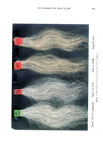
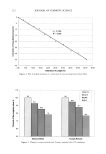
2000 ANNUAL SCIENTIFIC MEETING 149 MEADOWFOAM DERIVATIVES: TECHNOLOGICALLY ADVANCED COSMETIC INGREDIENTS Alan Wohlman, Ph.D. The Fanning Corporation, Chicago, Illinois The unique chemical structure of the Meadowfoam oil triglyceride has made possible the synthesis of exciting new compounds that have special applications for cosmetics. A series of dimethicone copolyol meadowfoam esters has been synthesized which synergistically unite the surface-active properties of silicone with the conditioning benefits of meadowfoam fatty acids. Presented as water-soluble (LIM-1), water-dispersible (LIM-3), and oil-soluble (LIM-2) forms, these esters have the remarkable ability to repair damaged hair. Experimental evidence includes x-ray microanalysis determinations to document penetration, electron micrographs to support structural repair (Fig. 1: "Cuticle Repair"), polarized light time-lapse photomicrography to substantiate restoration of functional behavior (Fig 2: "Repair and Reconstruction") and salon studies to confirm the aesthetic evaluations and conclusions. Having observed the reparative effects of dimethicone copolyol meadowfoamate with hair that had been relaxed and permanent waved, it was logical to test the ability of this special silcone- meadowfoam ester to repair hair damaged by permanent oxidative hair colors. Hair swatches were dyed using oxidative hair dye formulas containing from 0 to 2% dimethicone copolyol meadowfoamate. Hair fibers were pulled to the break point in a quantitative tensile testing apparatus. The average force required to break the hair increased with increasing concentrations of dimethicone copolyol meadowfoamate. The results show that the addition of this silicone ester of meadowfoam fatty acids to hair color formulations can help protect hair from the damaging effects of permanent hair color. Penetration of the LIMs into the hair fiber led to the postulate that it may well be capable of "carrying" other materials into the hair fiber. When added concomitantly with selected permanent hair colors, dimethicone copolyol meadowfoamate, at levels of 3 to 5%, demonstrated the ability to generate increased color intensity when compared to controls that did not contain the additive. Octyldodecyl meadowfoamate (Meadowester GME) results from the esterification of the natural triglycerides of meadowfoam with a branched-chain guerbet alcohol. This ester is a high molecular weight branched compound, in the form of a clear yellow liquid, that provides appreciable user benefits in a wide variety of important personal care products. Salon evaluations demonstrate significant improvement in the quality and aesthetics of hair following treatment with conditioners containing from 2 to 5% of the ester. The ability of octyldodecyl meadowfoamate to serve as a superfatting agent is particularly important in terms of treating dry scalp since the deposition of the long-chain unsaturated fatty ester should rapidly relieve the dehydrated tissue and thereby reduce irritation to and shedding of the affected area. Quite remarkably, the meadow foam guerbet ester demonstrates the properties of a non-occlusive moisturizer that has the ability to facilitate hydration of epidermal tissue without blocking the pores on the surface of the skin thereby allowing the skin to continue to "breathe" (Figs. 3 and 4). Meadowestolide results from new advances in organic synthesis by which an oligomeric ester is formed from the reactive self-condensation of meadowfoam fatty acids. Molecular structure has been characterized by NMR, HPLC, and GC/mass spectroscopy. In salon evaluations, meadowestolide provided statistically significant benefits including detangling, improved combability, and measurable improvement in fiber texture. Skin hydration studies, both NOVA and TEWL, document meadowestolide as an active moisturizing agent. Cosmetic "substantivity", or the ability to adhere to the negatively charged surface of skin and hair, results from the use of cationic quaternized meadowfoam derivatives that provide conditioning properties in a variety of personal care products. The meadowfoam quaternium, PEG-2 dimeadowfoam- amidoethylmonium methosulfate (Meadowquat HG), is a highly conditioning substantive compound that incorporates two long-chain, unsaturated fatty acid moieties in every molecule of the quat. When applied with semi-permanent hair colors at a level of 1 to 5%, PEG-2 dimeadowfoam-amidoethylmonium methosulfate provided meaningful benefits including improved pigment deposition, perceivable conditioning and greatly enhanced shine.

150 JOURNAL OF COSMETIC SCIENCE
Purchased for the exclusive use of nofirst nolast (unknown)
From: SCC Media Library & Resource Center (library.scconline.org)