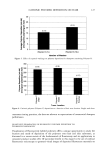
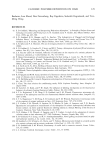
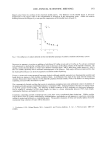
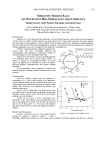
2000 ANNUAL SCIENTIFIC MEETING 153 SURFACTIN SODIUM SALT: AN EXCELLENT BIO-SURFACTANT FOR COSMETICS Tadashi Yoneda', Toshi Tsuzuki l, Eiji Ogata 2 and Yuichi Fusyo 3 •Showa Denko K.K. Central Research Laboratory, Chiba, Japan 2Showa Denko K.K. Specialty Chemicals Division, Kanagawa, Japan JShowa Denko America Inc., New York Introduction Suffactin, one of the most powerful suffactants, was fiest isolated from the culture broth of sevcral strains of Bacillus subtills in 1968(1) and the structure was determined (2,3,4,5). Since, many researches have been reported that such kinds of microorganisms secrete suffactin and it has good potential as a surfactant of special purposes. However, there has been little successful application to industry. The reason was that the productivity of surfactin of the microorganisms was too low to supply it to the market at a reasonable cosl. We have worked around this unique bio-surfactant for several years, and have successfully improved the microorganism and established a production method of surfactin sodium salt with a remarkably high yield. And we have also found its various excellent properties as a surfactant. With such a strong surface activity, we believe, it exhibits an outstanding possibility in various aspects for application to industhai use such as cosmetics, skin-care products, pharmaceuticals and general washing detergents. In this presentation, those properties of surfactin are reported with data including emulsion stability and low skin irritation. Experimental Materials. Surfactin sodiron salt was produced by fermentation of B. subtilis and purified in our laboratory. Human cultured model skin was purchased from Gunze. All other reagents were purchased from domestic suppliers. Male rabbits, aged 8-9weeks, were employed for primary skin irritation examination. Surface activity. Surfactants were dissolved in water and surface activity was measured by the plate method using automatic surface activity meter CBVP-Z (Kyowa kaimen kagaku) at room temperature. Prtmary skm trrttation m rabbtts. Surlactants were dissolved in water_ Each substance was closed-patched on the skin of the rabbits for 24 hours, and the skin was observed after 24, 48, 72 hours and 4, 5, 7, 10, 14 days. The erythema and edema observed were scored by the standards of Draze's method. Figure 1 A cheimcal stn•cture of surfacnn Z•60 ,o_ _.• 40 u) 20 I I I I I '-• Surfaorta Na -{•]- Tnto n X100 -- -• SLG -0- SDS r-'c _ ß 3•M I I I I i o o.o(3ol o OOl O.Ol o.1 1 lO lOO Conc•tradon (raM) Results and discussion Structure of Surfactin molecule. The typical chemical Figure 2. A comparison of the surface activity structure of surfactin is shown in Figure 1. It has a hydrophilic peptide-ring consisted of seven amino acids. L-glutamic acid and L-aspertic acid have •'o carboxyl

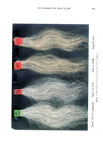
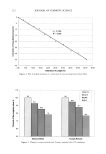
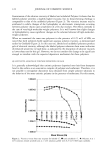
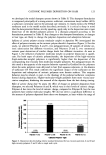
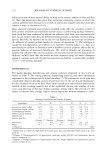
154 JOURNAL OF COSMETIC SCIENCE groups that carry aniouic charges. A long fatty acid residue builds up the hydmphobic domain. The chain configuration varies in length and branching. The major species has twelve outer-ting ca•oon atoms with branching at its end as shown in Figure 1. Our product is a mixture of sodium salts of surfacfin with slightly different andno acid arrangements and fatty acid chains. Strong surface activity. It was continned in our laboratory that the critical ndcelle concentration (CMC) of suffacfin sodium salt was 3 !xM. Figure 2 shows the decrease of surface tension of various suffactant aqueous solutions. Such a low CMC of surfacfin is one of the lowest values of all ever-known detergents. Compared to sodium dodecyl sulfate (SDS), CMC of surfactin is one thousand times lower than that of SDS. Generally, nonionic detergents have much lower CIVIC than aniouic or cafiouic ones. It is noteworthy that Surfactin has a lower CMC than Triton X100. High stability of surfactin emulsion. Sorfacfin eml•Srm is very stable. In this experiment, A five-ndlliliter of squarane was emulsified with the same volume of 0.1% suffactant solutions using a mechanical emulsifier, and then incubated at 80øC for 60 days. The results are shown in figure 3. Only surfactin emulsion remained after such a long severe incubation. Therefore it was continned that surfactin emulsion was stable even at high temperature. The high stability of surfactin emulsion is quite likely owing to its large molecular size. Its molecular weight is about one thousand Dalton. Compared to other softactanls, it is relatively large. The massive molecular size contributes to stabilizing the ndcelle, as it requires more energy to move the arranged suffactin molecules building the ndcelle than other detergents. Low skin irritation. The primary skin irritation of Figure 3. Squarane emulsion at 80øC after 60 days surfactin was evaluated in rabbits. Sodium lauroyl glutamate (SLG) and SDS were also evaluated as the reference substances. Each substance was closed-patched on the skin of the animals and the obsen•ed eq, thema and edema were scored. The degree of irritation was compared by P.I.I. (primary irritation index a sum of scores for each substance divided by the number of animals). The results are shown in figure 4. Surfacfin showed a significantly low P.I.I. It is noteworthy that no irritation was obsen'ed at all at the concentration of 2.5%, which is the expected normal concentration in cosmetics. These results indicate that suffactin is far from imtative. Surfactin sodium salt is an auiouic lipopeptide bio- suffactant produced by ndcmorganisms. It has a unique chendcal structure and shows a strong surface activity. The emulsion of surfacfin is very stable. It is supposed that the stability is caused by its massive structure. Furthermore, soffactin shows an extremely weak skin irritation. These properties suggest the use of suffacfin suitable for cosmetics. References 1. Arima, K., Kakinuma, A., and Tamura, G. Blochem. Biophys. Research Corn. 31 (3), 488 (1968) o ø'r• o•! 029 ß $u•aclin I• 0.75 2. Kakinuma, A., Hori, M., lsono, M., Tamura, G., and Figure 4. A comparison of the primary skin irritation Arima, K. Agr. Biol. Chem. 33 (6), 971 (1969) 3. Kakinuma, A., Sugino, H., Isono, M., Tamura, G., and Arima, K. Agr. Biol. Chem. 33 (6), 973 (1969) 4. Kakinuma, A., Hori, M., Sugino, H., Yoshida, L, Isono, M., Tamura, G., and Arima, K. Agr. Biol. Chem. 33 (10), 1523 (1969) 5. Kakinuma, A., Hori, M., Sogino, H., Yoshida, I., Isono, M., Tamurn, G., and Arima, K. Agr. Bioi. Chem. 33 (11), 1669 (1969)
Purchased for the exclusive use of nofirst nolast (unknown)
From: SCC Media Library & Resource Center (library.scconline.org)