284 JOURNAL OF COSMETIC SCIENCE Deet) under controlled laboratory conditions against Anopheles stephensi, Culex quinque- fasciatus, and Aedes aegypti. MATERIAL AND METHODS Reagent-grade Deet and isopropyl alcohol were purchased from Aldrich Chemical Com- pany (St. Louis, MO). MNDA was prepared by Parrmal Industries (Cuernavaca, Mexico) according to the method described by Steltenkamp et al. (6). EXPERIMENTAL Uninfected A. stephensi, C, quinquefasciatus, and A. aegypti were employed in this study. The eggs were hatched, and larvae were reared in muslin-covered plastic trays (50 cm x 19 cm x 15 cm) containing fresh tap water supplemented with a mixture of yeast and dog biscuit. This mixture was changed daily. Pupae were transferred with the aid of a dropper to plastic boxes covered with mosquito netting. Upon emerging, the male mosquitoes were removed and the female mosquitoes were maintained on a diet of 10% sucrose for 4-10 days. Feeding was suspended 24 hours prior to the start of the test. After giving informed consent, eight healthy adult males (ages 26-56 yrs) were enrolled in the study. However, because only four mosquito test chambers were available for each test session, only four subjects participated on a given test day. For convenience, one species of mosquito was bred at a time and used to complete the evaluation of both repellents. Three separate test sessions, separated by a two-day washout period, were used for each repellent. Finally, to prevent the repellents from interfering with each other, only one repellent was tested during a test session. To establish a uniform level of cleanliness, the volunteers washed their hands and forearms for one minute with unfragranced soap. The experiment was initiated when a gloved assistant applied 2 ml of the insect repellent (1% Deer or MNDA in isopropyl alcohol) to a randomly assigned hand/forearm and distributed it over the entire skin surface. The contralateral hand/forearm received the vehicle. After ten minutes (to permit evaporation of the isopropyl alcohol), each volunteer inserted his hands into a test chamber (31 cm x 31 cm x 31 cm) containing 50 nulliparous, 4-10-day-old, female mosquitoes (8). A different assistant, unaware of treatment assignments, recorded the number of insects landing/probing per five-minute test session. However, to prevent the mosquitoes from completing their feeding, they were shaken off (8). Once every hour, for a total of eight hours, the hands and arms were re-inserted into the insect chamber and exposed to the insects for five minutes. Between the challenges, the volunteers were permitted to perform light clerical duties but were restricted from washing their hands. Following the completion of each eight-hour test, the volunteers washed their hands/ forearms with soap to remove residual insect repellent. Since the three mosquito species exhibit vastly different feeding schedules (9), the experiments were conducted during species-specific peak feeding periods, namely, 18:00 for A. stephensi, 20:00 for C. quinquefasciatus, and 07:00 for A. aegypti. Although A. stephensi is recognized as a nocturnal feeder (9), the species used in this study was crepuscular, showing marked activity at dusk. Similar findings were reported by Reisen and Aslamkham (10) for Ao stephensi in Pakistan.

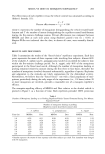
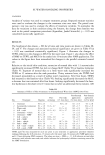
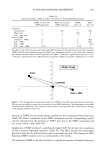
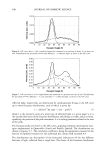
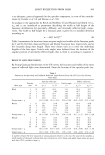
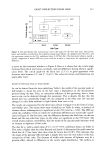
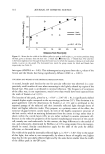
MNDA VS DEET IN MOSQUITO REPELLENCY 285 The effectiveness of each repellent versus the vehicle control was calculated according to Abbott's formula (11): Percent effectiveness - C-T ---x 100 where C represents the number of mosquitoes biting/probing the vehicle-treated hand/ forearm and T the number of insects biting/probing the repellent-treated hand/forearm during the five-minute challenge session. Percent effectiveness was compared between MNDA and Deet at each time point using Student's paired t-test (o• = 0.05). A Shapiro-Wilks test indicated that the data, in almost all cases, were normally distrib- uted. RESULTS AND DISCUSSION Table I summarizes the results of the "forced-choice" repellency experiment. Each data point represents the mean of three separate trials involving four subjects. Almost 60% of the available A. stephensi and C. quinquefasciatus landed on or probed the subjects' skin within the five-minute challenge period. For A. aegypti, only 40% of the mosquitoes participated in the blood meal search. Although the number of mosquitoes landing or probing remained relatively constant during the first three to four hours, thereafter the numbers of mosquitoes involved decreased substantially, regardless of species. Repletion and adaptation to the stimulus are likely explanations for the diminished activity. Nevertheless, we believe that the "forced-choice" test with a fixed population of mos- quitoes, particularly during the early stages of the experiment (i.e., •4 hours) where 20 or more mosquitoes are involved, provides a reasonable test of a mosquito repellent's efficacy. The mosquito-repelling efficacy of MNDA and Deet relative to the alcohol vehicle is plotted in Figure 1 as a function of time. Both repellents provided 100% protection Table I Number of Mosquitoes Landing on or Probing Repellent/Vehicle-Treated Forearms During Five-Minute Exposure Period* Number of mosquitoes landing or probing (Repellent-treated skin/vehicle-treated skin) A. stephensi C. quinquefasciatus A. Aegypti Time (hr) MNDA Deet MNDA Deet MNDA Deet 1.0 0/29 0/31 0/28 0/29 0/19 1/23 2.0 0/24 0/29 0/27 0/26 0/18 5/22 3.0 0/26 2/26 0/27 1/25 1/17 6/21 4.0 0/23 4/27 1/23 3/23 1/18 7/16 5.0 1/20 4/24 1/21 3/20 2/15 10/14 6.0 1/19 6/23 2/16 4/19 7/15 13/13 7.0 1/20 7/21 2/13 3/15 8/13 12/14 8.0 2/17 7/19 2/11 3/13 9/12 12/13 * Results represent the means of three separate trials (four subjects per trial). Test chambers were charged with 50 mosquitoes.
Purchased for the exclusive use of nofirst nolast (unknown)
From: SCC Media Library & Resource Center (library.scconline.org)