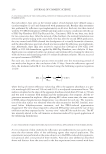
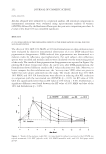
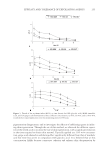
JOURNAL OF COSMETIC SCIENCE 250 IN VIVO EVALUATION OF THE EXFOLIATING EFFECTS OF FORMULATIONS ON DHA-INDUCED SKIN PIGMENTATION For each subject, four sites on the ventral surface of each forearm were defi ned using a circular template (1 cm2) and demarcated with permanent ink. Baseline skin assessment was performed by refl ectance spectrophotometry on all sites. Each site was then treated with the 5% DHA formulation (200 μl) and kept under occlusive conditions with the use of Hill-Top Chambers (Hill Top Research Inc., Cincinnati, OH) for one hour, once daily for two consecutive days. After the removal of the chambers, the residual formulation was removed by gently wiping with cotton balls. One day after the second DHA application, the sites treated with DHA showed the development of a visually brownish coloration, and the skin refl ectance spectrum of each site was recorded by refl ectance spectrophotom- etry. Afterwards, three skin sites received a topical dose (200 μl) of 10% GLY, 10% MAN, or 10% GA formulation, applied by Hill-Top Chambers, once daily for 12 days. Application was completed within two minutes and terminated by cleaning the skin sites with cold water and neutralizing with 1% sodium bicarbonate solution. One site received no topical treatment (CONTR). For each site, skin refl ectance spectra were recorded over the monitoring period of two weeks that began at the conclusion of the 12 days. From the refl ectance spectral data, the melanin index (M.I.) was obtained using the following equation (equation 1) (20): § · = + ¨ ¸ © ¹ 650 700 1 1 M.I. log log 0.015 R R (1) where the log of inverse refl ectance values (log 1/R) is the apparent absorbance at a spe- cifi c wavelength (650 nm and 700 nm) and 0.015 is an adjusted instrumental factor. This index is calculated as the slope of the apparent absorbance levels from 650 nm to 700 nm and was used to measure both melanin and the melanogenic dose response. All the re- gions were measured in triplicate. After plotting M.I. values versus time, the time course of DHA-induced pigmentation disappearance was obtained for each site. The regenera- tion of the skin surface was obtained when the skin returned to the M.I. baseline, mea- sured before dihydroxyacetone treatment, and the DHA-induced pigmentation disappeared. The time (days) required to obtained MI baseline indicated the rate of skin exfoliation and was expressed as the “recovery time” value (RT) for each skin site. The RT was inversely related to the cell turnover acceleration induced by topical application of the exfoliating formulations. IN VIVO EVALUATION OF SKIN ERYTHEMA INDUCED BY TOPICAL APPLICATION OF THE FORMULATIONS In vivo evaluation of skin erythema by refl ectance spectophotometry was used to deter- mine the skin-irritant effect of the exfoliating agents after topical application. The experiments were performed on the same subjects as in the DHA-induced skin pigmenta- tion protocol after a rest period of three months. Nine skin sites (defi ned as described above and distinct from the sites used in the fi rst experiment) were treated with three

EFFICACY AND TOLERANCE OF EXFOLIATING AGENTS 251 different concentrations (10%, 30%, and 50% w/w) of GLY, MAN, and GA formula- tions (200 μl) under occlusion conditions by Hill-Top Chambers for 3–15 minutes depending on the subject’s sensitivity. After the chambers’ removal, the cutaneous sites were washed by means of cold water-soaked gauze pads. For each skin site the induced erythema was monitored for 50 hours by refl ectance spectrophotometry. Since erythema is due to an increase in blood count in the subpapillary plexus of the skin, erythema index (E.I.) values were calculated by subtracting the logarithm of inverse refl ectance (log 1/R) values at 510 nm and 610 nm (mainly due to melanin absorption) from the sum of log 1/R values at 540 nm, 560 nm, and 580 nm, which represent the wave- lengths of hemoglobin absorption peaks (equation 2) (19). All the regions were mea- sured in triplicate. ª § · § ·º = + + + ¨ ¸ ¨ ¸» « © ¹ © ¹¼ ¬ 1 1 1 1 1 E.I. 100 log 1.5 log log 2 log log R560 R540 R580 R510 R610 (2) To evaluate the time course of skin erythema, E.I. baseline values were subtracted from the E.I. values obtained after application of the formulations, to calculate Δ.E.I. values. For each site, plotting Δ.E.I. versus the time the area under the curve was computed us- ing the trapezoidal rule to obtain AUC (area under curve) dimensionless index values directly related to the degree of skin erythema. IN VIVO EVALUATION OF THE PHOTOSENSITIZING EFFECT INDUCED BY TOPICAL APPLICATION OF THE FORMULATIONS In order to determinate the photosensitizing effect of the exfoliating agents, the skin ery- thema induced after UVB irradiation was evaluated in the same group of subjects par- ticipating in the previous studies, after a rest period of three months. For each subject, four skin test sites were defi ned on the ventral surface of each forearm. Three sites received 200 μl of 10% GLY, 10% MAN, or 10% GA formulations, applied once daily for four consecutive weeks. As reported before, the acid applications were completed within two minutes and termination was performed by cleaning the skin sites with cold water and neutralizing with 1% sodium bicarbonate solution. One site was used as control (no topical treatment). At the end of the fourth week, all sites were exposed to a UVB irra- diation dose, corresponding to the minimal erythema dose (MED), by using an ultravio- let lamp, model UVM-57 (UVP, San Gabriel, CA) that emitted radiation in the range of 290–320 nm, with an output peak at 302 nm. The fl ux rate measured at the skin surface was 0.80 mW cm-2. For each skin site the in- duced erythema was measured by refl ectance spectrophotometry (equation 2) twenty-four hours after the irradiation exposure, and the photosensitivity was expressed as the per- centage calculated from erythema index values using equation 3: T E.I. E.I.C Photosensitivity% 100 E.I.C = × (3) where E.I.C is the erythema index of the no-treatment skin site and E.I.T is the erythema index of the sites treated with the formulations.
Purchased for the exclusive use of nofirst nolast (unknown)
From: SCC Media Library & Resource Center (library.scconline.org)