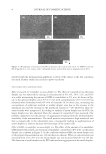
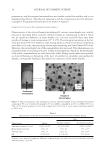
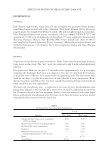
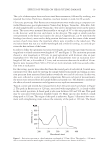
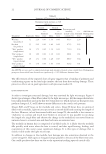
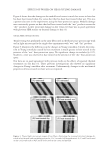
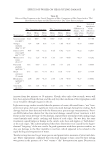
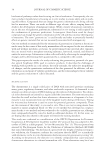
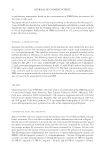
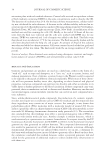
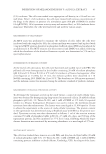
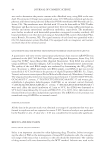
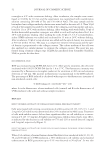
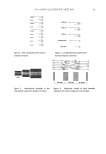
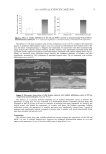
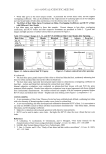
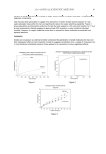
JOURNAL OF COSMETIC SCIENCE 10 preparation, and the prepared nanoemulsion was further studied for stability and in vivo depigmenting effi cacy. The physical appearance and the transmission electron photomi- crograph of the prepared nanoemulsion are shown in Figure 6. STABILITY OF THE SELECTED NANOEMULSION FORMULA Characteristics of the selected formula including pH, viscosity, mean droplet size, and the amount of artocarpin before and after stability testing are summarized in Table I. There was no signifi cant difference in mean droplet size, viscosity, and pH values after three months of storage at room temperature (35° ± 3°C). The artocarpin remaining in the for- mula was about 93% w/w. However, after storing under accelerated conditions, employing seven heat-cool cycles, the percentage of artocarpin remaining was lower (about 86% w/w). Moreover, the mean droplet size of the nanoemulsion was increased. This phenomenon cor- responded with its decreasing viscosity. Unlike microemulsions, which are thermodynam- ically stable, nanoemulsions are only kinetically stable. Being stored under stress possibly accelerated thinning or disruption of the layer of adsorbed co-emulsifi er surrounding the droplet, consequently leading to fl occulation or coalescence of the small droplets. Figure 6. Physical appearance and transmission electron photomicrograph of the nanoemulsion formula consisting of 8% w/w ceteareth-10 (emulsifi er), 5% w/w GMS (co-emulsifi er), 41.6% w/w IPM, 0.05% w/w TEA, 0.03% w/w α-tocopherol, 0.03% w/w carbopol 940, 0.02% w/w A. incisus extract, and water adjusted to 100% w/w. Table I Characteristics of the Selected Nanoemulsion Formula Before and After Stability Testing Characteristic Before After Normal condition Accelerated condition Artocarpin content (% w/w) 0.014 ± 0.007 0.013 ± 0.003 0.012 ± 0.002 Mean droplet size (nm) 325 ± 15 347 ± 19 453 ± 27* Viscosity (cps) 749 ± 17 726 ± 19 673 ± 20* pH 5.52 ± 0.01 5.52 ± 0.01 5.53 ± 0.01 Student’s t-test showed a signifi cant difference of mean droplet size and viscosity between before-and-after stability testing, * p 0.05.

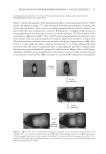
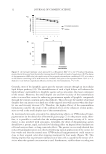
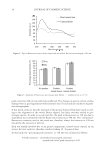
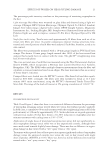
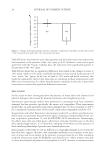
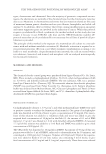
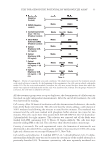
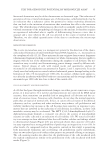
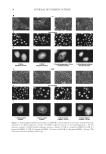
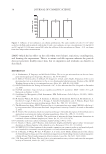
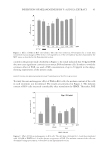
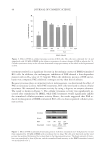
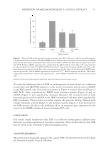
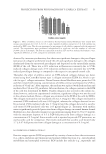
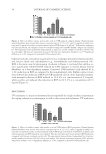
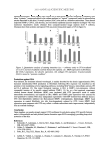
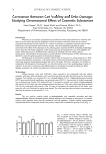
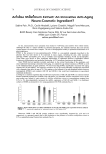
REDUCTION OF HYPERPIGMENTATION BY A. INCISUS EXTRACT 11 DEPIGMENTING EFFICACY OF THE SELECTED NANOEMULSION FORMULA IN UVB-INDUCED HYPERPIGMENTATION OF C57BL/6 MICE Figure 7 shows photographs of the depigmenting effect on the dorsal skin of the C57BL/6 mouse. As shown in Figure 7C, after treatment with the nanoemulsion containing the extract for four weeks, a greater decrease in hyperpigmentation was observed when com- pared with the extract prepared as a solution. Furthermore, a strongly visible decrease in hyperpigmentation was observed at week 6, as shown in Figure 7D. The melanin values measured by a Mexameter MX® 18 at the UV-induced hyperpigmented dorsal skin areas from the day after tanning through the six weeks of application are shown in Figure 8A. The nanoemulsion containing the extract decreased the degree of pigmentation (ΔM-value) by 84 ± 4 units while the extract solution decreased by 51 ± 3 units (Figure 8B). This indicated that the extract formulated into a nanoemulsion provided a higher skin- depigmenting potential than that prepared in solution form. Higher effi cacy of the nano- emulsion is probably due to destabilization of the bilayer structure of the stratum corneum by permeation enhancers like IPM, ceteareth-10, and the GMS contained in the formula. Figure 7. Effect of the selected nanoemulsion formula containing 0.02% w/w extract or the solution con- taining 0.02% w/w extract on improvement of UVB-induced hyperpigmentation in C57BL/6 mouse skin. All photographs were from the same animal: (A) before UV radiation (B) initial pigmentation after UV ir- radiation (C,D) after topical application for four weeks and six weeks, respectively and (E) after application had been stopped for four weeks.
Purchased for the exclusive use of nofirst nolast (unknown)
From: SCC Media Library & Resource Center (library.scconline.org)