JOURNAL OF COSMETIC SCIENCE 34 microtiter plate with each studied substance. Control cells received an equivalent volume of fresh medium containing DMSO in the same concentrations used to dissolve the OB. The duration of incubation was 24 h. On the basis of these measurements, cellular viabil- ity was calculated for each substance. A decrease in the cellular viability indicated an in- crease in toxicity. Cell proliferation was conducted by using a hemacytometer (Veeder-Root, Elizabeth Town, NC) and a light microscope (Zeiss, New York). A modifi cation of the method was used for counting the cells (10). Briefl y, at the end of 48 hours all the con- tents from the fl ask were removed and the cells were washed with DPBS once for one minute. DPBS was removed and 1 ml of trypsin was added to the fl ask. The fl asks were then placed in an incubator at 37°C for two minutes. The fl ask was gently shaken and the cells were detached with the help of a cell scraper. An amount of 20 μl of this solution was taken and added to a hemacytometer. Cells were counted in each of the four grids and the average of that was taken. The fi nal result would be an average number of 104 cells per ml. Statistical analysis. Data obtained were analyzed using descriptive statistics and single- factor analysis of variance (ANOVA), and were presented as mean value ± S.D. RESULTS AND DISCUSSION Cosmetic and personal care products are used on a daily basis, either in the forms of a “wash off,” such as soaps and shampoos, or a “leave on,” such as creams, lotions, and makeup preparations. Over a lifetime, a person living in the Western world is expected to be exposed to thousands of different chemicals repeatedly. While most of these chemi- cals will not penetrate healthy intact skin, depending on their chemical and physical properties, numerous compounds can partition into the skin and either accumulate in its viable layers or further penetrate to the blood circulation. If these compounds carry toxic potential, their accumulation can lead to diseases and disorders. Moreover, our skin and our internal organs contain metabolic systems that can convert an inert compound into a toxic substance. Since, unlike pharmaceutical grade compounds, the production of a cosmetic ingredi- ent does not require strict conditions such as GMP, the residuals and the impurities that these ingredients may contain are of major concern. For example, it was shown that polyethylene glycol (PEG) molecules with a molecular weight of around 200 Da can induce a genotoxic effect in chinese hamster ovarian (CHO) cells after metabolic activa- tion with S9 following chromosome aberration study protocols (11). The researchers also concluded that their fi ndings may refl ect a potential mutagenic risk of PEG de- rivatives with similar molecular sizes. Another example is sodium benzoate, which is used extensively as a preservative in cosmetic formulations. In a report issued by the EU Commission Scientifi c Committee, the SCCNFP, in 2002 (12), the Committee reviewed genotoxicity data generated on sodium benzoate. This compound demonstrated posi- tive results for genotoxicity in a CHO cell line without metabolic activation. Although chromosomal aberrations were not induced when tested in vivo in rats, a dominant le- thal assay with sodium benzoate in rats did show a genotoxic effect. Based on these data, the committee concluded that sodium benzoate carries a potential genotoxic risk and called for the generation of additional studies to either confi rm these observations or rule them out.

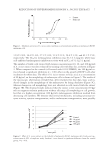
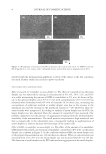
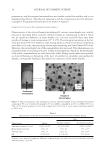
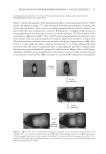
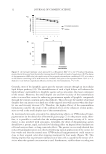
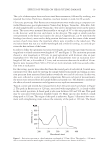
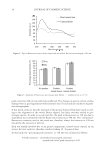
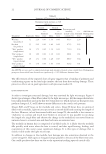
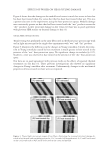
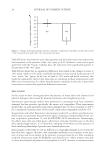
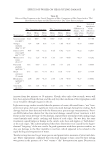
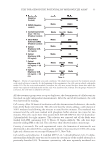
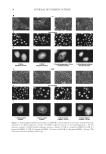
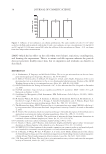
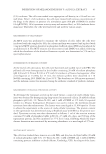
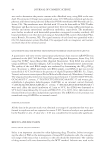
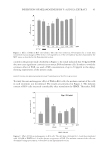
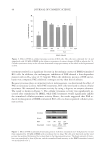
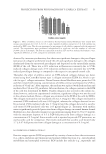
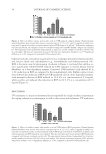
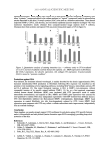
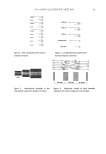
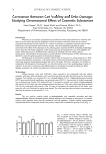
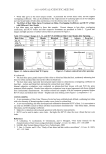
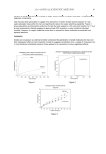
TEST FOR GENOTOXIC POTENTIAL BY MICRONUCLEI ASSAY 35 Structural aberrations may be of the chromosome or chromatid type. The induction of generation of two or more homologous sets of chromosomes, called polyploidy, may be an indication that a substance carries the potential to induce numerous aberrations that can lead to the initiation of mutations that transform the cells to the cancerous stage. The identifi cation of aberrations in this study is normally conducted by obser- vational assessment of the morphological changes in the nucleus. It therefore requires an experienced individual who is capable of differentiating between a state that is unusual and a state wherein the cell was arrested in the course of normal division. Therefore, we also added quantifi cation of the data to corroborate the microscope observations. MICRONUCLEI FORMATION The in vitro micronucleus assay is a mutagen test system for the detection of the chemi- cally induced formation of small membrane-bound DNA fragments, i.e., micronuclei in the cytoplasm of cells (13,14). These micronuclei may originate from acentric fragments (chromosome fragments lacking a centromere) or whole chromosomes that are unable to migrate with the rest of the chromosomes during the anaphase of cell division. The mi- cronucleus assay is widely used for monitoring genetic damage caused by different sub- stances. Typical images of cells with stained nuclei and quantitative analysis of micronuclei in cell populations are presented in Figures 2 and 3, respectively. It can be clearly seen that both positive controls induced substantial genetic damage leading to the formation of 140–170 micronuclei per 1000 cells. In contrast, cellular nuclei appear in- tact after the incubation with OB at both test concentrations and the average number of micronuclei per 1000 cells was close to that of the control cells. CELLULAR VIABILITY AND PROLIFERATION A cell that had gone through mutational changes can either go into senescence or apo- ptosis, or it may survive. If it survives and mutations are not corrected by DNA repair enzymes, these mutations can possibly lead to unregulated cell division and the cre- ation of cancerous tissue. Cancerous cells, therefore, do not obey the normal apoptotic paths that are typical of normal cells. In fact, in cancer cells activation of biochemical substances such as cytokines and other mediators may enhance cell proliferation and viability markers may increase as the cell becomes more sensitive in response to pro- moters that are involved in the induction of cell division. In addition, in these cells metabolic activity may be accelerated. The MTT ((3-(4,5-dimethylthiazol-2-yl)-2,5- diphenyltetrazolium bromide, a tetrazole) test detects the activity of mitochondrial enzymes in viable cells and is an indication of cell viability (15). We tested cell viabil- ity in an attempt to draw additional data that will further validate our fi ndings related to chromosomal changes (Figure 4) It was previously shown that a positive cell viabil- ity assay response has a strong probability of predicting carcinogenicity in vivo (16). In other words, if a compound (such as the positive controls in this study) is generating both micronuclei formation and accelerating cell proliferation and/or metabolism, there are two related pieces of evidence that point to its potential of being a carcinogen. The cell-counting studies also show that the proliferation of the cells incubated with the studied compound are similar to the proliferation of the cells incubated with fresh media (Figure 5).
Purchased for the exclusive use of nofirst nolast (unknown)
From: SCC Media Library & Resource Center (library.scconline.org)