JOURNAL OF COSMETIC SCIENCE 4 99.5% GC plant cell culture tested, Merck, Darmstadt, Germany). At the fi nal concen- tration, the amount of DMSO used was not more than 0.1% v/v. The control cells were treated with 0.1% v/v DMSO. Kojic acid (Sigma-Aldrich) of various concentrations (10, 15, 25, 40, 80, and 100 μg/ml) was used as a positive marker. MELANIN CONTENT ASSAY After treatment for four days, the treated cells were trypsinized with trypsin EDTA (GIBCO, Ontario, Canada) and washed twice with phosphate buffer saline (PBS). Then the collected cells were lysed in 1 N NaOH containing 10% v/v of DMSO and heated at 80°C for 1 h (12). Finally, the amount of melanin was determined from the absorbance at the wavelength of 490 nm by using a microplate spectrophotometer (model Spectra Count®, Perkin Elmer, Connecticut, USA). The percentage of inhibition was calculated from the reduction in the absorbance value of the treated cells compared with that of the control adjusted to 100%. All experiments were performed in triplicate. CELL VIABILITY MEASUREMENT A hemocytometer was used for counting viable cells that were not stained with the blue dye of a trypan blue solution (R&D grade, Sigma-Aldrich). A microscopic technique was also used to investigate the phenotypic appearance of the melanocyte cells before and after treatment with the extract. NANOEMULSION FORMULATION Nanoemulsions containing A. incisus extract were prepared by the phase inversion tem- perature (PTT) method with some modifi cations (13,14). The water phase was composed of ceteareth-10 (Brij 56®, nonionic emulsifi er, Sigma-Aldrich), 0.05% w/w trietha- nolamine (TEA, Riedel-de Haen, RdH Laborchemikalien GmbH & Co. KG, Seelze, Germany), 0.03% w/w carbopol 940 (BASF, Ludwigshafen, Germany), and deionized water. The oil phase contained the self-bodying agent glyceryl monostearate (GMS, co- emulsifi er, Huls AG, Witten, Germany), 0.03% w/w α-tocopherol (Cognis, Düsseldorf, Germany), 41.6% w/w isopropyl myristate (IPM, Cogins), and 0.02% w/w A. incisus extract. The concentration of the extract used was about six times the IC50 value of the melanogenesis-inhibitory activity of the extract, according to the above-mentioned study. For preparation processes, ceteareth-10 was dissolved in the required amount of deionized water and preheated to 75°C before being added to the oil phase. In the oil phase, the A. incisus extract was fi rst dissolved in IPM. The obtained solution was then mixed with other compositions of the oil phase, followed by heating to 70°C. Afterwards, the two phases were homogeneously mixed using an Ultra-Turrax T25 homogenizer (Janke & Kunkel IKA Labortechnik, Staufen, Germany) for 5 min at a rate of 8,000 rpm to form coarse o/w emulsions. The resultant emulsions were heated to a specifi c phase-inversion temperature (90°C), according to our preliminary study, at which point w/o emulsions were formed. Then, the hot emulsions were cooled rapidly in an ice bath without a high input of mechanical energy, resulting in fi nely dispersed o/w emulsions. Carbopol 940

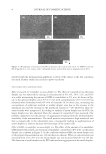
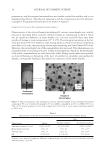
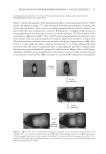
REDUCTION OF HYPERPIGMENTATION BY A. INCISUS EXTRACT 5 was added to the fi nely dispersed emulsion. Finally, TEA was added to neutralize the carbopol polymer. The effect of the contents of the emulsifi er and co-emulsifi er on the droplet size was also investigated in this study. The contents of the emulsifi er (4–16% w/w) and co-emulsifi er (1–8% w/w) were varied, and the formula that provided the smallest droplet size would be selected for stability studies and in vivo studies of UVB-induced hyperpigmentation in C57BL/6 mice. CHARACTERIZATION OF THE FORMULATED NANOEMULSIONS Morphology. The morphology of the nanoemulsions was observed using transmission elec- tron microscopy (TEM, Technai F20, Philips, Eindhoven, The Netherlands). To perform the TEM observations, the nanoemulsions were diluted with deionized water. A drop of the diluted nanoemulsions was then applied to carbon-coated grids. Two minutes later, the excess was drawn off with fi lter paper. A saturated uranyl acetate aqueous solution was used as a staining agent. After air drying, the morphology of the sample was observed by TEM at a magnifi cation of 370 kx. Droplet size analyses. The mean droplet size and polydispersity value of the nanoemulsions were analyzed by photon correlation spectroscopy (PCS), employing a Zetasizer (Model Nano ZS90, Malvern instruments Ltd., Malvern, Worcestershire, UK). An aliquot of the nanoemulsions was re-suspended in water. Measurements were performed at a fi xed angle of 90° to the incident light, and data were collected over a period of 3 min. Three mea- surements were performed separately on each prepared sample. Viscosity determination. The viscosity of the nanoemulsions was determined by a viscometer (model DV-III, Brookfi eld, Arizona) equipped with a cone and plate (plate diameter 40 mm, cone angle 4°). Three measurements were carried out at a temperature of 30°C with a torque of 10 rpm and were performed separately on each prepared sample. pH measurement. The pH of the nanoemulsions was measured using a pH meter (Model Delta 320, Mettler Toledo, Guangzhou, China). Three measurements were made sepa- rately on each prepared sample. STABILITY OF THE SELECTED NANOEMULSION FORMULA CONTAINING A. INCISUS EXTRACT The stability of the nanoemulsions containing A. incisus extract was studied under normal and accelerated conditions. For the normal condition, the selected formula was stored at room temperature (35° ± 3°C, during summer at Phitsanulok Province, Thailand) for three months. For the accelerated condition, the nanoemulsion was subjected to seven heat-cool cycles (4°C for 24 h and alternated to 45°C for another 24 h). The quantity of artocarpin was determined by the HPLC method described above. Moreover, the physical appearances of the nanoemulsions were examined in terms of viscosity, droplet size, and pH value. IN VIVO STUDY ON THE DEPIGMENTING EFFICACY OF THE SELECTED NANOEMULSION FORMULA IN UVB-INDUCED HYPERPIGMENTATION OF C57BL/6 MICE Three male C57BL/6 mice (National Laboratory Animal Centre, Mahidol University, Bangkok, Thailand), aged fi ve weeks and weighing 20–25 g, were used. The mice were
Purchased for the exclusive use of nofirst nolast (unknown)
From: SCC Media Library & Resource Center (library.scconline.org)