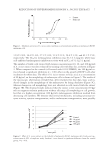
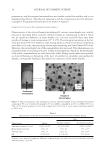
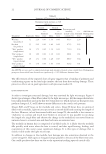
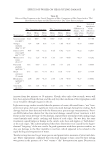
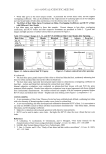
JOURNAL OF COSMETIC SCIENCE 6 housed on sawdust, three per cage, with free access to food and tap water. Room illumi- nation was on an automated cycle of 12 h darkness, and room temperature was main- tained at 25° ± 2°C. They were acclimatized to the laboratory conditions for at least one week prior to the experiments. UVB-induced hyperpigmentation was induced on the backs of the C57BL/6 mice by fol- lowing previous studies (15,16) with modifi cation. The mice were anesthetized with 5.47 g/ml solution of pentobarbital sodium (0.8 ml/kg). The back hair of the animal was shaved with a razor in the tail-to-head direction without damaging the skin. A bank of fi ve fl uorescent sunlamps (Toshiba FL8BLB, Japan) emitting rays between 275 and 305 nm, with a peak at 305 nm, was used as a UVB source. The lamp-to-skin distance was 30 cm. Two separate areas (2 × 2 cm) on the back of each animal were irradiated with 91.4 J/cm2 per exposure from the UVB lamps for ten days. The formulated nanoemulsion was topi- cally applied to one of the irradiated areas twice a day for six weeks, while the aqueous solution of the extract (0.02% w/w) was applied to the other one. The skin color of the treated area was evaluated by a Mexameter MX® 18 (Courage and Khazaka Electronic GmbH, Cologne, Germany). Once every week from the beginning of sample applications, the degree of depigmentation was evaluated as the melanin value (M), estimated as follows: ' M=M (at day 0) M(at each day measured) The M value expresses the melanin value or degree of hyperpigmentation and the high value of ΔM indicates the depigmenting effi cacy of the formula. STATISTICAL ANALYSIS A Student’s t-test was used for comparison between the averages of two independent groups. A p-value of equal to or less than 0.05 was considered statistically signifi cant. RESULTS AND DISCUSSION QUANTITY OF ARTOCARPIN IN THE EXTRACT The appearance of A. incisus extract was a yellow powder. According to the HPLC method, the amount of artocarpin in the extract was determined to be 44.5 ± 0.1% w/w. The obtained result corresponded with that of our previous study, indicating 45.2 ± 0.5% w/w of artocarpin in the extract (5). IC50 VALUE OF MELANOGENESIS-INHIBITORY ACTIVITY OF THE EXTRACT IN MOUSE MELANOCYTE CELLS The A. incisus extract exhibited a dose-dependent inhibition of melanin production in B16F1 cells, as shown in Figure 1. At concentrations of 10, 15, 25, 40, 80, and 100 μg/ ml of A. incisus extract, the percentage of melanin reduction compared to the control was

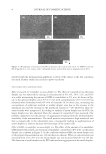
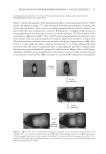
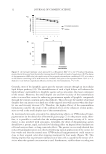
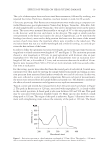
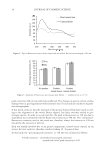
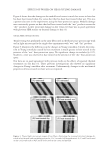
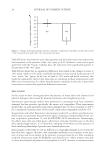
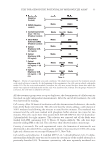
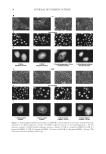
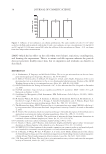
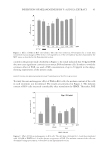
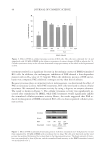
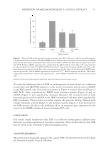
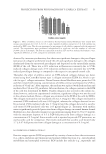
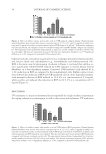
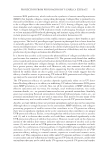
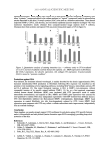
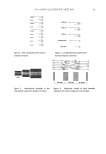
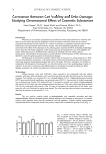
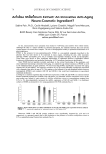
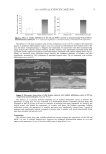
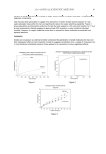
REDUCTION OF HYPERPIGMENTATION BY A. INCISUS EXTRACT 7 12.9 ± 2.9%, 18.4 ± 1.6%, 27.5 ± 3.0%, 51.9 ± 2.1%, 59.6 ± 3.3%, and 62.1 ± 2.5%, respectively. The IC50 for melanogenesis inhibition was 30.2 ± 2.4 μg/ml, while kojic acid exhibited melanogenesis-inhibitory activity with an IC50 of 51.4 ± 5.1 μg/ml. The number of viable cells treated with various concentrations (10, 40, and 100 μg/ml) of A. incisus extract was also evaluated by staining cells with blue dye, as shown in Figure 2. When compared to the control (cell treated with 0.01% DMSO), the 100 μg/ml ex- tract showed a signifi cant inhibitory (p 0.01) effect on the growth of B16F1 cells after incubation for three days. The effect of A. incisus extract or kojic acid, at a concentration of 40 μg/ml, on the morphology of melanocyte cells is shown in Figure 3. The results of the microscopic observations revealed that, after treatment for four days, kojic acid in- duced changes in the morphology of the melanocytes by losing dendrites (Figure 3C), whereas changes in cell morphology were not observed in cells treated with the extract (Figure 3B). The obtained results indicated that the extract at low concentration (40 μg/ ml) can suppress melanin production without affecting cell morphology or cell growth, but that at a higher concentration (100 μg/ml), melanogenesis inhibition resulted from decreasing cell numbers. We theorize that several mechanisms, including tyrosinase en- zyme activity, tyrosine transportation, and/or melanosome transportation, were possibly Figure 1. Inhibitory activities of A. incisus extract and kojic acid on melanin synthesis in melanocyte B16F1 melanoma cells. Figure 2. Effect of A. incisus extract on the viability of melanocyte B16F1 melanoma cells. Each point rep- resents mean ± S.D. of triplicate study. Student’s t-test showed a signifi cant difference from the control group, ** p 0.01.
Purchased for the exclusive use of nofirst nolast (unknown)
From: SCC Media Library & Resource Center (library.scconline.org)