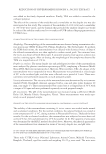
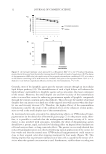
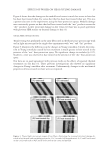
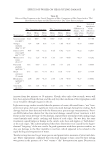
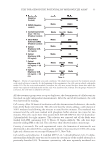
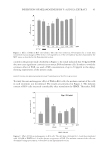
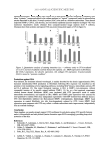
JOURNAL OF COSMETIC SCIENCE 52 overnight at 4°C with continuous shaking. After incubation, the samples were centri- fuged at 10,000g for 10 min and the supernatant was neutralized with neutralization solution containing 200 mM of Tris and 150 mM of NaCl. The assay sample and the biotinylated anti-collagen antibody solution were mixed well in the ratio of 1:9. Then 50 μl of each of the samples was added to the wells of the collagen-coated microplate and incu- bated for 1 h at 28°C with moderate shaking. After washing with wash buffer, 50 μl of Avidin-horseradish peroxidase conjugate was added to each well and incubated for 1 h at 28°C with moderate shaking. After washing the wells, 50 μl of 3,3′,5,5′-tetramethylben- zidine (TMB) substrate was added and incubated for 15 min at 28°C without shaking. After incubation, 50 μl of a stop solution was added and the optical density was measured at 450 nm within 10 min. The assay is a competitive enzyme immunoassay and the opti- cal density is proportional to the collagen content. The culture medium of the cells was also analyzed in a similar manner to estimate the collagen content. The assay was per- formed using a human collagen type I ELISA kit purchased from CosmoBio (Carlsbad, USA) as per the kit data sheet. ROS INHIBITION ASSAY ROS was estimated using DCFH-DA dye (12,13). After specifi c treatment, the cells were incubated with 0.002% DCFH-DA dye for 1 h at 37°C. The fl uorescence intensity was measured by a fl uorescence microplate reader set for excitation at 485 nm and emission detection at 520 nm. The increase in fl uorescence is proportional to the ROS induced. The percentage of ROS induced is calculated with respect to the fl uorescence intensity of non-irradiated control cells: % ROS enhanced = {[100/A] * B} − 100 where A is the fl uorescence of non-irradiated cells (control) and B is the fl uorescence of UVB-irradiated cells with and without sample treatment. RESULTS EFFECT OF EMBLICA EXTRACT ON NORMAL HUMAN DERMAL FIBROBLAST VIABILITY Cells were treated with varying concentrations of emblica extract (0.125, 0.25, 0.5, 1, and 2 mg/ml). Cell viability was determined after 24-h incubation by NRU assay. Treatment of cells with emblica extract did not have signifi cant effect on cell viability at a concen- tration of 0.125–0.5 mg/ml. At higher concentrations, emblica extract had a toxic effect, as indicated by the decrease in cell viability to 67% and 42% at treated doses of 1 mg/ml and 2 mg/ml, respectively (Figure 1). EFFECT OF EMBLICA EXTRACT ON UV-INDUCED COLLAGEN DAMAGE IN NORMAL HUMAN DERMAL FIBROBLAST CELLS When 24-h cultures of normal human dermal fi broblasts were irradiated with 10, 20, 30, 50, and 100 mJ/cm2 of UVB irradiation, a 50% inhibition in cell viability and a maximal enhancement in ROS generation up to 53% was observed at 50 mJ/cm2. It was also

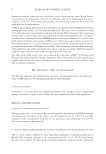
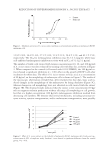
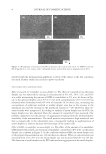
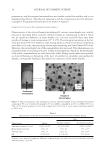
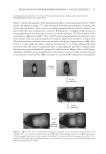
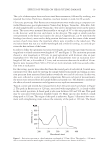
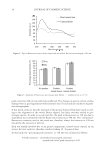
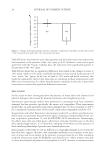
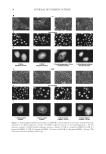
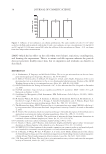
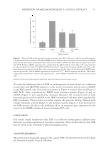
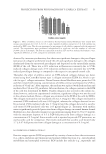
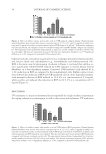
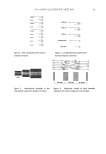
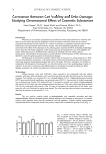
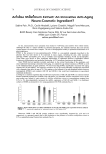
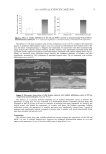
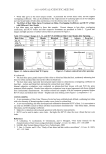
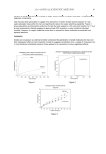
PROTECTION FROM PHOTOAGING BY P. EMBLICA EXTRACT 53 observed by immunocytochemistry that there was signifi cant damage to the procollagen (precursor of collagen) synthesized inside the cell and signifi cant damage to the collagen synthesized (from the exocytosed procollagen) and deposited on the extracellular matrix (ECM) of the cell. There was a 64% reduction in fl uorescence intensity due to UVB- induced collagen damage and a 43% reduction in fl uorescence intensity due to UVB- induced procollagen damage as compared to the respective unexposed control cells. Thereafter, the effect of emblica extract on UVB-induced collagen damage was deter- mined using the CosmoBio human type 1 collagen estimation ELISA kit, which is spe- cifi c for type 1 collagen estimation. Normal human dermal fi broblasts were grown for 24 h and then treated with varying concentrations of emblica extract and exposed to UVB ir- radiation of 50 mJ/cm2. After exposure, the medium was replaced with fresh medium and incubated for 24 h in a CO2 incubator. After incubation, the collagen content in the ECM of the cells was determined by ELISA. Usually collagen is also secreted in the culture me- dium however, under our experimental conditions, signifi cant collagen was not detected in the culture medium. Hence, collagen was estimated in the ECM of the cells by ELISA. The collagen estimated in non-irradiated cells was 3.23 μg/ml. The collagen estimated in untreated UVB-irradiated cells was 0.285 μg/ml, whereas the collagen detected in em- blica-treated UVB-irradiated cells was 2.72 μg/ml and the collagen detected in ascorbic acid-treated UVB-irradiated cells was 1.05 μg/ml (Figure 2). Treatment with emblica extract signifi cantly provided protection from collagen damage in normal human dermal fi broblasts in a dose-dependent manner (at concentrations ranging from 0.125 to 0.5 mg/ml), with the maximum response of 9.5 ± 0.28-fold protection from collagen damage at a concentration of 0.5 mg/ml. Since ascorbic acid is reported to provide UV protection, we used ascorbic acid for comparison. Our results indicated that ascorbic acid showed only 3.7 ± 0.07-fold protection from collagen damage at a concentration of 0.5 mg/ml. ROS INHIBITION OF EMBLICA EXTRACT Reactive oxygen species (ROS) are generated by a variety of sources from the environment (e.g., photo-oxidations and emissions) and normal cellular functions (e.g., mitochondrial metabolism and neutrophil activation). ROS include free radicals (e.g., superoxide and Figure 1. Effect of emblica extract on cell viability. Normal human dermal fi broblasts were treated with various concentrations (0, 0.125. 0.25, 0.5, 1, and 2 mg/ml) of emblica extract for 24 h. Cell viability was analyzed by NRU assay. The data are represented as percentage of cell viability compared with the untreated control. The experiments were performed independently in triplicate, and the number of cells was 50,000 cells in each sample. The data are represented as mean ± S.D. and were analyzed by Student's t-test. *Signifi cant difference, p 0.05, compared to untreated control.
Purchased for the exclusive use of nofirst nolast (unknown)
From: SCC Media Library & Resource Center (library.scconline.org)