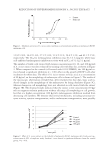
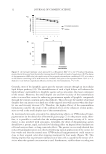
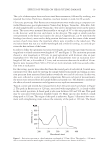
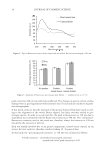
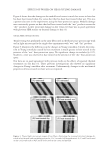
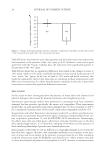
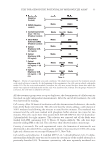
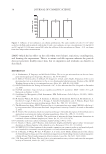
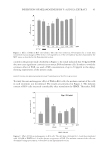
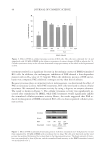
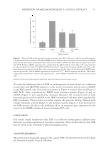
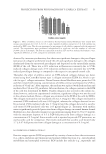
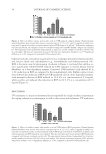
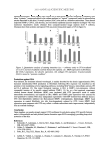
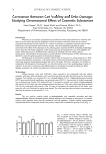
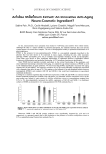
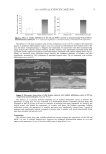
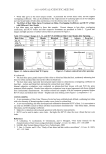
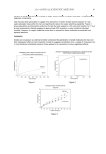
JOURNAL OF COSMETIC SCIENCE 54 hydroxyl radicals), nonradical oxygen species (e.g., hydrogen peroxide and peroxynitrite), and reactive lipids and carbohydrates (e.g., ketoaldehydes and hydroxynonenal) (14). ROS is the main cause for photoaging. As shown in Figure 3, we found that emblica ex- tract signifi cantly inhibited ROS induced by UVB exposure in normal human dermal fi broblasts in a dose-dependent manner. Untreated UVB-irradiated cells showed 84 ± 1.4% induction in ROS as compared to the non-irradiated cells. Emblica extract treat- ment lowered the induction of ROS in UVB-irradiated cells in a dose-dependent manner, with maximal reduction of ROS induced to 15 ± 4% at a concentration of 0.5 mg/ml, while ascorbic acid reduced the induction in ROS to 64 ± 2% at a concentration of 0.5 mg/ml (Figure 3). DISCUSSION UV irradiation is a major environmental factor responsible for a high incidence of premature skin aging, referred to as photoaging, as well as skin cancer and melanoma. UV irradiation Figure 2. Effect of emblica extract and ascorbic acid on UVB-induced collagen damage. Normal human dermal fi broblasts were treated with various concentrations (0, 0.125. 0.25, and 0.5 mg/ml) of emblica ex- tract and 0.5 mg/ml of ascorbic acid and irradiated with a UVB dosage of 50 mJ/cm2 . Followed by irradiation and 24-h incubation, the collagen content was estimated using the CosmoBio human collagen type 1 ELISA kit. The experiments were performed independently in triplicate, and the number of cells was 100,000 cells in each sample. The data are represented as mean ± S.D. and were analyzed by Student's t-test. **Signifi cant difference, p 0.05, compared to untreated UVB-irradiated cells. Figure 3. Effect of emblica extract and ascorbic acid on UVB-induced ROS generation. Normal human dermal fi broblasts were treated with various concentrations (0, 0.125. 0.25, and 0.5 mg/ml) of emblica ex- tract and 0.5 mg/ml of ascorbic acid and irradiated with a UVB dosage of 50 mJ/cm2. Followed by irradiation and 24-h incubation, the ROS induction was estimated. The data are represented as percentage of ROS induction compared with the non-irradiated control cells. The experiments were performed independently in triplicate, and the number of cells was 100,000 cells in each sample. The data are represented as mean ± S.D. and were analyzed by Student's t-test. **Signifi cant difference, p 0.05, compared to untreated UVB-irradiated cells.

PROTECTION FROM PHOTOAGING BY P. EMBLICA EXTRACT 55 increases ROS production, which induces the synthesis of matrix metalloproteinases (MMPs) that degrade collagen, causing skin photoaging. Collagen fi ber is primarily syn- thesized by fi broblasts as a pro-collagen protein, which is secreted and further processed to be a collagen fi ber in the extracellular matrix (15,16). Among collagens, type I is the most abundant and comprises between 85% and 90% of the total collagen in skin (9). Type 1 collagen damage by UVB irradiation results in photoaging. Strategies to prevent or at least minimize ROS-induced photoaging and intrinsic aging of the skin necessarily include protection against UV irradiation and antioxidant homeostasis (8). Due to their potent antioxidant activity, emblica extracts appear to have benefi ts as anti- aging actives. The level of procollagen type I protein in photoaged skin is lower than that in naturally aged skin. The level of matrix metalloproteinase-1 protein and the activity of matrix metalloproteinase-2 were higher in the dermis of photoaged skin than in naturally aged skin (10). Emblica extract stimulated proliferation of fi broblasts and also induced production of procollagen in human skin fi broblasts (17). It is known that ascorbic acid increases the photostability of collagen and that the colla- gen becomes less sensitive to UV radiation (18). The present study found that emblica extract signifi cantly protected normal human dermal fi broblasts from UVB-induced ROS generation and subsequent collagen damage. In addition, our results show that emblica has a greater potency than ascorbic acid. Moreover, only trace amounts of ascorbic acid have been recently reported in emblica fruits, suggesting that the antioxidant effects ex- hibited by emblica fruits are due to gallic acid esters (2). Our results suggest that the effi cacy of emblica extract in preventing UV-induced ROS generation and collagen dam- age may not be associated with its ascorbic acid content. The UV-protection effi cacy of a product depends signifi cantly either on its UV absor- bance/blocking effi cacy or its effi cacy in inhibiting UV-induced adversaries (ROS gener- ation, MMP generation, etc.) or both. Also, not all the antioxidants or MMP inhibitors are effective sunscreens and vice-versa. For example, octyl methoxycinnamate, zinc oxide, titanium dioxide, etc., are potential sunscreens but not potential antioxidants. Similarly, green tea (containing fl avonoid antioxidants), butylated hydroxytoluene, trolox, etc., are potential antioxidants but are not used as sunscreens. This may be because many of the antioxidants may not be stable under UV exposure to provide UV protection benefi ts. Ascorbic acid and emblica extract are potential antioxidants and are also used as sunscreens. Although there is enough literature on the antioxidant, MMP-inhibitory, and collagen- promoting properties of emblica extract that contribute to its UV-protection effi cacy, there was no signifi cant emphasis on the active constituents that contribute to its unique UVB-protection effi cacy. Earlier, it was thought that emblica fruits were rich in ascorbic acid (1), and it is obvious that ascorbic acid could have contributed signifi cantly to the UVB-protection effi cacy of emblica fruit extract. However, recent work on the character- ization of the emblica fruit extract indicates only trace amounts of ascorbic acid in the extract (2), and our work on its UVB-protection effi cacy in comparison to ascorbic acid indi- cates that the combination of various gallates (1-O-galloyl-β-D-glucose (β-glucogallin)) and mucic acid (1,4-lactone 5-O-gallate in the emblica extract) contributes to its UVB- protection effi cacy, making it a natural cosmetic, superior to a much-used cosmetic active, ascorbic acid. This composition is more stable under UV exposure and hence it could render its antioxidant and anti-infl ammatory benefi ts against UV-induced adversaries, unlike other antioxidants that may not be stable under UV exposure to provide UV-protection benefi ts.
Purchased for the exclusive use of nofirst nolast (unknown)
From: SCC Media Library & Resource Center (library.scconline.org)