JOURNAL OF COSMETIC SCIENCE 290 with PBS and lysed with 800 μl of 1 N NaOH (Merck, Darmstadt, Germany) containing 10% DMSO (Sigma) for 1 h at 80°C. The absorbance at 400 nm was measured using a microplate reader. The inhibitory activity of each sample against melanin production was calculated using equation (8): Inhibitory activity (%) = 100 − [(ODs/ODc) × 100], where ODs ODc are, respectively, the absorbances of the experimental sample and α-MSH-treated control at 400 nm. The results are reported in terms of IC50 (the concentration at which the percentage inhibition of melanin production was 50%). Kojic acid (25, 50, 100, 200, 400, and 800 μg/ml) was used as a standard under exactly the same experimental conditions. IN VIVO SKIN MOISTURIZING MEASUREMENT The assay for skin moisturizing measurement was carried out according to the method reported previously by Hou et al (30). In this study, 192 male ICR mice (6-weeks old on receipt SLC, Shizuoka, Japan) were used after 7 days of acclimatization. Animals were housed four per polycarbonate cage in a temperature-controlled (20–25°C) and humid- ity-controlled (40–45%) room. The light:dark cycle was 12 h:12 h and normal rodent pellet diet and water were supplied freely during acclimatization. After acclimatization, mice were divided into four groups for each time point (30 min and 1, 2, 4, 8, and 24 h eight mice per time point) based on body weight. Then, 100 μl of vehicle (distilled water) or E-AP-SM2001 was directly applied to shaved dorsal skin. A gel mask pack (area 2 × 3 cm) containing E-AP-SM2001 or SFF (area 2 × 3 cm) was patched on the shaved dorsal skin. Then, 30 min after application of test materials, all remaining samples were elimi- nated using cotton balls. Subsequently, 0.5, 1, 2, 4, 8, and 24 h after the end of exposure to the test materials, 2 × 3-cm skin samples were removed and skin water content (%) was measured using an automated moisture balance analyzer (MB23 Ohaus, Parsippany, NJ). In addition, percentage change compared to the vehicle control was calculated to help determine the effi cacy of test materials using equation (9): Change compared with vehicle control (%) = {[(Data for test material-treated group − Data for vehicle-treated control)/Data for vehicle-treated control] × 100}. STATISTICAL ANALYSES All in vitro data are expressed as the mean ± S.D. of fi ve independent experiments, and skin water content was calculated as the mean ± S.D. of eight mouse skins at each time point. Multiple comparison tests for different dose groups were conducted. Variance ho- mogeneity was examined using the Levene test (31). If the Levene test indicated no sig- nifi cant deviations from variance homogeneity, the obtained data were analyzed by one-way ANOVA followed by a least-signifi cant differences (LSD) multicomparison test to determine which pairs in the group comparison were signifi cantly different. If the Leven test showed signifi cant deviation from variance homogeneity, a nonparametric comparison test, the Kruskal–Wallis H test, was conducted. When a signifi cant differ- ence was observed in the Kruskal–Wallis H test, the Mann–Whitney U (MW) test was conducted to identify the specifi c pairs in the group comparison that were signifi cantly different. IC50 values for each in vitro assay were calculated by probit methods. Statistical analyses were conducted using SPSS for Windows (release 14.0K SPSS, Chicago, IL) (32).

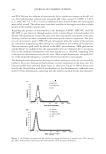
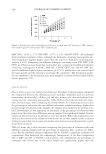
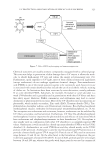
ANTI-SKIN-AGING BENEFITS OF EXOPOLYMERS FROM AUREOBASIDIUM PULLULANS 291 RESULTS ANTIOXIDANT EFFECT OF E-AP-SM2001 Signifi cant (p 0.01) increases in DPPH radical scavenging activities were detected in samples treated with ascorbic acid and E-AP-SM2001 at concentrations from 6.25 and 12.5 μg/ml, respectively. The IC50 values for the DPPH radical scavenging activity of ascorbic acid and E-AP-SM2001 were calculated as 6.84 ± 1.03 and 46.48 ± 10.76 μg/ml, respectively (Figure 1A and B). SOD-like activity showed signifi cant increases in samples treated with ascorbic acid and E-AP-SM2001 at concentrations from 12.5 and 25 μg/ml, respectively. The IC50 values for the SOD-like activity of ascorbic acid and E-AP-SM2001 were calculated as 65.17 ± 12.15 and 132.95 ± 45.53 μg/ml, respectively (Figure 1C and D). Figure 1. Antioxidant effects of exopolymers from Aureobasidium pullulans SM2001 (E-AP-SM2001). DPPH radical scavenging activity (A and B) and SOD-like activity (C and D) of ascorbic acid and E-AP-SM2001. Values are expressed as the mean ± SD of fi ve independent experiments. The vehicle control was set to 0%. DPPH: 1,1-diphenyl-2-picrylhydrazyl. IC50 indicates the concentration needed to reduce 50% of DPPH. SOD: superoxide dismutase. IC50 indicates the concentration needed to reduce pyrogallol oxidation by 50%. a p 0.01 compared with control (LSD test) b p 0.01 compared with control (MW test).
Purchased for the exclusive use of nofirst nolast (unknown)
From: SCC Media Library & Resource Center (library.scconline.org)