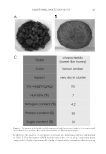
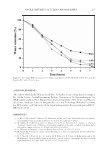
JOURNAL OF COSMETIC SCIENCE 124 aged skin fi broblasts. These results allowed us to conclude that application of the small RNA-rich Baobab extract helps skin cells to counter the visible signs of skin aging via the modulation of essential markers of senescence. CONCLUSION Although there are many antiaging cosmetic products on the consumer market offering a wide range of skin benefi ts, there remains a need for effective topically applied cosmetic compositions that provide antiaging or rejuvenating benefi ts to the skin, hair, and/or nails using natural ingredients as active agents. In this article, we present an innovative extraction technology that allows for the generation of new botanical extracts containing small RNAs, which can be used as natural cosmetic ingredients. PSR technology appears to be well adapted to plant species such as baobab. Indeed, baobab trees are well-known for their capacity for survival and longevity, which is supported in particular by its small RNAs that can rapidly regulate gene expression and enable adaptation to stressful envi- ronment. By addressing the maintenance of miRNA maturation machinery in the skin, Figure 6. Evaluation of SA β-galactosidase activity in young (P7) and senescent (P31) fi broblasts treated with 1% PSR baobab extract or with 1% placebo (baobab extract without small RNA) for 48 h (twice a day) (×20). Quantifi cation of blue staining (intensity in % adjusted by considering the cell number) ***: highly signifi cant, *: signifi cant compared with young control cells or compared with senescent control cells (indi- cated with an arrow) with Student’s t test, n = 3 replicates. Figure 5. Evaluation of Drosha mRNA (A) and miRNA-19b (B) levels in young (P8) and senescent (P32) fi broblasts treated with 1% PSR baobab extract or with 1% placebo (baobab extract without small RNA) for 24 h (twice a day). Error bars corresponded to the calculated RQmin and RQmax values, based on standard deviation of the mean expression level ***: highly signifi cant compared with young control cells, compared with senescent control cells (indicated by an arrow) with Student’s t test, n = 3 replicates.

PLANT SMALL RNA TECHNOLOGY 125 PSR baobab extract evaluated in these experiments appears to be associated with an ob- served reduction in certain visible signs of skin aging. ACKNOWLEDGMENTS The authors wish to thank Jason E. Yearout for reading the manuscript and for the Eng- lish language review. DISCLOSURE The authors of this publication are employees of Ashland Inc. FUNDING This study was funded by Ashland Inc. AUTHOR CONTRIBUTIONS Elodie Oger, Ludivine Mur, Alexia Lebleu, Laurine Bergeron, and Catherine Gondran conceived and designed the experiments Elodie Oger, Ludivine Mur, Alexia Lebleu, and Laurine Bergeron performed the experiments Elodie Oger, Ludivine Mur, and Catherine Gondran analyzed the data Elodie Oger and Ludivine Mur wrote the article and Cathe- rine Gondran revising it critically. Karine Cucumel supervised the study. All authors read and approved the fi nal manuscript. REFERENCES (1) G. E. Wickens, The Baobabs: Pachycauls of Africa, Madagascar and Australia (Springer, Netherlands, 2008). (2) E. Besco, E. Bracioli, S. Vertuani, P. Ziosi, F. Brazzo, R. Bruni, G. Sacchetti, and S. Manfredini, The use of photochemiluminescence for the measurement of the integral antioxidant capacity of baobab prod- ucts. Food Chem., 102, 1352–1356 (2007). (3) E. De Caluwé, K. Halamovà, and P. Van Damme, Baobab (Adansonia digitate L.): A Review of Traditional Uses, Phytochemistry and Pharmacology, H. J. Rodolfo, J. E. Simon, and C. T. Ho. Eds. (American Chemi- cal Society, 2009), Vol. 1021, pp. 51–84. ( 4) A. Lamien-Meda, C. Euloge Lamien, M. Compaoré, R. Meda, M. Kiendrebeogo, B. Zeba, J. Millogo, and O. Nacoulma, Polyphenol content and antioxidant activity of fourteen wild edible fruits from Burkina Faso. Molecules, 13, 581–594 (2008). (5 ) B. M. Komane, I. Vermaak, G. P. P. Kamatou, B. Summers, and A. M. Viljoen, Beauty in Baobab: a pilot study of the safety and effi cacy of Adansonia digitata seed oil. Rev. Bras. Farmacogn., 27, 1–8 (2017). (6 ) S. Tammen, S. Friso, and S. W. Choi, Epigenetics: the link between nature and nurture. Mol. Aspects Med., 34, 753–764 (2013). (7 ) J. L. Feig, K. M. Giles, I. Osman, and A. G. Franks, Jr, How microRNAs modify protein production. J. Investig. Dermatol., 135, 1–5. (2015). (8 ) F. Wahid, A. Shehzad, T. Khan, and Y. Y. Kim, MicroRNAs: synthesis, mechanism, function, and recent clinical trials. Biochim. Biophys. Acta., 1803, 1231–1243 (2010). (9 ) S. Cammaerts, M. Strazisar, P. De Rijk, and J. Del Favero, Genetic variants in microRNA genes: impact on microRNA expression, function, and disease. Front. Genet., 6, 186 (2015). (1 0) S. Srikantan, B. S. Marasa, K. G. Becker, M. Gorospe, and K. Abdelmohsen, Paradoxical microRNAs: individual gene repressors, global translation enhancers. Cell Cycle, 10, 751–759 (2011).
Purchased for the exclusive use of nofirst nolast (unknown)
From: SCC Media Library & Resource Center (library.scconline.org)