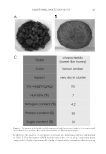
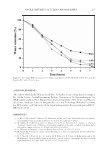
JOURNAL OF COSMETIC SCIENCE 122 molecules such as amino acids and polyphenols. Each of these molecules may be respon- sible for various benefi cial effects for skin, particularly small RNAs. BIOLOGICAL ACTIVITY OF PSR BAOBAB EXTRACT To evaluate the biological effect of PSR baobab extract on skin, the expression of collagen I was investigated. On ex vivo skin biopsies, the baobab extracts which either did or did not include small RNAs (PSR baobab extract or baobab placebo) were applied at 1% for 48 h, collagen I expression was evaluated by immunostaining (Figure 4A). Collagen I mRNA expression was also evaluated by RT-qPCR in fi broblasts treated with the same baobab extracts at 1% for 24 h (Figure 4B). In ex vivo skin, only biopsies that were treated with PSR baobab extract showed an increase in collagen I expression. The colla- gen I mRNA level was observed to have increased in fi broblasts that were treated with baobab extracts, with a stronger effi cacy for PSR extract (+72%) than for baobab placebo (+14%). Chung et al. demonstrated, in vivo, a perturbation in the balance between col- lagen synthesis and its degradation via matrix metalloproteinases, leading to decrease in collagen in aged skin (18). This fi rst biological result showed the potential of the presence of PSRs to enhance collagen synthesis in ex vivo skin. The model of fi broblasts that was aged by replicative senescence was used in the next experiment. The machinery of miRNA maturation via study of the expression of the en- zyme Drosha was performed in these fi broblasts by RT-qPCR (Figure 5A). Our results showed that Drosha expression was found to have decreased in senescent fi broblasts, con- fi rming previous observations (10). Indeed, the level of Drosha was maintained closer to the basal level found in young cells, but only in senescent cells that were treated with PSR baobab extract. The study of miRNA-19b completed this investigation (Figure 5B): Table I Phytochemical analysis of PSR baobab extract and conventional baobab extract Process Dry matter (g/kg) Total protein (g/l) Total sugar (g/l) Total polyphenol (mg/l) Total free amino acids (mg/l) Small RNA (mg/l) PSR baobab extract 12 2.7 3.3 274 380 32 Conventional baobab extract 12.5 3.3 5 247 310 0 Figure 3. Characterization of PSR baobab extract and placebo baobab extracts by bioanalyzer.

PLANT SMALL RNA TECHNOLOGY 123 this miRNA decreased with senescence. In senescent cells, after treatment with PSR bao- bab extract, the level of miRNA-19b exceeded the basal level of young cells. MiRNA- 19b level was previously shown to be associated with senescence and with the quality of collagen (19). The induction of senescence was verifi ed by SA β-galactosidase staining at different pas- sages. As expected, an increase in SA β-galactosidase activity was observed in in vitro se- nescent cells (Figure 6). The image quantifi cation of SA β-galactosidase activity allowed us to observe a decrease in this marker in senescent fi broblasts that were treated with PSR baobab extract this observed decrease was more pronounced than with the placebo treatment. In summary, these results allowed us to compare the effect of both PSR and placebo bao- bab extracts. We noted a better effi ciency of PSR extract on the modulation of certain aging markers: an increase in collagen expression in ex vivo skin, an increase in miRNA-19b expression, stability in Drosha expression, and a decrease in SA β-galactosidase activity in Figure 4. Observation of collagen I expression in ex vivo human skin biopsies and fi broblasts: (A) skin bi- opsies were treated with 1% PSR baobab extract or with 1% placebo (baobab extract without small RNA) for 48 h (twice a day) (´20). Collagen I immunohistological staining in green and nuclei counter-stained in blue with DAPI (on the original pictures) (´20). Quantifi cation of immunohistological staining of collagen I (intensity in % adjusted by considering the area of the examined dermis zone ns not signifi cant * signifi cant compared with control, with Student’s t test, n = 3). (B) Expression of collagen I mRNA in fi broblasts treated with 1% baobab PSR or placebo extracts for 24 h (twice a day). Error bars corresponded to the calcu- lated RQmin and RQmax values, based on standard deviation of the mean expression level ***: highly sig- nifi cant compared with young control cells, compared with senescent control cells (indicated by an arrow) with Student’s t test, n = 3 replicates.
Purchased for the exclusive use of nofirst nolast (unknown)
From: SCC Media Library & Resource Center (library.scconline.org)