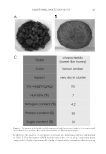
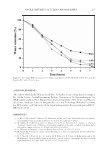
JOURNAL OF COSMETIC SCIENCE 134 The result of the foaming test is shown in Figure 8. After shaking for 10 s, the sample with binary 8:8 CAPB/RL and ternary CAPB/RL/SL formed a denser and an even bubble size foam than the pure CAPB sample by themselves. Five minutes later, the bubbles in pure CAPB sample were signifi cantly coarsening and draining, whereas the bubble size and quality of the samples with RL were still intact. After 45 min, the foam formed by the two pure CAPB samples almost disappeared, whereas the foam in the other two samples was coarsening, but there was no large gap which appeared in between. This strongly complements the results from the surface tension and surface elasticity measurement. With the RL in the surfactant system, the surfactant solution formed a more elastic layer at the air–water interface, which resulted in denser and more stable foam. Com- pared the performance of CAPB/RL and CAPB/RL/SL sample in this foaming test, the differences were subtle. This result supports the surface tension and surface elasticity ex- perimental results, which also have minimal differences between these two samples. CONCLUSION This study has shown the strong impact of biosurfactants such as RL and SL on the surface properties in binary and ternary mixtures with a commonly used zwitterionic surfactant such as CAPB. Signifi cant surface tension reduction and high surface elasticity was ob- served in all formulations, both binary and ternary when RL was present. As shown in Figure 9, this indicates the high surface activity of RL. The RL potentially dominates at the interface for both CAPB/RL and for CAPB/RL/SL mixtures, forming tightly packed elastic layers at the air–water interface as shown by the high values of surface elasticity. This results in denser and more stable foam formation. The SL behavior is signifi cantly different. In the binary SL/CAPB mixtures, it seems to exhibit synergistic interactions and forms a mixed layer. This is further corroborated through the surface elasticity mea- surements. These new insights on binary and ternary mixtures of two biosurfactants, RL and SL, together with CAPB should provide new formulation guidance for personal care products. The study also highlight the importance of surface tension and surface elasticity as two highly complementary techniques to better understand surface structuring in sur- factant and biosurfactant mixtures. Figure 9. Schematics of surfactant molecule orientation at air–water interface in different surfactant systems.

SURFACE ACTIVITY OF BIOSURFACTANT–SURFACTANT MIXTURES 135 REFERENCES (1 ) P. K. S. M. Rahman and E. Gakpe, Production, characterization and applications of biosurfactants— review, Biotechnology (Faisalabad, Pak.), 7, 360–370 (2008). (2 ) J. D. Desai and I. M. Banat, Microbial production of surfactants and their commercial potential, Microbiol. Mol. Biol. Rev., 61, 47–64 (1997). (3 ) A. Varvaresou and K. Iakovou, Biosurfactants in cosmetics and biopharmaceuticals, Lett. Appl. Microbiol., 61, 214–223 (2015). (4 ) M. J. Brown, Biosurfactants for cosmetic applications, Int. J. Cosmet. Sci., 13, 61–64 (1991). (5) M. Pacwa-Plociniczak, G. A. Plaza, Z. Piotrowska-Seget, and S. S. Cameotra, Environmental applica- tions of biosurfactants: recent advances, Int. J. Mol. Sci., 12, 633–654 (2011). (6) P . Singh, Y. Patil, and V. Rale, Biosurfactant production: emerging trends and promising strategies, J. Appl. Microbiol., 126, 2–13 (2019). (7) K . K. Sekhon Randhawa and P. K. Rahman, Rhamnolipid biosurfactants—past, present, and future scenario of global market, Front. Microbiol., 5, 454 (2014). (8) S . Lang, Biological amphiphiles (microbial biosurfactants), Curr. Opin. Colloid Interface Sci., 7, 12–20 (2002). (9) N . Kosaric, Biosurfactants in industry, Pure Appl. Chem., 64, 1731–1737 (1992). (10) N. Kosaric, Biosurfactants and their application for soil bioremediation, Food Technol. Biotechnol., 39, 295–304 (2001). (11) K. S. Rahman, T. J. Rahman, Y. Kourkoutas, I. Petsas, R. Marchant, and I. M. Banat, Enhanced biore- mediation of n-alkane in petroleum sludge using bacterial consortium amended with rhamnolipid and micronutrients, Bioresour. Technol., 90, 159–168 (2003). (12) Y. Maeng, K. T. Kim, X. Zhou, L. Jin, K. S. Kim, Y. H. Kim, and L. Cai, A novel microbial technique for producing high-quality sophorolipids from horse oil suitable for cosmetic applications, Microb. Biotechnol., 11, 917–929 (2018). (13) S. G. Costa, M. Nitschke, F. Lépine, E. Déziel, and J. Contiero, Structure, properties and applications of rhamnolipids produced by Pseudomonas aeruginosa L2-1 from cassava wastewater, Process Biochem., 45, 1511–1516 (2010). (14) I. M . Banat, R. S. Makkar, and S. S. Cameotra, Potential commercial applications of microbial surfac- tants, Appl. Microbiol. Biotechnol., 53, 495–508 (2000). (15) T. N guyen and D. Sabatini, Characterization and emulsifi cation properties of rhamnolipid and sophoro- lipid biosurfactants and their applications, Int. J. Mol. Sci., 12, 1232–1244 (2011). (16) Y. W . Xie, Y. Li, and R. Q. Ye, Effect of alcohols on the phase behavior of microemulsions formed by a biosurfactant—rhamnolipid, J. Dispersion Sci. Technol., 26, 455–461 (2005). (17) G. Ö zdemir, S. Peker, and S. S. Helvaci, Effect of pH on the surface and interfacial behavior of rhamno- lipids R1 and R2, Colloids Surf. A Physicochem. Eng. Asp., 234, 135–143 (2004). (18) R. D. Ashby, D. K. Y. Solaiman, and T. A. Foglia, Property control of sophorolipids: infl uence of fatty acid substrate and blending, Biotechnol. lett., 30, 1093–1100 (2008). (19) Ş. Ş. Helvacı, S. Peker, and G. Özdemir, Effect of electrolytes on the surface behavior of rhamnolipids R1 and R2, Colloids Surf. B: Biointerfaces, 35, 225–233 (2004). (20) D. Georgie va, A. Cagna, and D. Langevin, Link between surface elasticity and foam stability, Soft Matter, 5, 2063–2071 (2009). (21) Z. Mitrino va, S. Tcholakova, K. Golemanov, N. Denkov, M. Vethamuthu, and K. P. Ananthapadmanabhan, Surface and foam properties of SLES+ CAPB+ fatty acid mixtures: effect of pH for C12–C16 acids, Colloids Surf. A Physicochem. Eng. Asp., 438, 186–198 (2013). (22) S. Tcholakova, Z. Mitrinova, K. Golemanov, N. D. Denkov, M. Vethamuthu, and K. P. Ananthapadmanabhan, Control of Ostwald ripening by using surfactants with high surface modulus, Langmuir, 27, 14807– 14819 (2011). (23) H. M. Prin cen and S. G. Mason, The permeability of soap fi lms to gases, J. Colloid Sci., 20, 353–375 (1965). (24) R. Farajza deh, R. Krastev, and P. L. Zitha, Foam fi lm permeability: theory and experiment, Adv. Colloid Interface Sci., 137, 27–44 (2008). (25) K. Goleman ov, N. D. Denkov, S. Tcholakova, M. Vethamuthu, and A. Lips, Surfactant mixtures for control of bubble surface mobility in foam studies, Langmuir, 24, 9956–9961 (2008). (26) K. K. Ande rsen, B. S. Vad, S. Roelants, I. N. van Bogaert, and D. E. Otzen, Weak and saturable protein– surfactant interactions in the denaturation of apo-α-lactalbumin by acidic and lactonic sophorolipid, Front. Microbiol., 7, 1711 (2016).
Purchased for the exclusive use of nofirst nolast (unknown)
From: SCC Media Library & Resource Center (library.scconline.org)