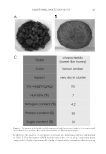
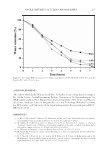
JOURNAL OF COSMETIC SCIENCE 116 pulp but also higher IACs than strawberry, bilberry, and kiwi pulp (2). The baobab fruit is a powerful anti-infl ammatory and antioxidant (3). Of 14 species of “wild edible fruits” evaluated, those from Adansonia digitata ranked second for highest phenolic and fl avonoid content, which are well-known for their antioxidant properties (4). The seeds are extracted from the baobab fruit by cracking the hard, outer capsule. The extracted seeds are then washed to remove the powder coating and then air-dried in the hot sun. These seeds can be stored for many months before pressing. Baobab oil is made by a cold pressing process. Baobab oil is an excellent skin moisturizer, which is quickly absorbed by the skin without clogging pores (5). It leaves the skin feeling soft and mois- turized. Indeed, thanks to its composition, its richness in omega 6–9 acids, vitamins, sterols, and minerals, organic baobab oil is ideal for use in cosmetics. Ashland has developed an extract obtained by valorizing oil by-product, the seedcake, which keeps the richness of cold pressing seeds. In particular, we developed an extraction process that allowed us to retain the healthy nutrients and compounds of interest such as phenolic compounds, sugars, proteins, and amino acids of the seeds, while also enriching our extract with small RNAs, named plant small RNA technology (PSR technology) (Figure 1). Figure 1. Flow chart of the PSR technology.

PLANT SMALL RNA TECHNOLOGY 117 The small RNAs, a class of noncoding RNAs, play a role in the regulation of genomes and transcriptomes targeting chromatin or transcripts. They are considered epigenetic regulators. Epigenetics is the study of modifi cations that are not caused by changes in the DNA sequence it allows us to perceive the infl uence of the environment on the transcrip- tional potential of a cell through modifying epigenetic marks (6). For example, baobab seeds must contend with harsh environmental conditions, such as drought and heat. Their resistance to these conditions is possible, thanks to the small RNAs that will regu- late their gene expression. Small RNAs are also involved in effi cient defense systems that provide resistance to environmental stresses, and scavenge reactive oxygen species (ROS). Small RNAs include miRNAs, consisting of 22–24 ribonucleotides. miRNAs are involved in post-transcriptional regulation through interaction with messenger RNAs. In the cells of both humans and plants, they are involved in numerous processes such as development, metabolism, and reproduction, as well as in the response to biotic or abiotic stresses and diseases. Regulation by miRNAs accounts for more than a third of all gene expression (7). To act on miRNA targets, in plants, this process is performed by a single RNase III enzyme, DCL1 (Dicer-like 1), in the nucleus (8). In animals, miRNAs follow a matura- tion process divided into two major steps. The primary miRNA is processed by the RNase III endoribonuclease Drosha to generate a shorter precursor miRNA (pre-miRNA). After export in the cytoplasm by the nucleoplasmic transport protein exportin-5, the pre- miRNA is cleaved by Dicer. Thereby, the miRNA is matured and assembled into the RNA-induced silencing complexes (RISC) and is ready to inhibit its mRNA targets (9). On senescent WI-38 human diploid fi broblasts from the lung, the expression of these two key enzymes has been shown to decrease, involving the dysregulation of 20% of miRNAs (10). Among the miRNAs dysregulated during cellular aging, miRNA-19b is described as a biomarker of cellular aging. Indeed, Hackl et al. showed a downregulation of this miRNA with aging, in different replicative cell and organismal aging models (11). In addition, this miRNA is part of small noncoding RNA signature in centenarians. Indeed, miRNA-19b expression was shown to be similar in the cells of both young and centenar- ian people (12). On the basis of their functions, plant miRNAs could be considered as a new class of mi- cronutrients, along with vitamins. Thus, an exclusive and novel extraction process maxi- mizing the potential of PSRs was developed and named PSR technology. Tests on ex vivo skin and in vitro fi broblasts demonstrated the benefi ts of PSR plant presence in extract on maintaining skin homeostasis by stabilizing the maturation of the skin’s miRNA machinery. MATERIALS AND METHODS PLANT MATERIAL The seedcake of Adansonia digitata used in this study originated from Senegal. We ap- preciate the partnership of two complementary companies in obtaining the seedcake: Biomega, an Austrian society specializing in food technology and Baonane, a Senegalese company and leading producer of baobab products, particularly baobab fruit valorization. The baobab fruits are matured 5–6 mo after fl owering. During the harvest, they are
Purchased for the exclusive use of nofirst nolast (unknown)
From: SCC Media Library & Resource Center (library.scconline.org)