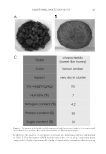
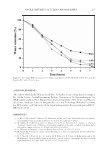
JOURNAL OF COSMETIC SCIENCE 144 tested in the study (including T. rubrum) was highly promising. For example, T. rubrum is the most common species that causes extremely diffi cult to cure (due to resistance to most of the commercially available antifungal agents) foot and nail infections (26). Moreover, terpinolene was found to be a very active antifungal agent against A. niger. The fungus Aspergillus has become a growing concern in the past few years as a causative agent of Figure 3. Trichophyton rubrum growth inhibition zones around disks impregnated with tested compounds.

ANTIMICROBIAL PROPERTIES OF NATURAL LIMONENE 145 Table II Antimicrobial Properties of Prepared Therapeutic Creams Cream name Terpinolene content (wt%) Mean growth inhibition zone (mm) for E. coli and S. epidermidis KRT1 0.5 E. coli: 8.0 ± 0.0 mm, S. epidermidis: 10.0 ± 0.1 mm KRT2 2.0 E. coli: 8.0 ± 0.0 mm, S. epidermidis: 10.2 ± 0.0 mm bronchopulmonary aspergillosis (ABPA) and “fungal asthma” (SAFS). Treatment for these diseases is performed with steroids by aerosol or mouth, which unfortunately has side effects such as thinning of the bones (osteoporosis) and skin, and weight gain (27). Our results did not confi rm the antimicrobial activity of γ-terpinene against bacteria and the yeast C. albicans but proved the highly effective germicidal properties of α-terpinene, which is consistent with the results obtained by other authors (28). It is noteworthy that α-terpineol (as well as linalool) presented antimicrobial activity against periodontopathic and cariogenic bacteria (29). For other tested compounds, it was found that the postreaction mixture obtained after the isomerization of limonene possesses higher antimicrobial activity than the pure tested compounds against the fungi T. rubrum, C. albicans, and T. viride and bacteria S. epidermidis or E. coli. This provides evidence that monoterpenes display different mechanisms of action. The mixture of products obtained after the isomerization of limonene also showed antibacterial and antifungal activity. In the future, this mixture of products can also be used as a potential and relatively inexpensive ingredient in therapeutic and protective creams. Interestingly, pure natural limonene, known for its antibacterial and antifungal properties, did not perform favorable properties in comparison with compounds present in the postreaction mixture obtained after its isomerization. The most probable interpre- tation is the occurrence of synergistic effect. It was concluded that some products of limonene isomerization showed a potent antimi- crobial effect against the tested Gram-negative and Gram-positive bacteria, and fungi. CONCLUSIONS The fi ndings of the present study indicated a strong and broad-spectrum antimicrobial activity of terpinolene. It can be recommended as the antibacterial agent in therapeutic and protective creams that can be used in the relief of skin lesions and in the treatment of acne or atopic dermatitis. The mixture of products obtained after the isomerization of limonene also showed antimicrobial activity. In the future, this mixture of products can also be used as a potential and relatively inexpensive ingredient in therapeutic and protective creams. Further investigations are needed for the exclusion of its allergic potential. REFERENCES (1) S. K. Król, K. Skalicka-Woźniak, M. Kandefer-Szerszeń, and A. Stepulak, The biological and pharmaco- logical activity of essential oils in the treatment and prevention of infectious diseases, Postepy Hig. Med. Dosw., 67, 1000–1007 (2013) [in Polish]. (2) E. Gonzalez-Burgos and M. P. Gomez-Serranillos, Terpene compounds in nature: a review of their poten- tial antioxidant activity, Curr. Med. Chem., 19, 5319–5341 (2012).
Purchased for the exclusive use of nofirst nolast (unknown)
From: SCC Media Library & Resource Center (library.scconline.org)