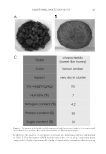
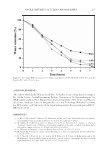
JOURNAL OF COSMETIC SCIENCE 142 the bacteria and dermatophytic organisms (C. albicans and T. rubrum) ranged from 9.0 to 25.2 mm, indicating a remarkable effect of natural limonene. The terpinolene exerted a particularly strong antifungal effect against the mold fungi (A. niger, P. commune, A. alter- nata, T. viride, and C. cladosporioides). The mean inhibition zone ranged from 18.4 to 52.2 mm (Table I). Interestingly, the reaction mixture obtained after limonene isomerization presented the best antimicrobial activity against dermatophytes C. albicans and T. rubrum and fi lamentous fungi T. viride. T. rubrum can be considered as the most sensitive organ- ism because growth inhibition zones were present around disks impregnated with almost all tested substances (the only exception was p-cymene). Therefore, the antifungal effects of all tested substances are presented in Figure 3. By contrast, the most resistant organism was the mold fungi P. commune. Growth inhibi- tion zones were observed only around the disk impregnated with terpinolene (Table I). On the basis of obtained results, terpinolene was assigned as t he substance with the best antimicrobial properties against a broad spectrum of microorganisms. For these reasons, terpinolene was chosen as a representative compound for the preparation of therapeutic creams. Two therapeutic creams containing 0.5 and 2 wt% of terpinolene, respectively, were prepared. The performed studies showed that both creams showed activity only against the Gram-negative bacteria E. coli and Gram-positive bacteria S. epidermidis. The growth inhibition zone around disks impregnated with both creams was not dose dependent and ranged from 8.0 mm for E. coli to 10.2 mm for S. epidermidis (Table II). It was concluded that 0.5 wt% of terpinolene in a cream is suffi cient to inhibit the growth of these microorganisms. The growing number of multidrug-resistant microorganisms and pe rsons with allergy has become a worldwide public health problem. This concerns in particular to producers of products such as creams, ointments, and toothpastes. Therefore, there is need to fi nd a new effective antimicrobial agent that kills or inhibits the growth of microbes but is safe to use on humans. The best candidates meeting these conditions appear to be natural substances such as monoterpenes or products of their isomerization. In the presented research, the antimicrobial activity of the po streaction mixture obtained after the isomerization of limonene and its individual components was investigated. Only terpinolene showed the highest activity against all species of tested bacteria and fungi. The considerable inhibition zone obtained for this compound against all dermatophytes Figure 2. Pictures of prepared creams: KRT1 (A) and KRT2 (B).

Table I Growth Inhibition Zone (mm) ± SD for Limonene and Its Isomerization/Dehydroaromatization Products by Disk Diffusion Method Organisms Substances Natural limonene Reaction mixture after isomerization p γ Limonene (template) Terpinolene α-Terpinene E. coli 9.0 ± 0.1 21.0 ± 0.2 0.0 ± 0.0 0.0 ± 0.0 0.0 ± 0.0 21.3 ± 0.1 9.2 ± 0.0 S. epidermidis 9.1 ± 0.1 24.1 ± 0.3 8.3 ± 0.2 0.0 ± 0.0 10.3 ± 0.2 18.4 ± 0.4 18.5 ± 0.1 C. albicans 25.2 ± 0.2 33.3 ± 0.3 0.0 ± 0.0 0.0 ± 0.0 13.1 ± 0.3 20.1 ± 0.7 20.2 ± 0.4 T. rubrum 9.0 ± 1.0 90.0 ± 2.0 0.0 ± 0.0 42.0 ± 1.5 10.2 ± 0.0 25.2 ± 0.9 27.2 ± 0.7 T. viride 12.0 ± 0.1 21.1 ± 0.2 0.0 ± 0.0 0.0 ± 0.0 14.2 ± 0.3 42.2 ± 1.0 14.2 ± 0.2 A. niger 0.0 ± 0.0 24.1 ± 0.3 8.1 ± 0.2 0.0 ± 0.0 13.3 ± 0.8 32.3 ± 1.0 0.0 ± 0.0 P. commune 0.0 ± 0.0 33.3 ± 0.3 0.0 ± 0.0 0.0 ± 0.0 0.0 ± 0.0 22.3 ± 0.0 0.0 ± 0.0 C. cladosporioides 33.4 ± 0.3 90.0 ± 2.0 0.0 ± 0.0 0.0 ± 0.0 16.0 ± 0.5 52.2 ± 1.0 14.2 ± 0.0 A. alternata 0.0 ± 0.0 51.5 ± 1.4 0.0 ± 0.0 0.0 ± 0.0 12.0 ± 0.0 23.2 ± 0.0 10.1 ± 0.0 ANTIMICROBIAL PROPERTIES OF NATURAL LIMONENE 143
Purchased for the exclusive use of nofirst nolast (unknown)
From: SCC Media Library & Resource Center (library.scconline.org)