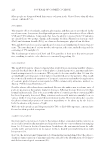
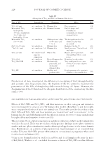
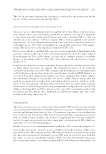
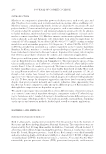
JOURNAL OF COSMETIC SCIENCE 226 ABSORPTION OF TIO2 AND ZNO—IN VITRO STUDIES Many authors reported the penetration of NPs from sunscreens onto the human skin. Hu- man epidermal penetration of a transparent TiO2 and ZnO sunscreen formulation was determined using Franz-type diffusion cells and electron microscopy to verify the loca- tion of NPs in exposed membranes. In most studies, no particles could be detected in the lower layers of SC or viable epidermis by electron microscopy, suggesting that minimal nanoparticle penetration occurs through the human epidermis. Thus, some researchers have concluded that NPs penetrate to 13 layers into the UVB-damaged SC, whereas only seven layers in the intact skin. The experiment conditions and effects are shown in Table I. ABSORPTION OF TIO2 AND ZNO—ANIMAL SKIN Gamer et al. reported the dermal absorption of ZnO and TiO2 particles through the skin of domestic pigs. In addition, the results show that microfi ne ZnO particles were not able to penetrate the porcine-dermatomed skin preparations (20). Wu et al. (21) and Adachi et al. (22) have concluded that after prolonged application, NPs can penetrate through the SC and they can be located in the deep layer of the epider- mis. Wu et al. investigated the penetration and toxicity of TiO2 NPs after in vivo animal (BALB/c hairless mice) dermal application. After 60 d of dermal exposure in hairless mice, TiO2 NPs not only penetrated the skin but also reached different tissues and in- duced pathological lesions in several major organs. In addition, they found TiO2 NPs in the mouse brain without inducing any pathological changes (21). Recently, Adachi et al. (23) found signs of irritant dermatitis with focal parakeratosis in the SC and epidermal spongiosis after applying uncoated TiO2 NPs for a long time. The experiment conditions and results of other researchers are shown in Table II. Ta bl e I Absorption of TiO2 and ZnO in vitro Type of NPs Formulation Experimental system Effects Ref. ZnO NPs Transparent formulation Franz-type diffusion cells No particles could be detected in the lower SC (16) w/o emulsion Franz-type diffusion cells on the excised porcine skin No particles could be detected in the lower SC (17) TiO2 NPs Suspensions (1.0 g/L), 24 h Franz cells using intact and needle-abraded human skin Not detectable in receiving solutions for both intact and damaged skin (18) TiO2 and ZnO NPs 1) 10% coated TiO2 in w/o, 2) 10% coated TiO2 o/w, 3) 5% coated ZnO in o/w, and 4) 5% uncoated ZnO in o/w Skin in fl ow-through diffusion cells 1) TiO2 in w/o penetrated deeper in UVB-damaged SC 2) penetrated 13 layers into UVB-damaged SC, whereas only seven layers in normal and 3) and 4) were localized to the upper one to two SC layers (19)

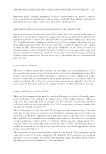
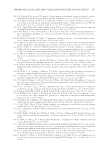
TITANIUM DIOXIDE AND ZINC OXIDE NANOPARTICLES IN SUNSCREENS 227 ABSORPTION OF TIO2 AND ZNO—INTACT AND DAMAGED HUMAN SKIN Many studies showed that there was no penetration of TiO2 and ZnO NPs. Also, they have shown that particle shape and formulation have no signifi cant impact on penetration through the SC in in vivo studies. The experiment conditions and results are shown in Table III. Gulson et al. have conducted the study to detect possible amounts of ZnO in blood and urine. The experiment was assessed under real-life conditions. Sunscreen was applied to the skin of volunteers for 5 d. Blood and urine levels of 68 Zn from 68 ZnO particles in sunscreens increased in all subjects over the period of exposure, with signifi cantly higher levels of 68 Zn in females exposed to a sunscreen containing NPs of 68 ZnO than in females exposed to larger 68 ZnO particles and males exposed to particles of both sizes (27). Tan et al. (28) have researched if there is a difference in resorption of NPs in elderly pa- tients. There was no signifi cant difference in the level of TiO2 in dermis compared with the control group. Bennat et al. found that TiO2 NPs are able to penetrate through hair follicles or pores, but no closer information is given on the fate of those particles. This result can show the importance of permeation through hair follicles (29). Zvyagin et al. investigated the distribution of topically applied ZnO on excised human skin. The lack of penetration of these NPs suggests that safety concerns are not objective and evidence based (26). Presently, only a few studies have been conducted with TiO2 or ZnO NPs applied to the damaged skin and on what normally happens when sunscreens are reapplied to sunburned skin. UVB-damaged skin slightly enhanced TiO2 NPs or ZnO NPs penetration in sun- screen formulations, but no transdermal absorption was detected (19). Table II Dermal Absorption of TiO2 and ZnO NPs Animal Skin Type of NPs Formulation Skin type Effect Ref. TiO2 and ZnO NPs Sunscreen formulation 25 μL UVB sunburned skin pigs Slightly enhanced penetration, but no detection of transdermal resorption (19) TiO2, ZnO NP o/w emulsion 24 and 48 h Normal and UVB- sunburned skin pigs UVB-damaged skin slightly enhanced penetration, but no transdermal absorption was detected (19) Ultrafi ne TiO2 10% W/O emulsion Hairless rat skin Neither penetrate viable cell layers nor biologically cause any cellular changes (22) Ultrafi ne TiO2 10% W/O emulsion 2, 4, 8 week Dorsal skin of hairless Wistar Yagi rats No evidence of penetration after the subchronic exposure (21) Micronized TiO2 Human skin transplanted to immuno- defi cient mice Do not penetrate through the intact epidermal barrier (23)
Purchased for the exclusive use of nofirst nolast (unknown)
From: SCC Media Library & Resource Center (library.scconline.org)