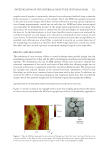
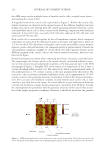
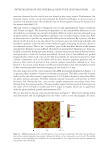
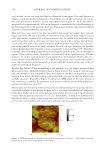
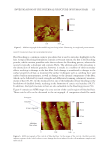
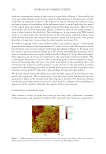
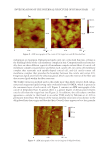
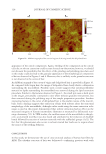
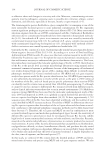
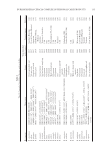
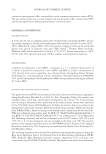
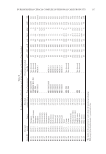
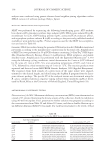
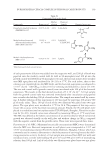
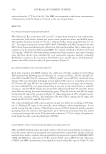
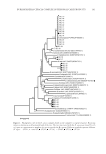
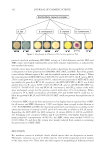
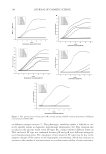
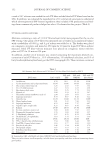
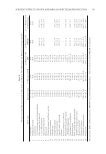
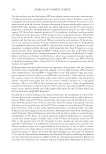
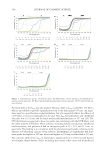
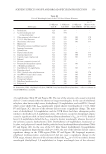
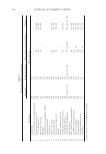
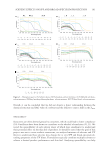
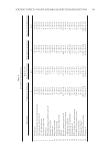
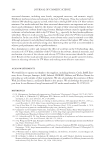
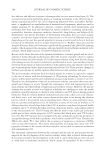
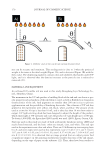
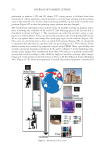
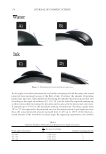
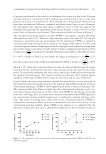
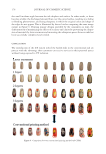
JOURNAL OF COSMETIC SCIENCE 140 and incubated at 37°C for 24 h (40). The MBC was estimated as the lowest concentration of preservative with the absence of colony in the case of agar plates. RESULTS BCC SPECIES ISOLATION AND IDENTIFICATION We collec ted 25 B cc strains from 2015 to 2017, isolated fr om shampoos, hair conditioners, raw materials, body lotion, shower gel, toner, cream, production water, and bubble water. The number of bacteria exceeds 103 cfu ml-1, of which 18 Bcc strains are greater than 105 cfu ml-1. The types of preservatives were MIT/cMIT, DMDMH, and MH. Except for the two PCPs (body lotion and shower gel) collected in July and November 2016, other types of cosmetics can be detected with residual MIT, the content of which is between 10.8 and 15.6 mg kg-1 (Table II). All of the spoilage strains were Gram-negative, non–spore-forming rods, and four species were identifi ed by recA nucleotide sequence analysis, including Burkholderia cenocepacia, B. contaminans, Burkholderia lata, and B. cepacia, with the phylo- genetic tree of Bcc based on the recA gene sequence (Figure 1). BCC SPECIES DIVERSITY IN CONTAMINATED PCPS RecA gene sequence and MLST analysis of a collection of 25 Bcc is olates recovered from PCPs revealed the following species diversity: B. cenocepacia (ST621, ST258, and nST), B. lata (ST339 and ST336), B. contaminans (ST482), and B. cepacia (ST922). A total of seven distinct STs were identifi ed belonging to four different Bcc species, including one novel ST. The new ST type, BC-04, was identifi ed as B. cenocepacia by recA gene, the evolution- ary tree established by recA gene showed that it was not in the same branch as other B. cenocepacia, and the MLST results also showed the gltB and gyrB were 64 and 506, which were different among the seven housekeeping genes. These all indicate that BC-04 might be the new ST type of B. cenocepacia (Figure 1). The proportion of 48% of stains we de- tected is B. cenocepacia ST621, the dominant STs were ST621 among all ST types, fol- lowed by ST339 (16%) and ST336 (16%). The colony morphology of Bcc species grown on agar was different according to STs (Fig- ure 2). Different ST types in the same Bcc show different colony morphologies. It was worth noting that the colonies of Burkholderia cepacia (ST922) showed a purple pigment spreading from the center to the edge (add 5 μl of the bacterial solution that was stored in a glycerol storage tube to the TSA plate and incubate at 37°C for 5 days) this phenom- enon might become a specifi c phenotype of ST922. SUSCEPTIBILITY OF BCC STRAINS ISOLATED FROM CONTAMINATED PCPS MIC a nd MBC methods allow the rapid evidence of bacterial susceptib ility in response to biocides contact and action in general, and to preservatives in particular. In this study, the methods were used to evaluate the susceptibility of preservatives agents (DMDMH, MIT/ cMIT, and MH) for a collection of 25 Bcc strains and B. cepacia ATCC 25416. The mean of MICs and MBCs demonstrated susceptibility varied within Bcc species (Table V). Our

BURKHOLDERIA CEPACIA COMPLEX IN PERSONAL CARE PRODUCTS 141 Figure 1. Phylogenetic tree of the B. cepacia complex based on the complete recA gene sequence. Bootstrap values are shown on each horizontal limb of the tree. The tree was rooted with the B. xenovorans strain TCo-26 recA gene as a representative member of a species outside the Bcc group. Different symbols represent different ST types: : ST621 : novel ST : ST922 : ST336 : ST482 : ST339 : ST258.
Purchased for the exclusive use of nofirst nolast (unknown)
From: SCC Media Library & Resource Center (library.scconline.org)