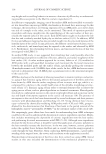
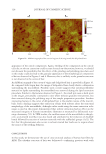
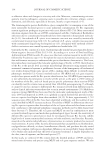
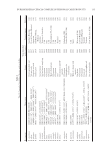
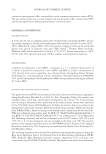
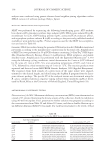
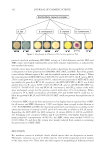
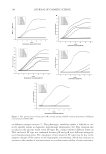
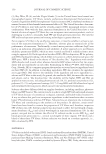
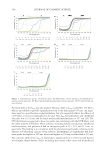
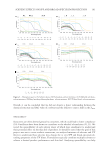
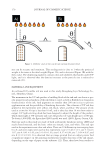
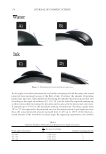
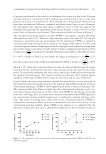
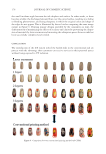
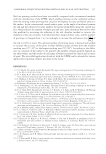
JOURNAL OF COSMETIC SCIENCE 144 Figure 3. The growth curves of four types of Bcc strains and the standard strain in the presence of different concentrations of MIT/cMIT. on different nitrogen sources (7). This phenotypic variability makes it diffi cult to cor- rectly identify strains in diagnostic microbiology laboratories (42). This variation also occurred in the present study, seven ST-types Bcc colonies showed different forms on TSA, and novel ST type was confi rmed because gltB and gyrB were different among the seven housekeeping genes. The emergence of new strains or ST types may be due to the adaptive changes of the strains to the oligotrophic environment, which may indicate an increase in the number of resistant strains or an enhancement ability of strain resistance.

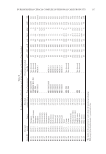
BURKHOLDERIA CEPACIA COMPLEX IN PERSONAL CARE PRODUCTS 145 In the present study, most of the contaminated bacterial count (72%) is greater than 105 cfu ml-1 it was a huge amount in PCPs, and most contaminating bacteria showed re- duced susceptibility in products where MIT/cMIT is present, which is consistent with previous studies (43), indicating that the MIT/cMIT in these products cannot inhibit the growth of Bcc for several reasons: (i) intrinsic and acquired resistance in Bcc bacteria, including effl ux pump, outer membrane permeability barrier, and alterations in drug targets (44) (ii) Bcc bacteria has an adaptive mechanism for oligotrophic environments that can use substances in the environment as a source of nutrients for metabolism and (iii) preservative compatibility with formulations: formulation water activity, pH range, and partition coeffi cients of preservatives (e.g., oil-in-water and water-in-oil emulsions). The work of the resistance mechanism will be performed in the next part of our study. B. cenocepacia is considered one of the most frequent isolates in our collection. B. cenocepa- cia ST621 was also identifi ed in 42 Bcc isolates, which were obtained from tertiary refer- ral hospitals (45). The fact that these STs from PCPs were also isolated from patients suggested that conservation of intrinsic determinants necessary to thrive in PCPs may confer an ability to colonize susceptible humans. Similar reports showed that 21.5% of the clinical isolates were indistinguishable by MLST in isolates from environmental sources (46). Therefore, more detailed MLST research is needed to study the pathogenic members of Bcc in nonclinical settings, and Bcc from clinical sources will be collected for further research. In this study, a total of 25 Bcc isolates were obtained from contaminated PCPs. B. cenocepacia was the most common contaminating microorganism, followed by B. lata and B. cepacia. The most common molecular type was ST621. However, Bcc is susceptible to genetic mutations that lead to the emergence of new types of mutations. Therefore, continuous monitoring and prevention of Bcc stains is extremely necessary, and the low susceptibility of Bcc to MIT/cMIT is one of the important reasons for its contamination of PCPs. This characteristic of Bcc should be taken seriously by manufacturers to avoid more nosoco- mial infection due to the use of Bcc-contaminated PCPs. ACKNOWLEDGMENTS The authors are grateful to the study participants, without whose willingness to participate this study would not have been possible. This research was supported by funding from GDAS’ Project of Science and Technology Development (No. 2019GDASYL-0104006) and the National Natural Science Foundation of China (No. 31770091 ). REFERENCES (1) M. Saeb-Lima, G. V. Solis-Arreola, and A. Fernandez-Flores, Mycobacterial infection after cosmetic procedure with botulinum toxin A, J. Clin. Diagn. Res., 9, WD01–WD02 (2015). (2) K. L. Warburton and M. Wilkinson, Contact allergy to methylisothiazolinone: has there been any change? Experience of a UK centre, Contact Dermatitis, 72, 398–400 (2015). (3) R. Campana, C. Scesa, V. Patrone, E. Vittoria, and W. Baffone, Microbiological study of cosmetic prod- ucts during their use by consumers: health risk and effi cacy of preservative systems, Lett. Appl. Microbiol., 43, 301–306 (2006). (4) A. S. B. Tan, M. Tuysuz, and G. Otuk, Investigation of preservative effi cacy and microbiological content of some cosmetics found on the market. Pak. J. Pharm. Sci., 26, 153–157 (2013).
Purchased for the exclusive use of nofirst nolast (unknown)
From: SCC Media Library & Resource Center (library.scconline.org)