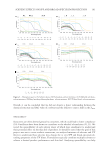
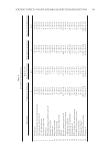
JOURNAL OF COSMETIC SCIENCE 164 structural elements, including ester bonds, conjugated structure, and aromatic ring(s). Ethylhexyl methoxycrylene and polyester-8 also had –CN groups. These four solvents had an inherent SPF-absorbing capacity as well, which led to the high SPF of the UV fi lter–solvent mixtures. Our results indicated that these structural characteristics are important and can in- dicate good performance however, the absence of some of these structural elements did not necessarily prevent a solvent from being a booster. Multiple solvents caused a signifi cant hyp- sochromic or bathochromic shift in the UV fi lters’ λmax, especially for butyl methoxydibenzo- ylmethane. However, in all cases, the λmax stayed in the range where the UV fi lter was normally absorbed in. In the case of the UVB fi lters, most solvents only caused a minimal or no shift. Although polyester-8 and ethylhexyl methoxycrylene achieved the highest SPF values, they were viscous and sticky and had a strong color. Optimizing their use level is recommended to achieve good performance and acceptable aesthetics. For a formulator t o select and estimate the effect of a solvent on the UV-absorbing char- acteristics of a UV fi lter, solubility of the UV fi lter in the solvent, chemical structure, and mechanism of action of the solvent and solvent–UV fi lter interactions should be consid- ered. Results of this study provide practical information that can guide sunscreen formu- lators in selecting solvents for UV fi lters and making more effective sunscreens. ACKNOWLEDGMENTS We would like to e xpress our thanks to the suppliers, including Symrise, Croda, BASF, East- man, Active Concepts, Innospec, AAK, Lubrizol, INOLEX, Hallstar, and Wacker Chemie for providing us with samples of their ingredients. We also acknowledge the assistance of Katie Wolf, Jess Kona-Stanciu, and Janelle Barth in this project. We acknowledge the partial sup- port from Access Business Group International LLC under award number N-127059-01. REFERENCES (1) H. H önigsmann, E rythema and pigmentation, Photodermatol. Photoimmunol. Photomed., 18, 75–81 (2002). (2) J. H. Rabe, A. J . Mamelak, P. J. McElgunn, W. L. Morison, and D. N. Sauder, Photoaging: mechanisms and repair, J. Am. Acad. Dermatol., 55, 1–19 (2006). (3) Hawaii State Senate, A bill for an act relating to water pollution, 29th Legislature SB 2571, 2018, ac- cessed December 4, 2019, https://www.capitol.hawaii.gov/session2018/bills/SB2571_.HTM. (4) City of Key West, FL City Commission, Action Minutes—Final, 2019, accessed December 4, 2019, http://keywestcity.granicus.com/MediaPlayer.php?view_id=1&clip_id=941. (5) Committee on Government Operations, Consumers, and Veterans Affair, Thirty-Third Legislature of the Virgin Islands, 2019, accessed December 4, 2019, http://legvi.org/committeemeetings/Rules%20 and%20Judiciary/Thursday,%20June%2013,%202019/Bills/33-0043.pdf (6) S. L. Schneider a nd H. W. Lim, Review of environmental effects of oxybenzone and other sunscreen ac- tive ingredients, J. Am. Acad. Dermatol., 80, 266–271 (2019). (7) S. Q. Wang and H . W. Lim, Principles and Practice of Photoprotection (Springer International Publish- ing, Cham, Switzerland, 2016). (8) S. Abbott, Solubi lity Science: Principles and Practice (Creative Commons BY-ND, Attribution and No- Derivatives, 2018), https://www.stevenabbott.co.uk/_downloads/Solubility%20Science%20Principles%20 and%20Practice.pdf. (9) J. Wiechers and S . J. Abbott, Formulating for Effi cacy, the Software, 2011/2013, accessed August 24, 2019, https://www.jwsolutionssoftware.com/. (10) M. A. Kalam, S. Alsheri, A. Alshamsan, M. Alkholief, R. Ali, and F. Shakeel, Solubility measurement, Hansen solubility parameters and solution thermodynamics of gemfi brozil in different pharmaceutically used solvents, Drug Dev. Ind. Pharm., 45, 1258–1264 (2019).

SOLVENT EFFECTS ON SPF AND BROAD-SPECTRUM PROTECTION 165 (11) A. Alhalaweh, A . Alzghoul, and W. Kaialy, Data mining of solubility parameters for computational prediction of drug–excipient miscibility, Drug Dev. Ind. Pharm., 40, 904–909 (2014). (12) A. Benazzouz, L . Moity, C. Pierlot, V. Molinier, and J. M. Aubry, Hansen approach versus COSMO-RS for predicting the solubility of an organic UV fi lter in cosmetic solvents, Colloids Surf. A Physicochem. Eng. Aspect., 458, 101–109 (2014). (13) F. Gharagheizi a nd M. Torabi Angaji, A new improved method for estimating hansen solubility param- eters of polymers, J. Macromol. Sci. B, 45, 285–290 (2006). (14) M. Raynal and L . Bouteiller, Organogel formation rationalized by Hansen solubility parameters, Chem. comm. (Cambridge, England), 47, 8271–8273 (2011). (15) J. Gao, S. Wu, a nd M. A. Rogers, Harnessing Hansen solubility parameters to predict organogel forma- tion, J. Mater. Chem., 22, 12651–12658 (2012). (16) C. M. Hansen, T h e Three Dimensional Solubility Parameter and Solvent Diffusion Coeffi cient (Danish Technical Press, Copenhagen, Denmark, 1967), accessed May 29, 2019. https://www.hansen-solubility. com/contents/HSP1967-OCR.pdf. (17) S. Abbott, Scie n ce-based Formulation: The XL Power of HSP for Coatings Compatibility Issues, 2018, accessed November 20, 2019, https://coatings.specialchem.com/tech-library/article/hsp-science-based- formulation-for-coatings. (18) U. Osterwalder, B. Herzog, and S. Q. Wang, Advance in sunscreens to prevent skin cancer, Expet Rev. Dermatol., 6, 479–491 (2011). (19) L. E. Agrapidis - Paloympis, R. A. Nash, and N. A. Shaath, The effect of solvents on the ultraviolet ab- sorbance of sunscreens, J. Soc. Cosmet. Chem., 38, 209–221 (1987). (20) National Archives and Records Administration's Offi ce of the Federal Register, Electronic Code of Fed- eral Regulations (eCFR), §352.10 Sunscreen Active Ingredients, 2019, accessed October 5, 2019, https://www.ecfr.gov/cgi-bin/text-idx?SID=cacd92e0a44451fa5eb26797b6bf6321&mc=true&node=s p21.5.352.b&rgn=div6&mod=article_inline#se21.5.352_110. (21) J. Wiechers, M. C. Taelman, V. A. L. Wortel, C. Verboom, and J. C. Dederen, Emollients and emulsi- fi ers exert their sensory impact in different phases of the sensory evaluation process but how does one demonstrate the absence of such an infl uence? IFSCC, 5, 99–105 (2002). (22) U. Osterwalder, M. Sohn, and B. Herzog, Global state of sunscreens, Photodermatol. Photoimmunol. P h o- tomed., 30, 62–80 (2014). (23) N. A. Shaath, “The photostability of organic sunscreen actives: a review” in Sunscreens, Regulatio n s and Commerical Development, 3rd Ed. (CRC Press, Boca Raton, FL, 2005), pp. 322–346. (24) N. A. Shaath, Encyclopedia of Ultraviolet Filters (Allured, Carol Stream, IL, 2007). (25) N. A. Sha a th, SPF boosters & photostability of ultraviolet fi lters, Happi, October, 77–82 (2007). ( 2 6) Hallstar, HallBrite BHB, 2018, accessed December 17, 2019, https://www.hallstar.com/webfoo/ wp-content /uploads/Sun-Care-HallBrite-BHB.pdf. (27) S. Afonso, K. Horita, J. P. Sousa e Silva, I. F. Almeida, P. A. Lobão, P. C. Costa, M. S. Miranda, J . C. Esteves da Silva, and J. M. Sousa Lobo, Photodegradation of avobenzone: stabilization effect of antioxi- dants, J. Photochem. Photobiol. B, 140, 36–40 (2014). (28) D. G. Beasley and T. A. Meyer, Characterization of the UVA protection provided by avobenzone, zinc ox i de, and titanium dioxide in broad-spectrum sunscreen products, Am. J. Clin. Dermatol., 11, 413–421 (2010). (29) National center for Biotechnology information, PubChem Database, Avobenzone, accessed October 3, 2019 , https://pubchem.ncbi.nlm.nih.gov/compound/Avobenzone#section=Information-Sources. (30) D. B. Buller, P. A. Andersen, B. J. Walkosz, M. D. Scott, J. A. Maloy, M. B. Dignan, and G. R. Cutter , Compliance with sunscreen advice in a survey of adults engaged in outdoor winter recreation at high- elevation ski areas, J. Am. Acad. Dermatol., 66, 63–70 (2012). (31) G. Baki, M. Szoboszlai, M. W. Liberatore, and M. Chandler, Application of check-all-that-apply (CATA) questions for sensory characterization of cosmetic emulsions by untrained consumers, J. Cosmet. Sci., 69, 83–100 (2018). ( 32) B. M. Jameel, A. Huynh, A. Chadha, S. Pandey, J. Duncan, M. Chandler, and G. Baki, Computer-based formulation design and optimization using Hansen solubility parameters to enhance the delivery of ibuprofen through the skin, Int. J. Pharm., 569, 118549 (2019). ( 33) B. Ametek, Texture Analysis Application Note: Moisturizing Cream Spreadability Test, accessed No- vember 30, 2019, https://www.brookfi eldengineering.com/-/media/ametekbrookfi eld/application%20 pdfs/texture%20applications/cosmetics%20texture/texture%20app_moist%20cream_spread. pdf?la=en.
Purchased for the exclusive use of nofirst nolast (unknown)
From: SCC Media Library & Resource Center (library.scconline.org)