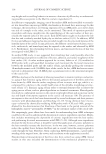
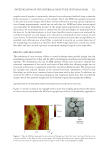
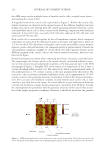
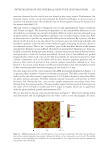
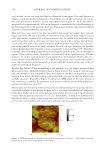
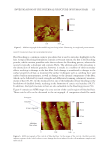
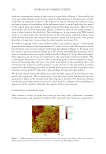
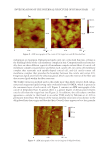
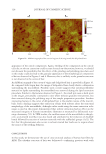
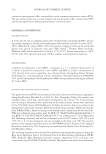
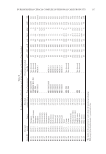
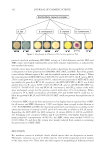
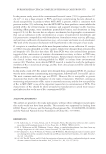
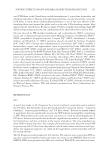
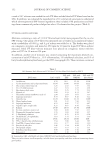
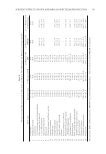
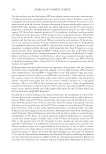
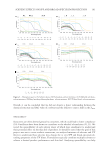
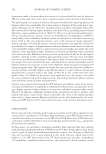
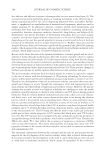
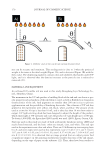
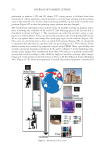
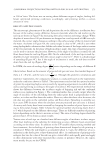
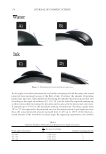
JOURNAL OF COSMETIC SCIENCE 176 the small incident angle between the ink droplets and surface. In other words, as theta becomes smaller, the discharged amount fl ows over the curved surface, resulting in a fading or bleeding phenomenon, and losing sharpness in which the original colors and shape of the edges do not appear. This is illustrated by the red circles comparing the same image output in Figure 6. Printing unique designs provided by the consumers on time, the demonstration of maximizing the effects of accuracy and clarity by preventing the disper- sion of materials by laser treatment and increasing the adsorption power between inks has been successfully completed and verifi ed. CONCLUSI O N The intr oduction of the IoT system solved the health risks in the conventional nail art process with the advantage that customers can receive services in their personal spaces without being exposed to UV radiation. Figure 6. Comparison between conventional printing method and CPPM.

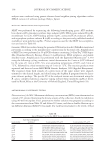
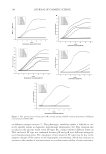
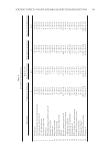
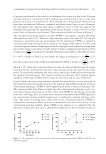
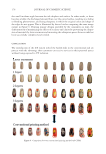
CONFORMAL PROJECTION PRINTING METHOD FOR 3D NAIL ART PRINTING 177 Nail art printing results have been successfully compared with conventional methods with the introduction of the CPPM, which enables printing on the conformal surfaces from the existing inkjet printing that can print the highest accuracy and detail only on a fl at surface. In the conventional curved surface print, as the angle of incidence between the ink and the substrate becomes smaller, the spread of ink fl ows along the curved sur- face, which reduces the amount of output per unit area. Laser treatment was used to solve this problem by increasing the adhesion of the ink. Another method to increase the sharpness of the curved surface is divided into three ranges of theta value, and the number of printings is changed from 1 to 3 accordingly to increase the settlement ratio ¬ WP ® I W of the ink to 100% or more. The optimal number of printing layers is derived and verifi ed to increase the accuracy of the print in three different ranges of theta from the smallest stacking area (15°–30°) to the largest stacking area (70°–90°). According to the differ- ence in curvature of the surface to be printed, the number of layers printed depends on the theta values, and the results of each range of values increased the clarity and accuracy of print. The successful application of nail art with the CPPM can be extended to various applications requiring compact precision in the future. REFERENCES (1) T. P. Mpof u , M. Cephas, and M. Macdonald, The impact and application of 3D printing technology, Int. J. Sci. Res. 3, 2148–2152 (2014). (2) N. S. Kim, K . N. Han, and K. H. Church, Direct writing technology for 21st century industries- focus on micro-dispensing deposition write technology, J Trans. KSMTE, 5, 511–515 (2007). (3) J. Hoffman, S. Hwang, A. Ortega, N. S. Kim, and K. Moon, The standardization of printable materials and direct writing system, J. Electron. Packing, 135, 01–08 (2013). (4) B. Berman, 3D printing: the new industrial revolution, J. Sci. Direct., 55, 155–162 (2012). (5) A. Vanderploe g , S. E. Lee, and M. Mamp, The application of 3D printing technology in the fashion industry, Int. J. Fashion Design Technol. Educ., 10, 170–179 (2016). (6) E. A. Clark, M . R. Alexander, D. J. Irvine, C. J. Roberts, C. J. Tuck, and R. D. Wildman, 3D Printing of tablets using inkjet with UV photoinitiation, Int. J. Pharm., 529, 523–530 (2017). (7) L. J. Love, A . O. Nycz, and A. Adediran, An in-depth review on the scientifi c and policy issues associ- ated with additive manufacturing, J. Sci. Policy Governance, 11, 1–10 (2017). (8) T. Birtchnell and J. Urry, A New Industrial Future?: 3D Printing and the Reconfi guring of Production, Distribution and Consumption (The University of Lancaster, United Kingdom, 2016), pp. 1–17. (9) D. G. Taylor a nd D. Strutton, Does Facebook usage lead to conspicuous consumption? The role of envy, narcissism and self-promotion, J. Res. Interactive Marketing, 10, 231–248 (2016). (10) N. A. Madnan i and K. J. Khan, Nail cosmetics, Indian J. Dermatol. Venereol. Leprol., 78, 309–317 (2012). (11) C. L. Farley , C. V. Hoover, and C. A. Rademeyer, Women and tattoos: fashion, meaning, and implica- tions for health. J. Midwifery Women’s Health, 64, 154–155 (2019). (12) J. A. Kim an d S. M. Kim, Analysis of infl uential factors on respiratory symptoms of nail shop workers, Int. J. Adv. Culture Technol., 5, 24–34 (2017). (13) T. Quach, D. N. Kim, P. A. B. Doan, L. Okahara, C. Fan, and P. Reynolds, A preliminary survey of Vietnamese nail salon workers in Alameda County, California, J. Community Health, 33, 336–341 (2008). (14) S. M. Bollar d , S. M. Beecher, N. Moriarty, J. L. Kelly, P. J. Regan, and S. M. Potter, Skin cancer risk and the use of UV nail lamps, Australas. J. Dermatol., 59, 348–349 (2018). (15) S. Holly, A. Ouhtit, and N. Honnavara, Mechanisms of induction of skin cancer by UV radiation, Front. Biosci. 2, d538–d551 (1997). (16) C. H. Shanno n and F. B. Wilma, Ultraviolet light and skin cancer in athletes, SAGE J., 1, 335–340 (2009). (17) S. Y. Kim an d M. K. Park, A study on nail service satisfaction by factors in customers of nail shop, Asian J. Beauty Cosmetol., 12, 555–564 (2014).
Purchased for the exclusive use of nofirst nolast (unknown)
From: SCC Media Library & Resource Center (library.scconline.org)