82 JOURNAL OF THE SOCIETY OF COSMETIC CHEMISTS associates (1, 2, 3). Proof of the cutaneous penetration of mercury has rested chiefly upon the finding of mercury in the urine, although systemic symptoms of mercurialism have also been frequently noted. While clinical studies on humans can be carried on with reasonable care to prevent contamination .of excreta with mercury, this is not so easy with animals. Furthermore, in the screening of a large number of ointments, a rapid means for quantitative differentiation was very necessary. In this respect, the urinary excretion method left much to be desired and, in fact, could be regarded as hardly suf•ciently quan- titative. Because of the fact that the new methods which we have adapted for the assay of mercurial ointments have applicability for other heavy metals, as well as the routine testing of numerous cosmetic preparations, it seems advisable to describe the procedures somewhat in :detail. A. METHODS FOR CUTANEOUS APPLICATION Obviously stringent precautions are necessary in determining cu- taneous permeability in order to avoid serious errors. There must be assurance that the substance under study enters the body • ia the skin and only • ia this route. All oral contact thr. ough lickir•g, etc., must, therefore, be avoided. In addition, if examination ofexcreta is to be made, ways must be found to prevent contamination by a flaking or running off of the test substance from the skin into the collection trays. Rabbits used in our study were immobilized in a special head-hip stock (4). Hair from the back and flanks was removed by clipper. Shaving or chemical methods of depiliation were avoided because of the possibility of injury to the skin. An area of 4 X 6 in. [155 (cm.) 2 which is 8 per cent of the total body surface of a 2.5-kg. rabbit] was laid off saddle fashion from the back around to each flank. To avoid creeping of ointment the area was limited by strips of tape. An excess of ointment (4 gm.) was inucted with a glass rod for 3 min, utes. Without removing the excess ointment the inunction site was then covered with rubberized cloth and the animal kept in the stock for 24 hours. Because of greater 'availability and ease of handling, the rat proved to be more desirable as a test animal than the rabbit. But since it was not feasible to confine rats in indi- vidual stocks like rabbits, a tech- nique for wrapping the animals was developed which proved rapid and effective. The animals were lightly etherized and the hair removed around the trunk between shoulders and hips. An area of 1i/2 X 3 in. [29 (cm.) 2 which is 8 per cent of the total body surface of a 250-gin. rat] was laid off on the back in a manner similar to that for the rab- bit. An excess of ointment (0.4 'gm.) was inuncted with glass rod for 3 minutes. After inunction, and without removal of the excess oint-

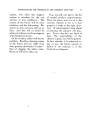
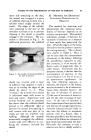
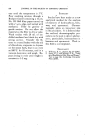
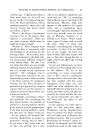
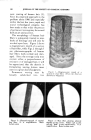
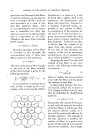
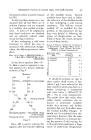
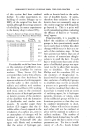
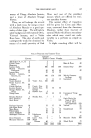
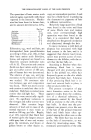
STUDIES ON THE PERMEABILITY OF THE SKIN TO MERCURY 83 ment still remaining on the skin, the animal was wrapped in a piece of celluloid sheeting formed into a cylinder fitted snugly around the trunk. The edges of the cylinder were cemented to the skin at the shoulders and hips so as to prevent slipping of the shield or possible seepage of the ointment. The pro- cedure is illustrated in Fig. 1. As additional protection, the celluloid Figure l.--For studies on the permeability of the skin to mercury shield was covered with a layer of adhesive tape applied in such a way as to overlap the edges of the shield by about •/4 in. Thus "trussed," the animals were placed in individual cages with access to food and water. Experience with several hundred rats so prepared has shown that the celluloid shield proved to be sufficiently rigid to prevent the animal from getting in oral contact with any part of its trunk, yet did not interfere with walking. Although the animals occasionally struggled, the celluloid- to-skin seals were effective in con- fining the ointment beneath the shield. B. METHODS FOR DETECTING CUTANEOUS PENETRATION OF MERCURY The method for detecting and quantitating the cutaneous pene- tration of mercury depends on an entirely new principle. This method substitutes storage of mercury for excretion of mercury as a measure of how much has penetrated the skin. Of all the organs of the body, the kidney has the greatest capacity for storing mercury. This is shown very clearly in Table 1. Here it can be seen that the concentration of mercury in the kidney, following 24- and 48-hour exposures to calo- mel ointment, is of an entirely dif- ferent order of magnitude than in other tissues. Convenient also for purposes of assay is the fact that the concentration of mercury in the control kidney is so low as to be of no quantitative significance. At any time following exposure to mercury, the amount in the kidney may be assumed to be a balance be- tween three dynamic factors: (1) the rate of entrance of mercury, (2) the rate of excretion of mercury, and (3) the rate of storage of mer- cury. If the rate of excretion is slow (experiments have proved this) and the rate of storage rapid (intra- venously injected mercury finds its way into the kidney in maximum amount with 1'./•. hours), then it becomes possible to use the mercury content of the kidney as a measure of how much has penetrated the skin. Obviously this measure is only a relative one, but is chiefly useful in
Purchased for the exclusive use of nofirst nolast (unknown)
From: SCC Media Library & Resource Center (library.scconline.org)