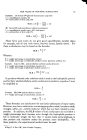
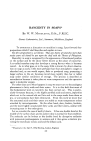
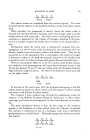
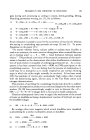
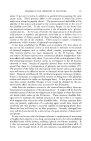
LIPSTICKS--FORMULATION, MANUFACTURE, AND ANALYSIS 245 This is indicated by a rather rapid decrease in its acid number. In prep- aration of esters this reaction goes on to a considerable degree as a side reaction. The hydroxyl group does oxidize to form heptaldehyde. Even traces of heptaldehyde are sufficient to make the product unusable for lip- sticks. Quite often ricinoleates have not been fully explored because of these impurities. We use an indirect method to form the ricinoleates to avoid cross esterification. Care in selection of the catalyst and operating conditions avoids the formation of aldehydes and other odoriferous by- products. The lower aliphatic esters are made by alcoholysis of the glyc- eride. The other esters are then made by replacement of the lower alkyl radical with the desired alcohol. castor oil q- methanol -• methyl ricinoleate q- glycerin methyl ricinoleate q- cetyl alcohol -• cetyl ricinoleate q- methanol We have prepared a number of ricinoleate esters using these methods. The ethyl and isopropyl as well as the propylene glycol monoester have been mentioned previously. Cetyl and stearyl ricinoleate are liquids with melting points of 20 and 25øC. They are somewhat less viscous than castor oil. They are completely compatible with castor oil and can be used as a substantial replacement of it. The ricinoleates of lanolin alcohols and lanolin sterols are viscous products with exceptionaI emolliency. We are also making the corresponding oleates. The properties are somewhat the same for the entire series with the exception of having less body and being poorer solvents for bromo acid. The term solvents has been used several times. There are materials that are excellent solvents for bromo acid but are of limited value as they do not allow the dye to stain the skin. Polyethylene glycol ether of lauryl alcohol is a representative case. Where reference is made to a solvent, we mean one that not only dissolves the bromo acid but assists it in staining the skin. The solvents used in the high stain lipsticks fall into two groups: the free glycols or polyglycol esters and fatty acid esters of the polyglycol ethers. Of the glycols, propylene and butylene are most frequently used. The polyethylene glycols up to a molecular weight of 1000 are effective. Consideration must be given to the hygroscopic effect of these materials. Due to the anhydrous nature of a lipstick, moisture is drawn from the lips in order to establish a hygroscopic equilibrium, where these materials are used. This can result in dry, parched lips. We know of no miracle ingre- dient, with one exception, which will offset this hygroscopic effect. This ingredient is water, which is incompatible with the general type of lipstick. As the molecular weight increases, the hygroscopic effect decreases but so does the staining power of their solutions. The polyethylene glycol mono- esters of lauric, palmitic, stearic, oleic, and ricinoleic acids are good solvents. There is a tendency for the longer polyglycol chain esters to act as emulsi-

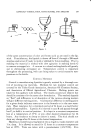
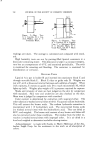
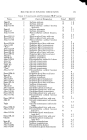
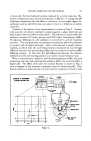
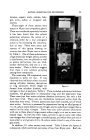
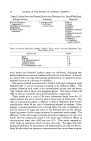
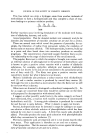
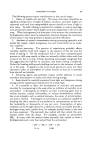
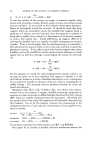
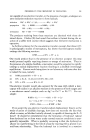
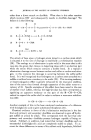
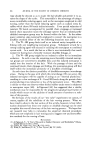
246 JOURNAL OF THE SOCIETY OF COSMETIC CHEMISTS tiers or water solubilizers. The use of tetrahydrofurfuryl acetate as a bromo solvent is covered by patents. As staining colors the halogenated fluoresceins are used: Color Chemical Formula Stain D&C Orange #5 Dibromfluorescein Orange red D&C Red #21 Tetrabromfluorescein Red D&C Red #27 Tetrabromtetrachlorfluorescein Blue red There are several other colors of this general structure that are certified. Their use has been limited. General practice is to use 3 parts bromo acids and 12 parts lake color to 100 parts base. Variation in consistency and melting point in different shades of lipstick is quite often encountered even though the same base and color con- centration are used. This is due to differences in the oil absorption of the various colors. Taking an arbitrary oil absorption as indicated by flow characteristics as a value of 0, we have charted the colors as follows, giving a negative value to those with a lesser amount of oil absorption and a posi- tive value to those with a greater amount. D&C Orange if4 ............................................. - 2.'0 D&C Red #9 ................................................ - 3:0 D&C Red #35 ............................................... - 0.5 D&C Red #21 ................. A1. salt ........................ '15.0 D&C Red #11 ............................................... 3.5 D&C Red #13 ............................................... - 1.0 D&C Red #19 ................. A1. salt ........................ 1.0 D&C Red #7 ................................................ 0.5 D&C Red #34 ................. Resinated Ca. salt .............. 12.0 Titanium Dioxide ............................................ - 4.0 D&C Red #21 ............................................... •-- 2.5 D&C Orange #5 .............................................. - 1.5 D&C Red #27 ............................................... - 2.0 The weighted average of oil absorption for each formula in a series of shades should be as uniform as possible. The differences in oil absorption are ap- parent where melting points are taken by the capillary tube method. A lipstick made with a colorless base with 65øC. m.p. might have a re.p, of 66 ø in a shade high in titanium dioxide and 72øC. in a shade high in D&C Red//34. In manufacturing lipsticks, the colors are mixed with part of the oil in change can mixer A, then passed through a three-roller mill B. The color and oil are ground a sufficient number of times to achieve a color distribu- tion of 7 or better on a grind gauge. The color in oil is heated to 70øC. in kettle C. The balance of materials is heated to 90 ø in kettle D. The con- tents of D is strained through a 2$0-mesh stainless steel screen E into C with constant agitation in C. After several hours' stirring, samples are drawn off for control tests. Any adjustment in shade is made by using color bases
Purchased for the exclusive use of nofirst nolast (unknown)
From: SCC Media Library & Resource Center (library.scconline.org)