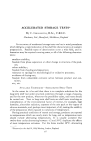
CALCULATION OF HLB VALUES OF NON-IONIC $URFACTANTS* By WILLIAM C. G•.I•IN ?it/as Powder Company, tt•ilmington, Del. IN THE PAST FIFTEEN or twenty years, there has been a tremendous growth in the field of surfactants. The term surfactants, as used here, includes emulsifiers, wetting agents, suspending agents, detergents, anti- foam compounds, and many others. Despite widespread interest in all types of surfactants, there has been no utilitarian method of classifying them. There has been division according to ionization, chemical type, and by popular (often ambiguous) nomenclature. The surfactant used in practically all formulations prior to the 1930's was soap. In the mid 1930's the supremacy of soap was challenged, first by sulfonates and sulfate-type ionic surfactants, and shortly thereafter by the non-ionics. In the past few years blends of non-ionic and anionic sur- factants have become increasingly popular. Throughout this period, cat- ionic surfactants have seen increased use but not to the same degree as that of either anionic or non-ionic products. The biggest difficulty with surfactants today, at least from the stand- point of those who have to choose them, is the staggering number that are available. Each manufacturer tries to provide one or more of his own products that is suitable for every need and therefore each has a tremendous selection. The large number of surfactants available, coupled with the fact that application problems are becoming increasingly difficult, is mak- ing the need for a suitable system of selection of surfactants more and more critical. Any emulsion chemist who works with surfactants for a few years soon recognizes that there is a correlation between their behavior and their solubility in water. For example, he will use a water-soluble surfactant or blend to make an oil-in-water emulsion. He will also use a water- soluble surfactant for solubilization and an almost completely water- soluble surfactant as a detergent. All the products of these applications may be said to exhibit aqueous characteristics that is, they dilute readily * Presented at the May 14, 1954, Meeting, New York City. 249

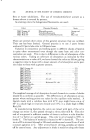
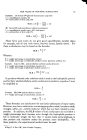
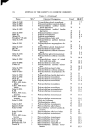
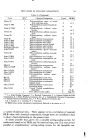
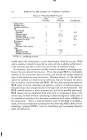
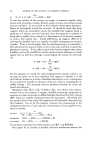
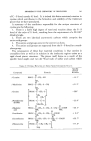
•50 JOURNAL OF THE SOCIETY OF COSMETIC CHEMISTS with water and conduct electricity. For these purposes the emulsion chem- ist would under no circumstances use an oil-soluble surfactant. However, to make a water-in-oil emulsion, to couple water-soluble materials into an oil, or to make a dry-cleaning detergent, all of which are non-aqueous sys- tems, he would choose an oil-soluble surfactant. This relationship of behavior and water solubility that is followed by most experienced emulsion chemists is so inexact in its usual form that it is only of value as a basis of thinking. We have been successful in assigning nu- merical values to surfactants, thereby providing a system of classification that is related to their behavior and to their solubility in water. This method, called the HLB method from the term Hydrophile-Lipophile Bal- ance, is based on the premise that all surfactants combine hydrophilic and lipophilic groups in one molecule and that the proportion between the weight percentages of these two groups for non-ionic surfactants is an indication of the behavior that may be expected from that product. The HLB value is useful because it allows a prediction of the action that may be expected from a surfactant for example a low value, about 4, will be a water-in-oil emulsifier a high value, about 16, will be a solubilizer. What is referred to here is the type of behavior that can be expected, rather than the efficiency with which this will be accomplished. In our laboratory the behavior ofsurfactants in relationship to their hydro- philic nature was first recognized in emulsion studies. When two non-ionic emulsifiers, one hydrophilic and the other lipophilic, were mixed in varying ratios the efficiency of the blend as an emulsifier for a given oil went through a maximum. Using pairs of different surfactants to emulsify the same oil, it was apparent that this maximum occurred at the same weight percentage of hydrophilic substance in the surfactant blend. Essentially therefore, the HLB value is a function of the weight percentage of the hydrophilic portion of the molecule of a non-ionic surfactant. HLB values may be calculated for non-ionic surfactants or may be deter- mined experimentally. The experimental procedure is long and laborious and was described a few years ago [J. Soc. COSMETIC CHEM., 1,311-326 (1949)]. Formulas for calculating HLB values may be based on either analytical or composition data. For most polyhydric alcohol fatty acid esters ap- proximate values may be calculated with the formula HLB= 20(1 Wherein: S = saponification number of the ester A = acid number of the acid
Purchased for the exclusive use of nofirst nolast (unknown)
From: SCC Media Library & Resource Center (library.scconline.org)