WHAT RESEARCH EXPECTS OF MANAGEMENT 265 No matter what management's other attitudes toward science may be, it should not demand that science relieve it of its responsibility for action. Science has been so productive, and the authority of science has come to be so persuasive, that society has come to place an unfortunate faith in the ability of science. Humility is to be regarded more highly than authority in all fields of endeavor, and research is no exception. ß ß ß ß ß ß Good research can be fostered by good publicity. However, the use of advertising copy which unwarrantedly glorifies research findings, and which makes spectacular announcements of and claims for products and processes, far beyond the ability of the research group to produce, is damaging to both management and research. All too frequently "research" is conducted for the purpose of creating extravaganza-type advertising programs. False claims or overrated statements inevitably impose serious problems upon management and the responsibility for them is frequently, albeit unfairly charged to research. Management should avoid such practices since they can result only in disappointment and disillusionment to all concerned. John Boulton, Director of the Dye Research Laboratory of Courtaulds Limited at Droylsden, England, in his opening remarks to the 1949 Annual Conference of the Textile Institute commented as follows: "It is one thing to build up a large research potential, to make use of its results in industry is another. Management should ask themselves if in fact, they are making use of research. Research purely of itself, is a cure for nothing. Research is an activity the first product of which is ideas of a speculative kind and ideas of an established kind. The first provide a reservoir for further and eventual production of the second kind, which constitute new knowledge. Industry should be concerned, therefore, with the following questions: "(a) Are we making the fullest use of the available research potential, and if we are not, can we find reasons for this and can we point to practical means by which we can, with due speed, tap the available sources of new knowledge ? "(b) Apart from the use we may make of its results, are we doing all that could be done to initiate research? The relation between the sources of new ideas and their application to industry should be a two-way relation. It is not sufficient for industry to apply itself, no matter how diligently, to the receiving end of the research activity. "Is industry actively seeking the right kind of new knowledge? "Is industry asking the right kind of questions of the research worker ?" Management and research may both profit from his sage advice.

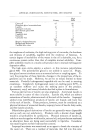
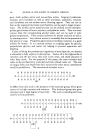
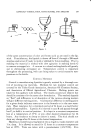
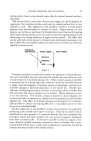
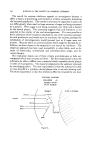
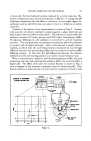
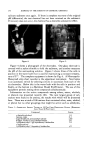
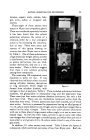
ENZYME INHIBITORS FOR DENTIFRIGES* By R. S. Tufts College Dental School, Boston, Mass. t THE INlvORMATION TO BE presented is concerned with the approaches used by dental investigators in searching for caries-inhibiting agents for dentifrices, a description of the method we employ for primary screening in our search for enzyme inhibitors, and a presentation of examples of one class of inhibitors from a group of several hundred compounds studied. The em- phasis will be on enzyme inhibitors for dentifrices of the future rather than evaluation of the inhibitors in dentifrices that are currently being marketed. It is well known that changes occur gradually among ethical pharmaceu- tical products, where useful drugs are continually being replaced by newer products that are superior in certain respects. The pace of obsolescence be- cause of research is just as rapid for dentifrice inhibitors. It can be pre- dicted as a safe generalization that some of the inhibitors currently used in dentifrices will be replaced by newer and better ones within a few years. Our presentation deals with some of the means which can be used to locate and narrow down the selection of new inhibitors of acid production by dental plaques. Some background regarding the etiology of dental caries might help to explain the current interest in enzyme inhibitors. A skeleton of the theory that is commonly held regarding the cause of dental caries is given in Fig. 1. It presents only those parts of the general theory which I believe are poten- tially useful for the control of dental caries by dentifrice additives, and ex- plains merely the production of corrosion or pitting of tooth enamel. The three general essentials are carbohydrates, a dental plaque, and tooth enamel. Diffusible carbohydrate passes into the dental plaque, which con- sists of an adherent mass of micro6rganisms plus some proteins of saliva, is there converted to acid rapidly enough to cause a localized decalcification of enamel. Once the surface layer of enamel is etched, the lesion progresses rapidly. The goal of most dental investigators is to prevent the original * Presented at the May 14, 1954, Meeting, New York City. • Supported by grants from American Chicle, Beechnut Packing, Colgate-Palmolive, Lam- bert Pharmacal, Lever Brothers, and Procter and Gamble Companies, and the Sugar Research Foundation. 266
Purchased for the exclusive use of nofirst nolast (unknown)
From: SCC Media Library & Resource Center (library.scconline.org)