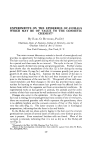
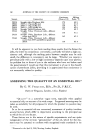
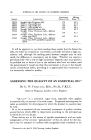
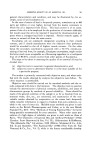
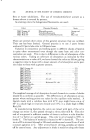
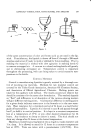
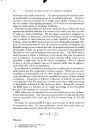
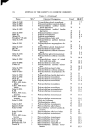
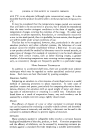
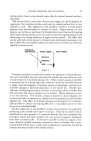
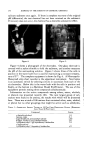
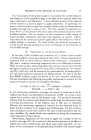
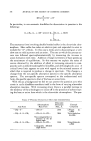
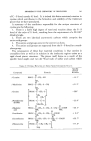
ENZYME INHIBITORS FOR DENTIFRICES 267 pitting rather than to arrest dental caries after the smooth enamel surface is destroyed. The various links in this chain of events are sugar, the dental plaque, its organisms, their enzyme systems, acid, and an enamel surface that is sus- ceptible to acid. One approach to the problem would be to keep dental plaques from accumulating on surfaces of teeth. Improvements on oral hygiene can do this, as was shown by Fosdick who found that tooth brushing after meals reduced dental caries (1) either by preventing the plaques from developing or by aiding clearance of sugar from the mouth. The effect that can be achieved in this manner is limited since mechanical cleansing is not apt to affect the inaccessible surfaces of teeth, many of which are most sus- ceptible to dental caries. Carbøh2drate I Den• P• Tooth •1 •• Bac•r• [Ac• • • Figure l. It might be possible to reduce the numbers of organisms in dental plaques. The use of penicillin has been advocated by Zander for controlling the rate of acid formation from dental plaques (2). Other workers question whether a continual use of a broad spectrum antibiotic would be desirable because it might cause development of resistant strains of organisms or produce un- desirable changes in bacterial population in the mouth (3). Another pos- sible way of breaking this chain of events is to produce alkali or buffer that will neutralize the acid as rapidly as it is iBrmed. Dilute solutions of urea act in this manner. The enzyme, urease, is present in dental plaques and converts the urea to ammonia so rapidly that the plaques actually become alkaline (4). The effect with dilute solutions is transient but it is theoreti- cally possible to obtain neutralizing effect for a reasonable period of time by use of an adsorbed buffer. Another approach to the problem involves the protection of enamel by producing a less soluble layer upon its surface. Fluoride has been tried in dentifrices for this purpose (5), stannous fluoride has been proposed (6), tetradecyl amine has been studied (7), and several inorganic substances have been considered (8). It should be possible to find an organic, non- toxic chemical capable of giving a protective layer on enamel, but a prac- tical problem will be how to cause such a substance to penetrate the dental plaques and attach itself to the enamel surface.

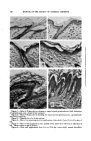
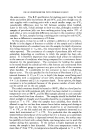
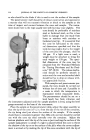
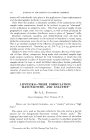
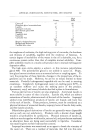
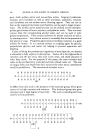
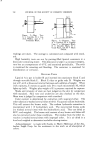
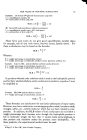
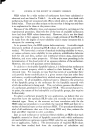
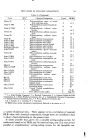
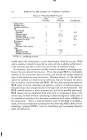
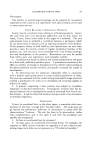
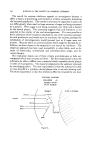
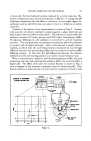
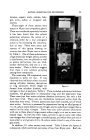
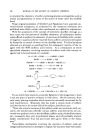
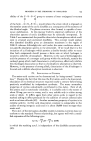
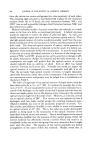
268 JOURNAL OF THE SOCIETY OF cOSMETIC CHEMISTS The search for enzyme inhibitors appeals to investigators because it offers a means of preventing acid formation without necessarily disturbing the bacterial population. The numbers and types of organisms in saliva do not differ greatly When small or large amounts of sugar are being consumed by a patient. When sugar is not being consumed, very little acid is formed by the dental plaque. This reasoning suggests that acid formation is not essential to the vitality of the oral micro6rganisms. If it were possible to find a substance which would be adsorbed by one of the enzymes necessary for acid production and would serve to inactivate the enzyme, perhaps the metabolism of micro/3rganisms would proceed just as if sugar were not present. Because there are several enzymes which might be blocked by in- hibition, we have chosen to be empirical in our search for inhibitors. The empirical approach has been used successfully in other fields, such as for study of insecticides, antimalarial and antituberculosis drugs, and for cancer therapy. Our evaluation makes use of three criteria and eliminates or fails any compound which does not pass all three. The first requirement is that the substance be able to diffuse into a material which resembles dental plaque in some of its properties. The material employed is the sediment obtained by centrifuging saliva. The next requirement is that the substance be able to raise the pH of a synthetic dental plaque that is actively forming acid. The third requirement is that the inhibitory effect be retained for one hour Inhibitor Glucose Buffer AIk(31i Acid REACTIONS AFFECTING EQUILIBRIUM pH REACHED WITHIN SALIVA SEDIMENT SEDIMENT GLASS ELECTRO • Glucose j/•• CO 2 • H20 •' ..•- Figure 2.
Purchased for the exclusive use of nofirst nolast (unknown)
From: SCC Media Library & Resource Center (library.scconline.org)