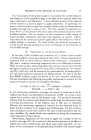
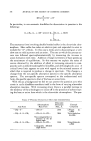
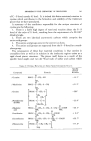
ENZYME INHIBITORS FOR DENTIFRICES 273 Possibly the discrepancy arises from the fact that the saliva-sugar tests do not indicate either the ability of a substance to penetrate a plaque or to be retained by a plaque. These amines are presented as examples of progress with our Inhibitor Survey Program. Since January, 1953, 1400 compounds have been sent us by over 60 organizations. About 140 substances have been found to have inhibitory properties greater than 50 per cent under certain conditions of testing. There are active substances among aldehydes, ketones, acids, amides, halogen derivatives, quaternary nitrogen compounds, sulfur com- pounds, and inorganic substances and various combinations of the above. Research directors of dentifrice companies sometimes appear disturbed be- cause of the number and variety of effective substances, and the total cost of submitting all of these to toxicity evaluation. Many compounds would be ruled out because of toxicity, but the cost of clinical trial of those that could be used might still be astronomical. In our opinion all of these amines and the other active substances should be subjected to further evaluation, using as guides a series of screening pro- grams, each somewhat more complex and more exacting than the one be- fore. The approach we wish to suggest is based on four assumptions: (1) that there is at present no substitute for a full-scale, thorough clinical trial in proving whether or not a dentifrice will actually inhibit dental caries, (2) that the most expensive research is the clinical trial which gives negative results, (3) that there are enough potential inhibitors available to justify use of the least expensive means for eliminating the majority of substances, and (4) that the risk of negative results should be kept as low as possible by using only those compounds which are rated highly by all recognized types of screening methods. Let us assume that each of the major dentifrice companies has a budget that will permit starting one clinical study each year. If 100 new active compounds come to tl•e research director's attention each year, his problem is how to pick the best non-toxic compound in time for the starting date of the clinical trial. Toxicity tests are not the most efficient secondary screen because of their cost and time required to get answers. It is more efficient to screen for inhibitory activity under the special con- ditions of dentifrice use. One special condition of dentifrice use is the short time of contact between dentifrice and inaccessible plaques, which amounts to only one to three minutes. Our testing procedure can be modified to give a contact of this duration rather than the usual thirty-minute contact. We believe that about two-thirds of any list of 100 could be eliminated because of sluggishness in penetrating salivary sediment. If the compounds were incorporated into dentifrice for test in a short contact study, information would automatically be obtained on the compatibility of a compounds ac- tion with the dentifrice components. Compounds which show enough

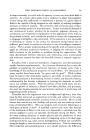
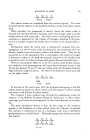
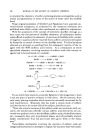
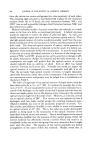
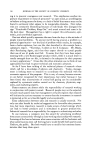
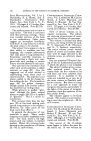
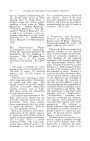
274 JOURNAL OF THE SOCIETY OF COSMETIC CHEMISTS TABLE 4--INHIBITION OF ACID PKODUCTION OF SALIVAK¾ SEDIMENT BY AMINES A. Recoveries less than 20 per cent Alkyl diethylene triamine .......................................... s/10 o-Aminobicyclohexyl .............................................. 1.0 pg Decylamine ...................................................... s/10 N-Decylpiperazine ................................................ 0.1 Di [1-(3 ethylamyl)-(4-ethyloctyl) ] ethylenediamine .................... s/10 2,5-Dimethyl-N-nonyl piperazine .................................... s/10 N-Diphenylpropene-2, N•-methyl piperazine hydrochloride ............. s/10 N,n, Dodecylpiperazine ............................................ s/10 N-Fluorene piperazine dihydrochloride ............................... s/10 Gentian violet .................................................... 0.1 pg N-n-Heptylpiperazine .............................................. s/10 (1-Hydroxyethyl-2-glyoxalidinyl) (2-e thylhexoxymethyl) me thane ........ 1.0 N-(1-Naphthyl, 1-phenylmethyl)-N'-methylpiperazine hydrochloride .... s/10 N-Octyl piperazine ................................................ 0.1 2,4,6-Tri(dibutyl-aminomethyl) phenol ............................... s/10 pg B. Recoveries from 20 to 39 per cent N-(2-Aminoisobutyl) aniline ........................................ 1.0 pg 4-Amino-2-methylq3-hexanol ........................................ s/2 pg N(3-Aminopropyl) rosin amine D diacetate ........................... 1.0 5-Amino-2,2,5-trimethyl-3-aza-l-hexanol ............................. 1.0 pg Ortho anilinophenol ............................................... s/2 pg Dibutylammonium lactate ......................................... 1.0 pg Didodecylamine .................................................. s/2 pg a-Methyl-benzylamine ............................................... 1.0 Di(4-ethyl-l-methylhexyl) ethylenediamine ........................... s/10 N,N-Dime thyl-dodecylamine ...................................... 0.1 N-Diphenylmethyl-N•-methyl piperazine HCI ........................ s/10 Dodecylamine .................................................... s/10 2-Ethylhexylethylenediamine ....................................... 0.1 4-Ethyl 2-isobutyl octyl diethanolamine .............................. s/2 pg 1,•-Oxyethyl 2A8 hepta decenyl imidazoline .......................... 1.0 pg 1,/%Oxyethyl 2--heptadecyl imidazoline ............................... s/2 pg 1,t•-Oxyethyl 2-undecyl imidazoline .................................. 1.0 pg •0-Phenetidine ..................................................... s/10 C. Recoveries from 40 to 59 per cent Nq(2-Aminoisobutyl) isopropylamine ................................ 1.0 pg 5-Amino-5-methyl-l,3-dioxane ...................................... 1.0 pg N-Benzylcyclohexylamine .......................................... s/10 Furfurylamine .................................................... 1.0 pg Methyl anthranilate ............................................... s/10 2-(Alpha-methylbenzylamino) ethanol ................................ s/2 pg Phenylethanolamine ............................................... 1.0 pg Rosin amine D acetate ............................................ 1.0 Rosin amine D hydrochloride ....................................... s/2 Soy dimethyl amine ............................................... s/2 pg D. Recoveries from 60 to 79 per cent 2-Amino-2-methyl-1-propanol ....................................... 0.1 Benzyldiethanolamine ............................................. 1.0 4, Butyl(5 or 6) methyl morpholine .................................. 1.0 n-Butyl oxamate ................................................. s/10 Cetyl diethanolamine hydrochloride ................................. 0.1 2,6-Di(dibutylaminomethyl) 3,5 dimethylphenol ...................... s/2 pg Diethanolamine ................................................... 0.1 1,3-Bis(dimethylamino)-2-propylamine ............................... 1.0 pg 2,6-Dimethyl-4-dodecylmorpholine ................................... s/10 N-Diphenylmethyl, N•-(2-hydroxyethyl) piperazine dihydrochloride ..... ' s/10 N,N-Dime thyl-1,3-propanediami ne .................................. 1.0 a'-Dipyridyl .................................................... 0.1 odecylamine-N-glucoside ......................................... s/10 N-Dodecyl-morpholine ............................................. s/10 N-Dodecyl-pyrrolidine ............................................. 1.0 Ethomeen S/12 ................................................. 0.1
Purchased for the exclusive use of nofirst nolast (unknown)
From: SCC Media Library & Resource Center (library.scconline.org)