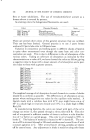
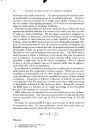
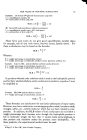
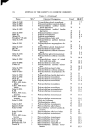
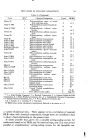
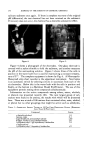
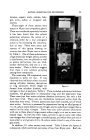
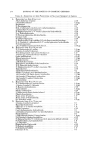
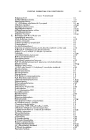
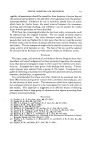
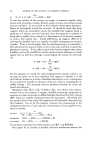
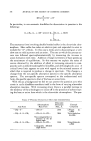
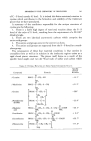
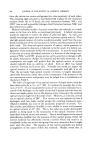
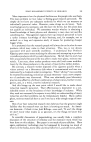
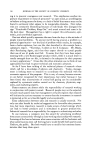
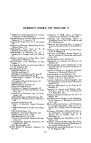
ENZYME INHIBITORS FOR DENTIFRICES 271 ketones, organic acids, amides, halo- gen, nitro, sulfur, or inorganic sub- stances. Thirty-eight of these amines were tested in 10 per cent propylene glycol. These are considered separately because it has been found that this solvent sometimes enhances the action of a chemical, either by a true synergistic action or by increasing the concentra- tion at test. There were seven sub- stances of this group showing re- coveries less than 30 per cent as shown by Table 1. One of these substances is a high molecular weight amine, another a disinfectant, two are phenols as well as amine derivatives, two are irnid- azoline derivatives, and one is a ter- tiary amine. There is little to suggest that there is any common grouping among these compounds. The remaining 148 compounds were dissolved in water for test. It was observed that inhibition often occurred among ethylene diamine derivatives or ring structures which might be formed from ethylene diamine, with Figure 6. nitrogen in the 1,4 positions, Table 2. These included substituted ethylene diamines, the glyoxalidine or imidazoline ring, and the piperazine ring. There were just four active ethylene diamine derivatives, but only a few have been tried. There was one imidazoline compound active from the three that were tried. Twenty piperazines have been studied, ten of which were active. Activity is possessed by piperazines having an alkyl group of 7 to 12 carbon atoms linked to one nitrogen and no substituent larger than a methyl on the other nitrogen. There were also active phenyl derivatives with one to three phenyl rings present either singly or in one or more con- densed rings. As with the other types, activity is apt to occur only when one nitrogen has a free hydrogen or methyl group, and when there are one or more alkyl or aryl groups of 6 to 18 carbon atoms linked to one of the nitro- gen atoms. In addition, 111 other arnines were tested. Table 3 shows the names of compounds which permitted recoveries of less than 40 per cent. Both do-

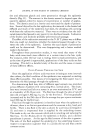
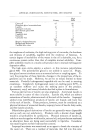
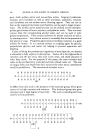
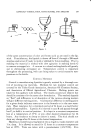
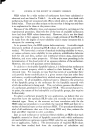
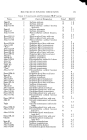
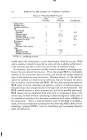
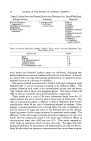
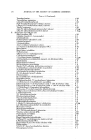
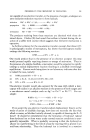
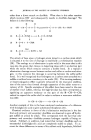
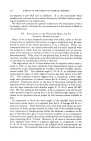
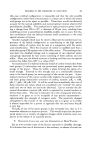
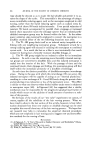
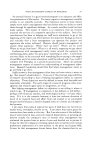
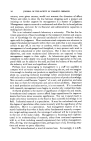
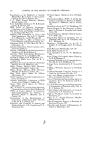
272 JOURNAL OF THE SOCIETY OF COSMETIC CHEMISTS TABLE 2--ACTIVE ETHYLENE DIAMII•E DERIVATIVES (REcovERY LEss THAN 40 PER CE•T) Ethylene Diamine Imidazoline Piperazines Di- [1-(3-ethylamyl)- 4-ethyloc tyl) ] Di(4 Ethyl-l-methylhexyl) 2-Ethylhexyl Di Alkyl, t5 alkyl aminoethyl I, fl-hydroxyethyl 2-(,,2-Ethyl- hexoxy) ethyl N-Decyl N-Nonyl N-Dodecyl H-Neptyl N-Diphenyl propenyl N-Octyl N-Diphenyl propenyl N-Oetyl N-Diphenyl methyl N-Fluorenyl N-(1-Naphthyl, 1-phenyl methyl) TABLV. 3•HER INHIBITORY AMINES (FROM A TOTAL Or 111 TESTED) (RzCOVER¾ LESS THAN 40 PER CENT) Substitution Conch. Decyl 0.1 Dodecyl 0.1 N,N Dimethyl dodecyl s/2 Methyl benzyl 1.0 Ethoxy phenyl s/10 (3 Aminopropyl) rosin 1.0 decyl amine and dimethyl dodecyl amine are inhibitory, indicating that methyl substitution does not interfere with activity of an amine. A second- ary amine with two large alkyl groups sometimes has no inhibitory action, probably because of a decrease in solubility. The amines studied are presented in Table 4 with each compound listed 'alphabetically in one of six groups according to its inhibitory effect. The number following each name is the concentration at test, and the letters "pg" indicate test in 10 per cent propylene glycol. The terms s/2 and s/10 refer to tests at one-tenth and one-half saturation, respectively. These results give a total of 20 active substances found from the 151 tested without the aid of solvents, about 13 per cent of those tried. This type of screening procedure is efficient in that it eliminates from further consideration about 90 per cent of substances selected at random. Other primary screening methods have involved either the rate of formation of acid by mixtures of sugar and saliva or the determination of the calcium- dissolving power of saliva-sugar mixtures for powdered tooth enamel. The efficiency of the saliva-sugar screening procedures appears to be low since nearly half the compounds tested in one study gave inhibitory effects at concentrations lower than 0.025 per cent (11). That study reported ac- tivity from six substances which we have also tried. We agree with their finding of inhibition by decylamine and dodecylamine, but did not find ac- tivity for the other four amines at concentrations four to ten times as great.
Purchased for the exclusive use of nofirst nolast (unknown)
From: SCC Media Library & Resource Center (library.scconline.org)