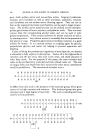
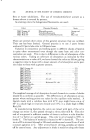
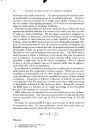
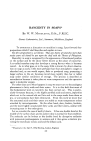
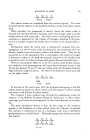
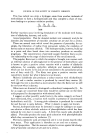
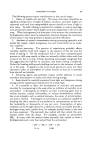
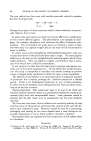
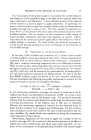
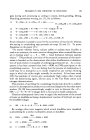
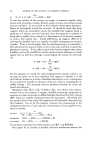
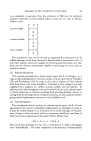
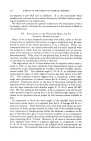
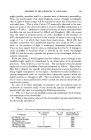
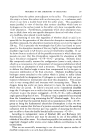
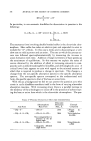
RANCIDITY IN SOAPS 281 The following points require consideration in the case of soaps: 1. Choice of suitable oils and fats. We know that there should be no significant proportions of soaps of linoleic, linolenic, and more highly un- saturated acids and that unsaponifiable matter should not have a high io- dine value. Suitable refining is required for example, to remove mucilagi- nous and protein matter which might cause microfrganisms to thrive in the soap. When hydrogenated oils form part of the mixture the characteristic hydrogenation odour must be adequately removed, because the recurrence of this odour in the soap produces a pseudo rancidity off-odour. 2. Avoidance of metallic contamination during processing especially with metals like copper, cobalt, manganese, iron and nickel which act as oxida- tion catalysts. 3. Correct processing. The practice of superfarting probably affects rancidity stability both with respect to the amount of free fat and the mode of adding it. On the mechanical side it has been considered good practice to chill soap rapidly in films on internally chilled rollers with free access of air, but it is now, I think, becoming increasingly recognised that this aggravates the liability to rancidity, and frame cooling is preferred. Under this heading milling and plodding can lead to the inclusion of much air in the soap. It appears to me to be sound practice to carry out these operations under an atmosphere of carbon dioxide so that air is excluded from the mill and plodder. 4. Colouring agents and perfumes require careful selection to avoid secondary deterioration in colour and odour during storage. 5. Soap should be carefully protected fi'om light and dampness during storage and the temperature should never be unduly high. 6. It is possible to delay the development of rancidity and pseudo rancidity by incorporating in the soap either an inhibitor of rancidity or an antioxidant. I distinguish an inhibitor as either a reducing agent such as sodium stannite, sodium hydrosulfite, or sodium formaldehyde sulfoxy- late or an antiseptic such as sodium benzoate, the esters of p-hydroxyben- zoic acid or thymol. I distinguish an antioxidant as a substance capable of breaking the chain reaction of autoxidation at concentrations as low as a few hundredths or thousanths of one per cent. Interruption of auto- oxidation can be brought about by a substance which can readily provide a hydrogen atom, more readily than, for example, methyl oleate, in the case we have examined. The peroxidic free radical will then attack the anti- oxidant rather than the oleate. For example, consider an antioxidant AH•. It reacts with the methyl oleate peroxidic free radical to form a hydroperoxide and a new free radical from the antioxidant. --CH-- + AH2-'---CH-- + AH O--O-- OOH

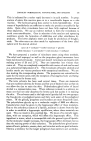
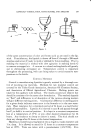
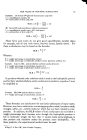
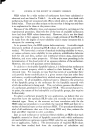
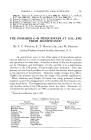
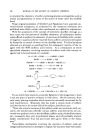
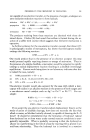
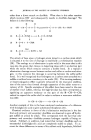
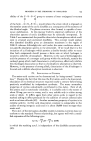
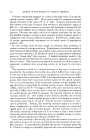
982 JOURNAL OF THE SOCIETY OF COSMETIC CHEMISTS The new radical can then react with another peroxidic radical to produce the final hydroperoxide. --CH-- + AH--CH-- + A i I I 6-0- OOH During the progress of these reactions methyl oleate molecules are practi- cally immune from attack. In some cases antioxidants are found to be more effective in combination of two or more different agents. The phenomenon is an example of syner- gism for example, phosphoric acid enhances the effect of phenolic anti- oxidants. The antioxidants for soaps must not develop a colour of their own when they are exposed to light and air and must not be inactivated by water or alkalis. In recent years p-tert-amylphenol, ethylenediaminetetracetic acid, and various derivatives of thiourea have been used in soaps. The most popular additives in the past are the straightforward reducing agents which I have called inhibitors. They are added at a higher concentration than is neces- sary with what I have called the antioxidants. In my opinion it is clear that the steps taken to protect soap against ran- cidity are on the whole unsatisfactory. On the whole they accept the posi- tion that soap is susceptible to rancidity and merely attempt to prevent access of oxygen under conditions in which the soap is most susceptible. The addition of an inhibitor or an antioxidant gives a temporary measure of protection but it merely prolongs the induction period for a limited period. There is no fundamental protection in any of these measures. In other words the methods of providing protection from rancidity consti- tute an art and not a science. Fourth proposition: That commercial soaps to be used in the Toilet and Cosmetic Industry should be subject to a specification limiting the content of un- saturated fatty acids and unsaponifiable matter. Some guarantee should be obtained that the fatty matter used in manufacture was free from incipient rancidity. We have seen that many factors influence the rancidity stability of soap and that many of these factors are beyond the control of the user who de- pends upon commercial soap. However careful he may be in processing, packaging, and storing, he can never depend upon a soap having an un- suitable composition or one in which incipient rancidity is present. Having described and explained the four propositions I now submit them for discussion. REFERENCES (1) Farmer, E. H., and Sutton, D. A., y. Chem. Soc., 1942, 116. Farmer, E. H., and Sun- dralingham, A., Ibid., 1942, 121. Farmer, E. H., Koch, H. P., and Sutton, D. A., Ibid.,
Purchased for the exclusive use of nofirst nolast (unknown)
From: SCC Media Library & Resource Center (library.scconline.org)