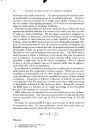
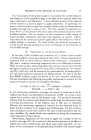
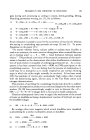
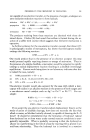
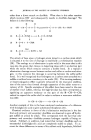
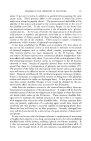
PROGRESS IN THE CHEMISTRY OF DISULFIDES 287 It is the purpose of the present paper to re-examine the current ideas on the chemistry of the disulfide linkage in the light of the research which has been carried out in our laboratory. A more detailed account of our research will be treated in a series of papers to appear elsewhere. In particular, we hope to show that the concept that unstable sulfenic acids are formed during disulfide cleavage has no basis in fact. We then consider the spectral evi- dence which can be related to the strain and to the chemical reactivity of the disulfide linkages. For our studies, we have examined a wide variety of model disulfide compounds, with particular emphasis on cystine. The re- suits obtained for cystine are directly applicable to the chemistry of the di- sulfide linkage in keratins. We shall review the chemical processes in- volved in hair waving taking into account our findings on the chemistry of the disulfide linkage. II. CHEMISTRY OF THE DISULFIDE BOND In the early 1930's Sch6berl and co-workers (6, 7) noted in their studies of model disulfide containing compounds that many of these compounds on treatment with an alkali solution formed three substances: a mercaptan, H2S, and a carbonyl-containing compound such as an aldehyde or ketone. What was particularly interesting about this reaction was the fact that the mercaptan produced accounted for about 50070 of the product the remain- ing 500/0 could very well be accounted for quantitatively as being equal to the sum of the carbonyl compound and HaS produced. In view of the fact that RSOH (sulfenic acids) are known to be very unstable compounds, Sch6berl postulated the following reasonable mechanism to account for the products formed on reaction of a disulfide with alkali: OH- R--CH=S--S--CH=--R 4- H=O ) RCH=SH 4- RCH2SOH RCH=SOH RCHO 4- In this mechanism, hydrolyric cleavage, the attack of water upon the di- sulfide bond which is accelerated by the presence of OH- ion, yields a mer- captan and a sulfenic acid as the primary step. The products ultimately isolated from the reaction were believed to result from the subsequent steps involving decomposition of the sulfenic acid to H2S and an aidehyde. Whereas this mechanism appeared to account for the observed facts, no direct positive evidence in its support was forthcoming. On the contrary, some anomalous results were noted in the case of some secondary and ter- tiary disulfides (8), results which were explained as being the consequence of the operation of steric factors. Nevertheless, Speakman (9) was soon to apply the concept of the hy- drolyric cleavage of S--S to wool and other keratin proteins in an effort to explain the action of both steam and alkali upon these materials. As evi- dence of the universality of this phenomenon, Sch/3berl (10) himself sought

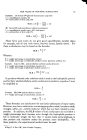
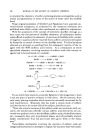
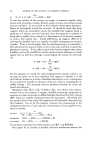
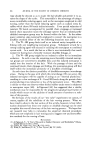
288 JOURNAL OF THE SOCIETY OF COSMETIC CHEMISTS to interpret the chemist• y of sulfur containing proteins and peptides such as insulin and glutathione in terms of the action of water upon the disulfide bond. These original postulates of Sch6berl and Speakman have acquired uni- versal factual acceptance, as evidenced by the numerous references and published texts which contain their mechanism as a definitive explanation. With the acceptance of the concept of hydrolytic disulfide cleavage as a basic tenet, the sine qua non of disulfide chemistry, all subsequent mecha- nisms offered to explain the chemistry of reactions of disulfides with a variety of reagents in aqueous solution required that a sulfenic acid and a mercaptan be formed by an attack of water on the disulfide bond. The final products obtained are pictured as resulting from the subsequent reaction of the re- agent with the SOH (sulfenic acid) moiety. As a consequence an entire specialized chemistry involving reactions of sulfenic acids with various re- agents had to be postulated, for example: R--S--SR -3- HOH } RSOH 4- RSH RSOH } RCHO 4- H•S 5RSOH } 3RSH 4- RSO•H -3- RSOaH (11) RSOH -3- R'NH,, } R--S--NH--R' RSOH 4. R'SH - NH• RSOH -3- • ' OH RSOH 4. • - R--CH.oSOH - } R--SSR' -3- HeO } RS---•--NHe (12) } RS--••OH • R--CH•CH• -3- $ -3- H•O (13) To our mind these reactions are purely figments of the imagination there is not one piece of positive evidence in their favor. On the contrary, there exist many glaring anomalies which cannot be rationally accounted for by such machinations. Kharasch, who has made a serious study of sulfenic acid derivatives in his review (14) of the subject, had this to say: "Since the actual structures of the sulfenic acids are not known with cer- tainty, the mechanisms whereby various sulfenic acid derivatives are con- verted into products such as the disulfides, sulfinic acids, thiolsulfonic esters, etc., necessarily have only hypothetical status, and will probably warrant deeper consideration than has previously been given them in the litera- ture." Nevertheless mechanisms involving the reactions of sulfenic acids are categorically presented in attempts to explain the reactions that wool under-
Purchased for the exclusive use of nofirst nolast (unknown)
From: SCC Media Library & Resource Center (library.scconline.org)