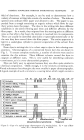
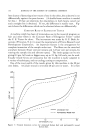
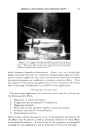
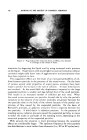
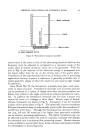
CHEMICAL APPLICATIONS FOR ULTRASONIC WAVES 141 Figure 1 .--Cavitation in water produced by focused ultrasonic waves at n frequency of 600 kc./sec. from a concave barium titanate sound source. The white blur in the center represents intense cavitation at the convergence of the ultrasonic waves. ularly frequency dependent phenomenon. Above I inc. sec. increasingly higher acoustical intensities are required to produce appreciable cavitation until at several megacyclcs per second the acoustical intensities awfilable for practical purposes are insut-Ecient to produce cavitation effects. Since the majority of the processing applications involve cavitation, this means that a wide range of frequencies is available for such applications. PROCESSING AI'I'LICATIONS The processing applications fi•r ultrasonic waves may be resolved into the following basis effects. 1. l)ispersion of solids and liquids. 2. Coagulation and precipitation of suspensions. 3. Degassing of liquids. 4. Promotion of mass and heat transfer in gases and liquids. 5. Initiation and control of crystallization. 6. Sonochemical reactions. Each of these will be discussed in terms of the proposed mechanisms for the effects and the present as well as potential utilization of these effects in the chemical industry. A brief review of the equipment commercially available for such applications will be presented at the end of the paper.

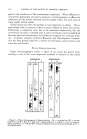
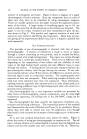
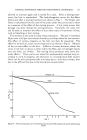
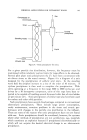
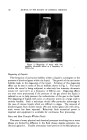
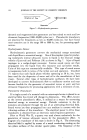
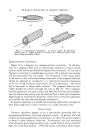
1•,2 JOURNAL OF THE SOCIETY OF COSMETIC CHEMISTS Dispersion of Solids and Liquids Intense sound waves are capable of dispersing materials in both the liquid phase (41, 42) and the gas phase (25, 40). Dispersion in the liquid phase will be considered first. Two mechanisms have been proposed to ex- plain the dispersion of solids and liquids by intense sound waves. In most instances the dispersing effects are contingent on acoustically pro- duced cavitation within the liquid. The extreme mechanical effects associated with cavitation appear to be the primary agency by which solids as well as liquids are dispersed in a liquid phase. In the case of a few liquid pairs (e.g., mercury and water), it has been observed that emulsions can be formed with ultrasonic waves even in the absence of cavitation. Surface waves are excited at the interfaces between the two liquids. The situation is represented in Fig. 2. As the amplitude of the transverse waves becomes greater, droplets of one liquid are thrown into the other liquid and vise versa. Cavitation, however, is the pre- dominant agency for most emulsions. While almost any solid or liquid can be suspended in a second liquid by means of cavitation, emulsions are by far the easiest to form. A survey of the literature as well as current experimental work in the author's labora- tory indicate that the mean particle size for emulsions is often of the order of 1 micron, a value which is somewhat disappointing since it is relatively large for stable colloidal suspensions. For emulsions of such large particle size to be stable for any appreciable time, stabilizing agents usually must be added to provide protection. It is interesting to note that mineral oil suspensions in water produced ultrasonically even in the absence of stabiliz- ing agents at concentrations of the order of 1 per cent oil have proved stable for periods of the order of one month. The ultimate or limiting concentration of one liquid phase in a second liquid phase is contingent on the nature of the sound source as well as the properties of the liquids. While only a small percentage of oil can be suspended in water in the ab- sence of a stabilizing agent, concentrations in the excess of 75 per cent can be obtained with surface active agents present. The literature provides insufficient data upon which to base any statement as to the rate of emulsification, particularly in terms of commercial proc- essing. Crawford (7) reports that whistle-type transducers (to be de- scribed later) have been used in England to produce emulsions in the pharmaceutical, cosmetic and food'processing industries. While ultra- sonic waves offer promise as a means for preparing emulsions, overoptimism is to be discouraged since current indications are that ultrasonic emulsifi- cation is not yet competitive with more conventional' techniques even for relatively small scale industrial applications. The suspension of solids in liquids is more difficult to accomplish and
Purchased for the exclusive use of nofirst nolast (unknown)
From: SCC Media Library & Resource Center (library.scconline.org)