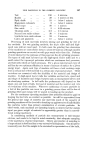
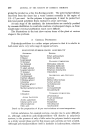
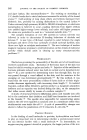
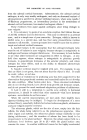
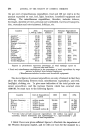
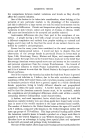
FINE PARTICLES IN THE COSMETIC INDUSTRY 187 Talc ............ 150 5 microns Kaolin ............ 35 -- 1 micron or less Pptd. chalk .......... 10 -- below 1 micron Magnesium carbonate ... 5 -- below 1 micron Metal soaps ......... 50 -- 1 micron Zinc oxide ......... 5 -- 0.25 microns Titanium oxide ......... 0.5 -- 0.1 micron Natural iron oxide colours ... 50 -- 5 microns Synthetic iron oxide colours ... 25 -- 2 microns Lakes and pigments ...... 10 -- below 1 micron Processing of such materials involves mixing and grinding by wet or dry methods. For wet grinding methods, the triple roller mill and high- speed cone mill are most used. In both cases the grinding face clearances of the machines are controllable down to about 30 microns although usually grinding operations are carried on with gaps much wider than this. Perhaps of more interest for the purposes oi this paper are the dry grinding processes. The types of mill most favoured are the high-speed beater mills and to a small extent the vapour-jet pulveriser which are continuous feed processes, and ball mills which are batch processes. For a given material each type of mill has its own optimum efficiency in terms of increase of surface for a given energy input. Again each type of machine will have a best working range from a certain size of fed material to a certain size of ground product. These variations are connected with the friability of the material and design of machine. In high-speed beater mills the variables are feed rate, speed and and shape of hammers and design features such as incorporated sieves and air-classifying systems. In ball mills the performance will depend on the shape, size and load of balls, the load of material and the number and rate of revolutions of the machine. Wherever cushioning of coarse particles in a bed of fine particles can occur in a grinding process there will be loss of grinding effect and energy will be wasted in heating up the product. For the continuous operating machines close attention should be paid to keeping the feed rate as constant as possible. As will be appreciated from the general size range of cosmetic raw materials much of the capacity of grinding machines will be devoted to breaking up agglomerates of individually fine particles rather than primary comminution of oversize particles. In other words, such machines are operating largely as mixers but the energy input per given weight of material is appreciably greater than in conven- tional mixing machinery. In considering methods of particle size measurement it will become obvious, and needs to be kept in mind constantly, that adequate sampling of the material is of prime importance. Theory and practice of sampling is a large subject in itself and has a very extensive bibliography. One should be reasonably. sure that the sample to be examined is representative of the bulk.

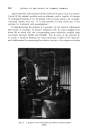
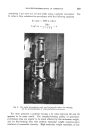
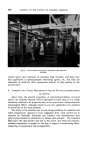
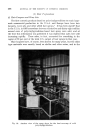
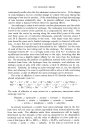
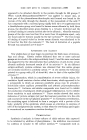
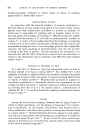
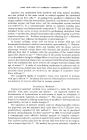
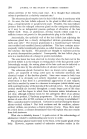
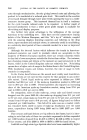
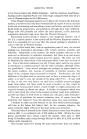
188 JOURNAL OF THE SOCIETY OF COSMETIC CHEMISTS SIEVES To come now to particle size measurement, the coatset fractions are dealt with by means of sieves. Here again the theory and technique of sieving has been the subject of a great amount of work. As most cosmetic materials are in the sub-sieve range I do not wish to consider sieves further here except for one or two comments. Their use for us will be confined to the natural minerals and to cases where accidental oversize particles are encountered. The practical lower limit of particle size measurement obtain- able by sieving is 40-50 microns. It is perhaps not too trite to point out that sieves, particularly the finer ones, are high-precision instruments and should be treated as such. The mesh should be checked occasionally with a measuring lens. There is no limit to the amount of sample which may be examined in usually 10-50 gm. batches. MICROSCOPE The optical microscope has been much used for particle size determination in the sub-sieve range and some authorities still consider it the best. How- ever, it is a very tedious time-consuming method and the amount of sample examined is extremely small. When it is realised that a 40-micron particle of, say, talc weighs about 10--7 gms. and a 2-micron particle about 10 -• grns., • count of 10,000 particles in this range may not amount to more than one- tenth of a milligram, and the reliability of sampling becomes of great importance. Much depends on the operator and the preparation of slides. ELUTRIATION AND SEDIMENTATION Many designs of apparatus have been based on the principle of vertical movement of solid particles in a fluid medium. Elutriation involves move- ment of particles in a rising column of fluid, usually water or air, and sedimentation the downward movement of the particles in a stationary column of liquid. The terminal velocity of fall v of a particle depends on the "diameter" d and density o- of the particle, the density p and viscosity n of the fluid, and on gravity g. The relationship is expressed by Stokes law (c.g.s. units). _ p)g V--- 18n Dealing first with elutriation in which separation of the powder is achieved by suspension in a rising column of fluid an upward speed of fluid is fixed according to the desired particle size cut. Particles coarser than this size will fall, and particles finer than this will rise to be collected and weighed. A series of such cuts must be made to give a measure of particle size range. Multiple instruments have been designed having a series of columns of suc- cessively larger diameters to give three or more fractionations in one operation. Examples of types:
Purchased for the exclusive use of nofirst nolast (unknown)
From: SCC Media Library & Resource Center (library.scconline.org)