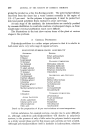
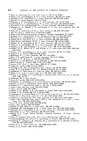
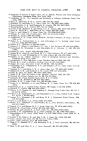
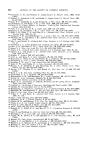
POLYVINYLPYRROLIDONE IN COSMETICS 2!1 (g) Per fuming , Perfume plays an important part in all cosmetic preparations, and atten- tion must be drawn to the fact that polyvinylpyrrolidone is a reactive polymer and can form complexes with appropriate substances. In certain cases this can result in the precipitation or gelling of polyvinylpyrrolidone and certainly will result in a change in its viscosity. It is, of course, also possible that the odour of the perfume might change through such com- plexing. It is therefore essential to ensure that perfumes used with polyvinylpyrrolidone are fully compatible. Very little has been published on this subject, but we are informed that most perfume and perfume raw material suppliers are now aware of this problem and can advise on the choice of suitable compounds. This property of forming complexes with perfumes has resulted in suggestions that the polymer may be of interest as a possible perfume fixative, and we have been advised that such properties and possible applications are being actively studied both in this country and overseas. Acknowledgement is made to the Directors of British Oxygen Research and Development Limited for permission to publish this paper, and to the various members of your industry for advice on the uses of polyvinyl- pyrrolidone in cosmetics. REFERENCES D.R.P. 737663, I.G. Farben. D.R.P. 738753, I.G. Farben. D.R.P. 744414, I.G. Farben. French P. 956,535, I.G. Farben. U.S.P. 2,658,045, General Aniline and Film Corp. Shelanski, Shelanski & Cantor, y. Soc. Cosmetic Chemists, 5, No. 2. 129-132. Drug. Trade News, July 6th, 1953. Chem. Eng. News, January 3&th, 1956, 500-503. B.P. 747806, General Aniline & Film Corp. Wilkinson, Stoner, Hay & Witwer, C.S.M..4. Proceedings, 40th mid-year meeting, Cincinnati, Ohio. Chern. Week, May 5th, 1956, 84. j. Pickthall, Soap, Perfumery • Cosmetics, May 1956, 553-557. Benk, Seifen-Ole-Fette-Wachse, 80, No. 10, 1954, 254-255. B.P. Appl. 28509/55, The British Oxygen Co., Ltd. Holmes & Witwer, American Dyestuft Reporter, September 26th, 1955, 702-704. B.P. 739936, Colgate-Palmolive Co. B.P. 741315, Colgate-Palmolive Peet Co. South African P. 14793, Colgate-Palmolive Peet Co. B.P. 701546, Te•mpia-Coliera & Hurlaux.

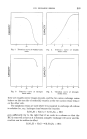
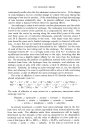
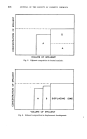
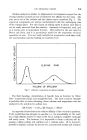
ION EXCHANGE RESINS By T. R. E. KRESSMAN, ProD., D.I.C., F.R.I.C.* A lecture delivered before the Society on Friday, March 1 st, 1957. IN Ta•s account of ion exchange resins it is proposed to discuss the nature and properties of the resins and the principles underlying their action, and then to indicate how these properties can be applied to a few specific problems. This is a better approach than trying to present simply a cata- logue of applications, because if the principles of the resins are known it is comparatively easy to see how they can be applied to one's own particular problems. An ion exchange resin can be defined as an insoluble organic polymer containing labile ions that will reversibly exchange with other ions in a surrounding solution. The resins were discovered by Adams and Holmes in 1935. • The first of these contained phenolic OH groups leading to cation exchahgers, and aromatic amino groups leading to anion exchangers. The exchange of ions took place through these groups thus R.OH + NaC1 ,_2 R.ONa + HC1 R.Nt{• + HC1 r -• R.NH•C1 The capacities of these materials were low for two reasons' 1. The concentration of exchange groups in the resins was not very high (obviously a high capacity will result from a high concentration of groups). 2. The resins behave as weak acids and bases so that the equilibria lie rather to the left. Even when they were used in the form of columns and the reaction product--the HC1, say--was removed as fast as it was formed, the unfavourable equilibrium still resulted in a low working capacity. Development of the resins, therefore, followed the lines of increasing the strength of the exchange groups and of increasing the number of the groups per unit weight of resin. Increasing the strength was a comparatively simple matter and cation resins, for example, were quickly developed that contained SO •H groups, while anion exchange resins containing aliphatic amino groups followed shortly afterwards. Later, resins containing rather less strongly acidic groups in the form of COOH groups were developed and still later artion exchange resins containing strongly basic groups--quaternary ammonium groups--appeared. Thus each type of exchanger--cation and anion--now has its counter- part of weakly and strongly ionised groups, and their properties can be illustrated by their titration curves (see Figs. 1-4). It should be noted that * The Permutit Company Limited, Chiswick, W.4. 212
Purchased for the exclusive use of nofirst nolast (unknown)
From: SCC Media Library & Resource Center (library.scconline.org)