ION EXCHANGE, RESINS 221 adsorbed neomycin, and •an anion• exchanger containing sulphadiazine suspended in oil-in-water emulsions were claimed to show greater bactericidal action and more prolonged activity than those containing the free drugs. •8 ' REFERENCES Adams and Holmes, J. Soc. Chem. Ind., 54, 1T (1935). Adams and Holmes, Brit. Pat. 450,308. Holmes and Holmes, Brit. Pat. 588,380. Adams and Holmes, Brit. Pat. 450,309 I.,G. Farben A.G., Brit. Pat. 489,173. Kressman & Kitchener, J. Chem. Sot., 1190-1208 (1949). Peterson, Ann. N.Y. Acad, Sci., 57, 144 (1953). Kunin and Myers, J. Am. Chem. Soc., 69, 2874 (1947). British Pharmacopoeia 1953, Addendum 1955, 73 British Pharmaceutical Codez 1954, Supplement 1957, 80. See, e.g., Moore dc Stein, J. Biol. Chem., 21!, 893 (1954). See, e.g., Partridge, Brimley and Pepper, Blochem. J., 46, 334 (1950). Rohm and Haas Co., U.S. Pat. 2,653,902. Rohm and Haas Co., U.S. Pat. 2,684,321. Fiedler, Dissert. Abs., 15, 1870 (1955).

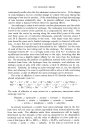
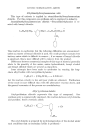
CATIONIC SURFACE-ACTIVE AGENTS By P. A. LINCOLN, M.Sc., M.R.S.H.* A lecture delivered to the Society on Friday, April 5th, 1957. SURFACE-ACTIVE agents, however these may be defined, fall into two classes: Ionic surface-active agents, which are substances capable of ionisation in aqueous solution, and Nonionic surface-active agents, which do not so ionise. Where the surface-active properties of ionic compounds are associated with the anion the substances are termed anionic surface-active agents or simply anionics where these properties reside in the cation, cationic surface- active agents or cationits. Some compounds can behave both as cationic and anionic agents according to the pH of the medium, and this zwitterionic class is referred to generally as ampholytic. The majority of surface-active ions are characterised by a chemical structure which is essentially linear, one end of these linear surface-active ions being composed of radicals which are hydrophilic and the other of hydrophobic radicals. The ionic surface-active agents may be subdivided according to the nature of the hydrophilic or solubilising group contained by the active ion. Whereas the principal anionics utilise the carboxy (--COOH), sulphonic acid (--S03H) or sulphuric ester (--OS03H) solubilising groups, all cationic agents of major importance contain the basic nitrogen atom and are salts of primary, secondary or tertiary amines, or of quaternary ammonium bases. Structure Cationics may therefore be represented by the type structure R2 R• -- N -- R3 I R, X- (I) where R•, R2, R•, R, are natural or synthetic radicals or hydrogen, at least one of these substituents containing 8 to 22 carbon atoms. Only rarely is more than one substituent hydrophobic, and the remaining groups are commonly H, CH•, C2H5 or benzyl groups except where the compound is derived from a heterocyclic base, as, for example, with pyridinium and * Milton Antiseptic Ltd., London, W. 1. 222
Purchased for the exclusive use of nofirst nolast (unknown)
From: SCC Media Library & Resource Center (library.scconline.org)