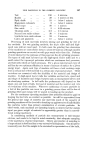
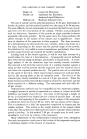
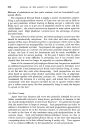
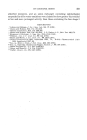
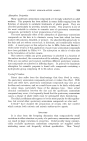
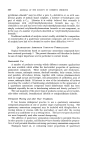
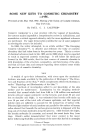
CATIONIC SURFACE-ACTIVE AGENTS 227 the quaternary salts of any acid, including those of weak or unstable acids, e.g., nitrites, bicarbonates, sulphites, etc. • Patents have been granted to workers who have "discovered" that the artion affects the properties of a particular cation, as in the case of the claim that the alkyldimethylbenzylammonium bromides and iodides are more powerful bactericides than the corresponding chlorides. 5 Apart from the fact that such differences have been reported previously, 6,7 these disappear in practice when other substances are present which can displace and control the ionic equilibrium established by solution of the original quaternary salt in water alone. The test technique influences the results obtained also, and it is not uncommon to find that in vitro results bear no relation to those obtained in vivo. Cationic surface-active agents possess similar properties to the anionics in respect of their ability to act as detergents, emulsifying agents, to foam, to reduce interfacial tension, etc., but they are rarely used for these proper- ties alone. The development of the cationics has been conditioned by those properties of many compounds of this class which are not possessed by anionics to any marked extent, principally their: (a) Bactericidal activity. (b) Adsorptive properties. (c) Fixation of direct dyestuffs. Bactericidal Activity Not all surface-active quaternary ammonium compounds are strongly bactericidal the activity varies considerably with the structure of the compound in a manner which cannot be directly related to physical proper- ties such as surface tension reduction. Table 1 illustrates the variation of a•[tivity observed using one test technique for some closely related com- pounds. For any one compound the bactericidal activity may be made to appear good or poor simply by varying the bacteriological test technique employed. This frequently makes comparison of results from different authors difficult. TABLE 1 Method: United States Department of Agriculture, Circular 198. Results expressed as concentration of substance which will kill organisms of standard phenolic resistance in 10 minutes but not in 5. Substances: Lauryldimethylbenzylammonium bromide (L.D.B.A. 13.) Cetyldimethylbenzylammoniurn bromide (C. D. 13. A. 13. ) Lauryldimethylbenzylammonium chloride (L.D.13.A.C.) Myristyldimethylbenzylammonium chloride (M.D.13.A.C.) Cetyldimethylbenzylammonium chloride (C.D.13.A.C.) Stearyldimethylbenzylammonium chloride (S.D.B.A.C.) Lauryltrimethylammonium bromide (L. T. A. 13. ) Myristyltrimethylammonium bromide (M. T. A. 13. ) Cetyltrimethylammonium bromide (C. T. A. 13. ) Stearyltrimethylammonium bromide (S.T.A.B)

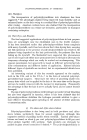
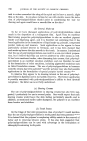
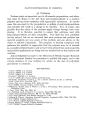
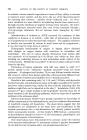
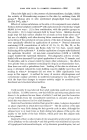
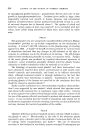
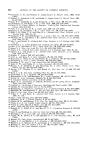
228 JOURNAL OF THE SOCIETY OF COSMETIC CHEMISTS Organism Author Temperature Substance Staph. aureus E. typhosa -,. Shelton, et al. 7 37* C. L.D.B.A.B. 1: 32,000 1: 30,000 C.D.B.A.B. 1:76,000 1:32,000 -- Valko and 37* C. L.D.B.A.C. 1:40,000 -- Dubois ø C.D.B.A.C. 1: 15,000 -- 3/[ixture of L.D.B.A.C. + C.D.B.A.C. 1: 27,000' • ,. Valko and 20 ø C. L.D.B.A.C. 1: 20,000 1: 16,000 Dubois 8 M.D.B.A.C. 1:21,000 1: 17,000 C.D.B.A.C. 1: 14,000 1: 11,000 S.D.B.A.C. 1: 5,000 1: 7,000 __ __ Shelton, et al. 7 37 ø C. L.T.A.B. 1: 4,000 1: 9,0C0 M.T.A.B. 1: 38,000 1: 36,000 C.T.A.B. 1: 80,000 1: 40,000 S.T.A.B. 1:64,000 1: 8,000 ,. Valko and 20 ø C. L.T.A.B. 1: 6,500 1: 5,000 Dubois 8 M.T.A.B. 1: 12,000 1: 11,000 C.T.A.B. 1: 14,000 1: 10,000 S.T.A.B. 1: 9,000 1: 5,000 * --"the killing dilution is that of L.D.B.A.C. alone." The precise mechanism by which micro-organisms are destroyed is not fully understood, although this problem has attracted considerable research (see, e.g., 9,•o). The best known and most widely used bactericidal quaternary ammoni%rn compounds are those employed in medical and pharmaceutical practice, i.e., Cetrimide B.P. and Benzalkonium Chloride B.P.C. and U.S.P. Cetrimide is a mixed alkyltrimethylammonium bromide containing the C•-C•0 homologues, while benzalkonium chloride is a mixed alkyldimethylbenzyl- ammonium chloride principally C•-C•4. Regrettably, neither compound is subject to exact chemical specification, leading to considerable variations among materials which separately conform to the pharmaceutical requirements. • In most practical applications, the bactericidal quaternary ammonium compounds are employed in concentrations of the order of 50 to 500 p.p.m. In special cases, for example, when used as detergents with disinfectant properties and also when employed as emulsifying agents in cream prepara- tion, the concentration is increased to 0.5 to 1-0 per cent. Several reviews of the bactericidal properties and applications of quater- nary ammonium compounds have appeared, e.g., those of Lawrence. TM
Purchased for the exclusive use of nofirst nolast (unknown)
From: SCC Media Library & Resource Center (library.scconline.org)