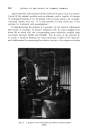
FINE PARTICLES IN THE COSMETIC INDUSTRY 191 particles. As air is forced through a bed of powder the viscous drag, which is related to the surface area of the particles, causes a differential pressure to be set up across the bed of particles. The difference in pressure is correlated with the total surface of the particles forming the bed and so gives a single figure of specific surface (cms. per gramme). It is very attractive to be able to express the size of a powder as a single figure but for many purposes it does not give enough information. Since the method was first devised twenty years ago, it has been developed into a very simple apparatus easy to use eve• in unskilled hands. It gives repeatable results for given materials and by carefully standardised forms of procedure has become a standard method in some industries where the particle range of powders is small for example, the .cement industry. Despite much work on the theory of the process there is uncertainty about the absolute values for particle surface obtained by this method. This difficulty turns on what is meant by surface. Some surfaces are very much more fissured than others. There is some difficulty in assessing if the method applies to the gross surface or includes also some or all of the finer structme of the surface. OTHER •½[ETHODS Attempts have been made to measure the surface of a bed of powder by gas adsorption by which it is possible to differentiate between the outer surface and the fine structure surface. The sample to be treated is out- gassed to a pressure of 10 -4 m.m., and the adsorbant gas is then admitted to the powder from a gas burette until saturated. In the same way solutes may be adsorbed from solutions by particles to give a measure of surface area. The powder is immersed in a suitable dye solution of known concentra- tion, stirred until a state of equilibrium is reached, then the strength of the residual dye solution determined by suitable titration. The relation between amount adsorbed and the equilibrium concentration is complex but has been worked out to express the monolayer capacity and hence the specific surface of the powder. This demands a knowledge of the molecular dimen- sions and orientation of the adsorbate, and this is rarely known with accuracy. Since dyestuff molecules are comparatively large they will not penetrate the finer pores. Iodine has a much smaller molecule and so can penetrate further than a dye molecule. It is found, in fact, that estimation of surface by means of iodine solution will give higher results than with a dye solution. A further method Of this type is measurement of heat of wetting which will be proportional to the surface area of the powder. Here again the sample must be freed from any adhering gases by high vacuum before being introduced into the wetting liquid in a calorimeter. Of these three methods the dyeing technique is very simple to perform. The gas adsorption method will yield absolute values, the other two methods somewhat more relative values.

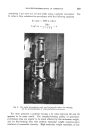
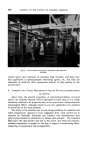
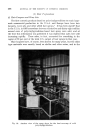
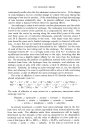
192 JOURNAL OF THE SOCIETY OF COSMETIC CHEMISTS One method of particle size measurement which I have not mentioned so far is the electron microscope. This, of course, has widened greatly the scope for examination of extremely fine powders. It goes beyond the magnifying power of the optical microscope to give resolution of particles of 0-01 micron and less. At the same time the amount of sample examined is proportionately lower. Its great scope would seem to lie in revealing fine particle structure which will help to explain some of the anomalies observed in the more statistical methods. ANDREASEN METHOD Having described some Of the methods of particle size determination together with their attendant advantages and shortcomings you might expect me to tell you which is ihe best. This is impossible, of course, because much depends on the purpose for which the information is needed. For this industry I would say that possibly the Andreasen pipette supported by a good microscope is the most versatile instrument. It is simple to use, and cheap. It can be used over a wide range of materiMs and many suspending fluids may be used. A determination may be completed in a day and will occupy only two hours of an operator's time. The sample examined is 7-15 gm. In view of this I would like to give a little more detail of the sedimentation method. The flow of a particle in a liquid has been very extensively studied. The type of flow has been described as streamline gradually changing to turbulent as the speed of the particle increases. For streamline flow the speed of fall is proportional to the square of the diameter of the particle. As the speed of. the particle increases eddies begin to develop around the particle and to impede its flow. In fully turbulent conditions the speed of fall becomes proportional to the square root of the diameter. In sedimenta- tion work care should be taken to keep the motion in the streamline range. The form of flow can be calculated from the known properties of the suspen- sion by the magnitude of the Reynolds Number Velocity of particle x diameter Kinematic viscosity of the liquid For values of this expression up to 0.2 the motion is streamline. For fully turbulent conditions the value is over 700. For most materials up to 60 microns and density up to 4 the movement is essentially streamline in water, and the Stokes equation involving d • may be used. The interaction between the particles themselves is always a problem. In the sub-sieve range for a 1 per cent suspension by voltune the average distance apart is of the order of four or five diameters. Andreasen con- sidered this sufficient clearance to allow the particles to fall freely. Some other authorities consider that the free space around the particle should be
Purchased for the exclusive use of nofirst nolast (unknown)
From: SCC Media Library & Resource Center (library.scconline.org)