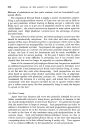
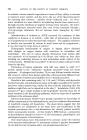
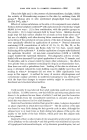
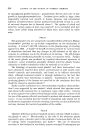
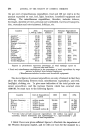
MARKETING TRENDS The address of the retiring President, Mr. R. T. Dobson, given at the Annual General Meeting of the Society of Cosmetic Chemists of Great Britain on Friday, May 17th, 1057. LAST YEAR I gave you a talk on the development of a new product and, when turning over in my mind a subject which might prove of general interest to discuss here to-night, I came to the conclusion that a talk on the broad aspects of marketing might be a natural follow-on to the previous talk. It is my intention, therefore, to give you a picture of the Western European market, the United Kingdom and United States markets, and show you why, in my opinion, the cosmetics industry to-day must necessarily be influenced to a large extent by the products launched in the United States. The population of any country is indicative of the potential sales which may be made and, although certain countries cannot to-day be considered good prospects because the earning capacity of the individual is by compari- son limited, it must be borne in mind that the standard of living is steadily rising in the majority of the countries in Western Europe and, with increased earning capacity, the tendency to spend more on cosmetics and toiletries, especially amongst the female population, grows also. It is perhaps interesting to realise that, while the population of the United States is 154 million, that of Western Europe is 280 million. The countries included in the definition "Western Europe" are France, Luxem- bourg, Switzerland, Belgium, Netherlands, Western Germany, Austria, Italy, Spain, Portugal, Norway, Sweden, Denmark, Iceland, Eire and the United Kingdom. The prosperity of Western Europe is without doubt growing, and the population is estimated to increase by 8 per cent, or 18 million persons during the next fifteen years. The area of the United States is 3 million square miles, and that of Western Europe only 1.15 million. There are therefore nearly five times as many potential customers per square mile in Western Europe as in the United States. Do not be misled by this statement, but keep always in mind that the potential spending power of the average person in the United States is far greater than in any other country. It may perhaps be of interest to look for a few moments at some compari- sons of areas, population, and percentage of personal expenditure on miscel- laneous articles, which would include cosmetics and toiletries, Unfortun- ately, I am unable to give the expenditure within each country for cosmetics, and can only show this as being included under miscellaneous expenditure. The exception occurs with a few countries such as Western Germany, Norway, Sweden and the United States, where I am. able to show as a separate figure the percentage spent on personal care and health. The difference between 263

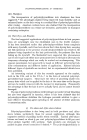
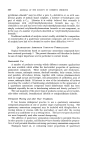
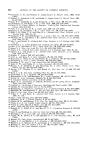
264 JOURNAL OF THE SOCIETY OF COSMETIC CHEMISTS the per cent of miscellaneous expenditure, food and 100 per cent is in the amount expended on rent, fuel, light, furniture, household equipment and clothing. The miscellaneous expenditure, therefore, includes tobacco, beverages, domestic services, personal care and health, travel and transporta- tion, recreation and entertainment, holidays, etc. Country Area Population Personal Expenditure 1,000 sq. miles millions Food Miscellaneous Austria* .... 32-38 6.974 49.9 21.4 Belgium* .... 11.78 8.868 47.4 23.1 Denmark* .. 16.58 4.439 33-1 30-6 France* 212.75 43-3 60.2 19.4 Western G•man«' 97-74 49.995 33.0 33.0 (4.0) Eire•* .... 27.14 2.909 34.0 42.0 Italy . .. ] 16.24 48.016 -- NetherlandS* .. 12.7 10.747 34.5 36.3 Norway .... 125.19 3.425 30-0 34.0 (5.0) Portugal* .. 34.41 8.765 58- 0 18.0 Spain .... 194.24 28.976 -- -- Sweden .. 176.43 7.262 31.0 39.0 (5.0) Switzerlan•i • .. 15-95 4.978 37.1 26.6 United States .. 3,022-5 165.271 27.0 43.0 (6.0) United Kingdom 94.21 50-968 31.0 40-0 Figures in parentheses represent percentage of total earnings spent on personal care and health. * Food and miscellaneous expenditure is the percentage ooe total expenditure by wage earners, as distinct from salaried employees. • Miscellaneous includes furniture and household equipment. The above figures of personal expenditure are only of interest in that they show the relationship between food, miscellaneous expenditure, and rent, fuel/light, clothing, etc. To give some indication of the total private con- sumer expenditure, and the increase therein which has occurred since 1936-38, we must turn to the following figures: Country Unit ooe Expenditure 1936 1938 1954 quoted ß , Western Germany .. million marks 29,000 81,700 Eire ...... million oe 142 393 Norway .... million kroner 3,850 14,500 Sweden .... million kroner 8,400 26,350 U.K.* .... million oe 4,390 11,850 U.S.A ..... thousand million $ [ 64-5 236-5 * Of the total private consumer expenditure, 120 million was spent on cosmetics, beauty treatments and hairdressings•i.e., approximately 1 per cent of total expenditure. I think I have now given sufficient figures to illustrate the importance of the Western European market, and we will now turn for the moment to a
Purchased for the exclusive use of nofirst nolast (unknown)
From: SCC Media Library & Resource Center (library.scconline.org)