MARKETING TRENDS 265 few comparisons between market variations and trends as they directly affect the cosmetic industry. One of the factors to be taken into consideration, when looking at the potential of any particular market, is the physiology of the consumer, and this is affected to a large extent not only by social environment but by geographical differences. Climate and temperature play their part in causing variations in skin texture, colour and degree of dryness or oiliness, which will cause one formulation to be accepted and another rejected. Gastronomic differences also play their part in the acceptance of cos- metics. A people having a diet with a large oil and fat content has both a different complexion and outlook from peoples existing on oatmeal and haggis, and it may well be true that the sweat of one nation's brow is con- trolled by another's anti-perspirants. France has for many years been considered as the most cosmetic-con- scious and fashion-proud nation. I would not dare to dispute this, but observation of the average female in provincial France in towns such as Lyon, Lille, Strasbourg, Nancy, Rheims and Dijon, and comparison with those outside the large cities in the United States leads me to the belief that the average American woman spends more care and money on her cosmetics and personal appearance than the average Frenchwoman. One branch of the cosmetic industry in which France undoubtedly excels is perfumery, and it is of interest to note that the United States is the largest market for French perfumes. One of the reasons why America has taken the lead from France in general cosmetics and toiletries is, I believe, due to the wide variation in climatic conditions within the United States, such variations causing cosmetic houses to formulate products which have a general appeal to a widely distributed female population, living in totally different climatic and geographical conditions within the same country. A further factor of importance may well be that the American cosmetic houses must, to be successful, satisfy the complexions and physiological differences which exist within a country containing inherent cosmopolitan racial characteristics. A further, and most important, factor which has helped to build the American cosmetic industry into one whose goods have found ready accept- ance in most of the world's markets is the large potential home market. The number of females in the United States between the ages of 15 and 64 is 51.7 millions, compared with females in the United Kingdom within the same age groups of 17.3 millions. This large potential buying public allows the American cosmetic house to launch a product on a larger scale than is possible in the United Kingdom or any Western European country. They therefore have an advantage in laying down special plant and equipment to deal with advanced and perhaps tricky formulations. The size of this market allows large-scale buying and increased production

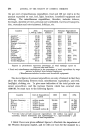
266 JOURNAL OF THE SOCIETY OF COSMETIC CHEMISTS rates through mechanisation, thereby giving lowered costs and allowing the product to be marketed at a reduced price level. This results in the c•eation of increased demand through lower price levels opening the way to a wider consumer income group. This increased demand has in itself a tendency for the cycle towards reduced costs to be repeated. A further result of increased production is that a wider gross profit margin is available for advertising and display purposes. One further very great advantage is the willingness of the average American to try something new. They have not the conservative buying habits of the Western European, and this "let's try it" attitude, coupled with the amazing displays featuring cosmetics and toiletties in the drug stores, super-markets and multiple stores, is extremely useful in establishing in a relatively short period of time a sizeable market for a new or improved product. Although the internal factors which influence the trends in American- produced cosmetics can result in products which are acceptable in the majority of Western European markets, there are certain cosmetics which to-day find a lower acceptance outside the States than within. For instance, face cleansing creams and lotions at the moment are used extensively in the States, whilst in the United Kingdom sales are relatively low. Nourishing creams have a higher rate of usage in the States than in tha United Kingdom. With foundation creams and lotions, however, the rate of .usage in both countries is comparable. In the States, hand lotions are the second most widely used foundation, but such lotions are not used in this country for that purpose to any notice- able extent. Tinted liquid make-up sales expressed in dollars per 1,000 families had 28-3 per cent of the make-up foundation market in 1953 and rose to 38.5 per cent in 1956. Pressed powders also enjoyed an increasing share of the American make-up foundation market, rising from 27-8 per cent in 1953 to 35.2 per cent in 1956. By comparison, sales of cake make-up, cream cake and tinted creams dropped over the years 1953-56, cake make-up dropping from 10.1 per cent to 5.7 per cent, cream make-up from 9.1 per cent to 5-7 per cent, and tinted creams from 14.0 per cent to 8.9 per cent, all figures being based on dollars expended per 1,000 families. This fall-off in sales was on a market which has remained fairly ,st'able in sales of make,up foundation over the same years, expenditure during 1953 being $809 and in 1956 $827 per 1,000 families. Face creams and hand lotions are big sellers in the States, but it is inter- esting to note that sales of these two products expressed in dollars expended per 1,000 families dropped from $1,815 in !953 to $1,649 in 1956, in respect of face creams, and from $926 in 1954 to $854 in 1956 for hand lotions.. Indelible and high stain type lipstick sales have been considerably higher
Purchased for the exclusive use of nofirst nolast (unknown)
From: SCC Media Library & Resource Center (library.scconline.org)